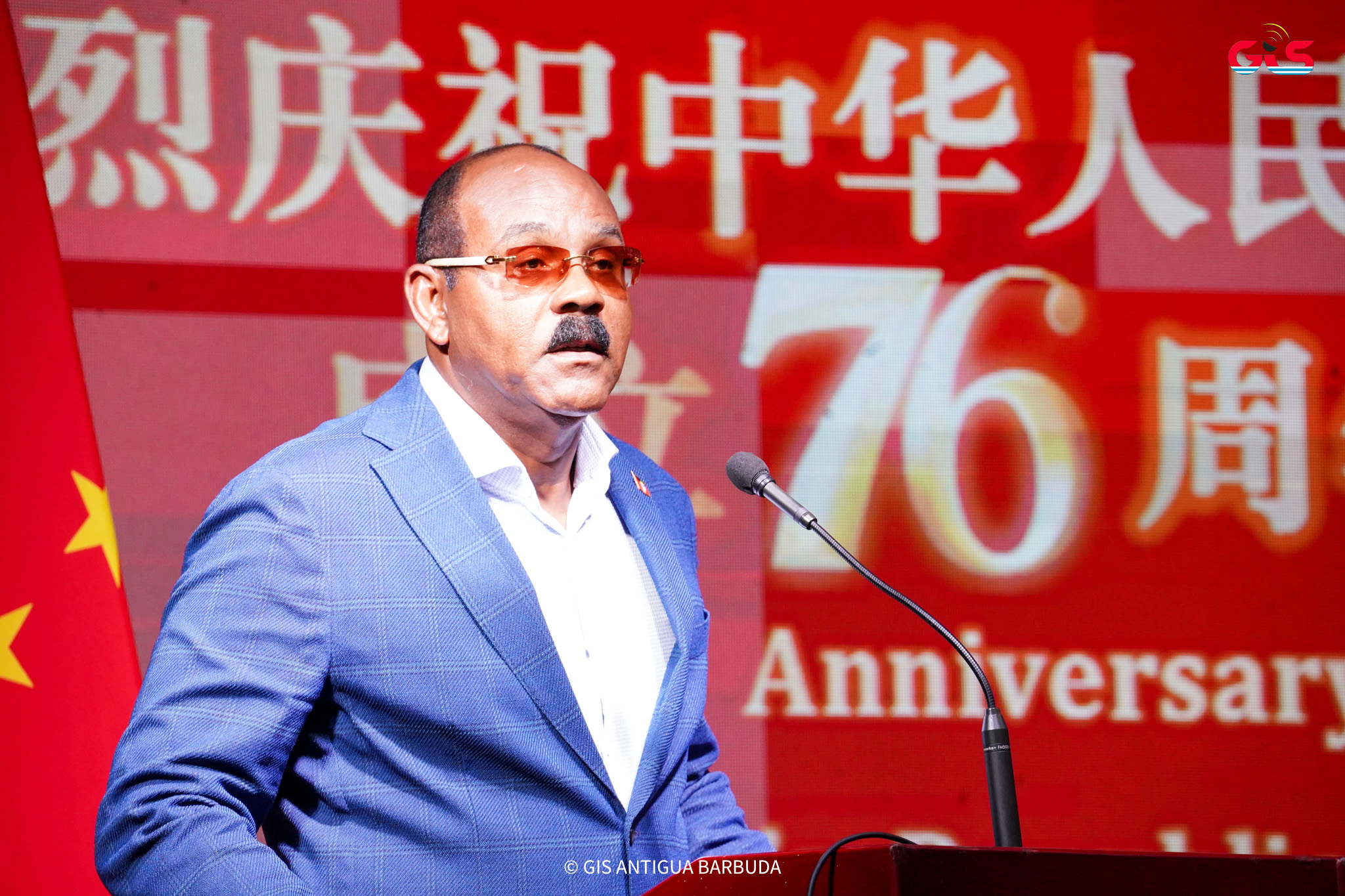
In a recent public address on the locally broadcast Browne and Browne Show, Antigua and Barbuda Prime Minister Gaston Browne has made clear that cutting the Caribbean nation’s long-standing diplomatic relations with China would be an extraordinarily challenging step, due to Beijing’s consistent 30-year track record of financing and backing for transformative national infrastructure projects across the country.
During the discussion, Browne acknowledged the open possibility that Antigua and Barbuda’s close bilateral partnership with China could be linked to recent policy measures implemented by the United States that impact the small island nation. At the same time, he was careful to emphasize that he was not making a formal accusation that Washington is intentionally applying coercive pressure on his administration to cut ties with Beijing.
“If it is that the US is trying to force us to end our diplomatic relations with China, I would say here that that would be a difficult proposition,” Browne stated during the program. “And I’m not saying that they are.”
Expanding on the value of the bilateral relationship, the prime minister noted that China stands as one of the most significant contributors to Antigua and Barbuda’s infrastructure growth across the past two to three decades. “No other country, no other financial institution would have made a greater contribution towards the advancement of our country than China,” he asserted.
Browne went on to highlight specific, high-impact projects that would not have been possible without Chinese support, including the country’s primary commercial airport, major seaport facility, national university campus, and a wide range of other core public infrastructure projects that serve local communities every day.
The prime minister also explained the unique structural barrier that Antigua and Barbuda faces when seeking low-cost development financing from global multilateral institutions. The country’s relatively high per capita income, he noted, disqualifies it from accessing the concessional lending terms offered by bodies such as the World Bank and the International Monetary Fund, leaving a critical gap in funding for national development priorities.
China has stepped in to fill this unmet need, Browne confirmed, providing both grants and concessionary loans with terms that are simply not available from most other global lenders. He detailed the favorable terms of some Chinese financing packages: a 2% annual interest rate spread over a 20-year repayment period, paired with a five-year moratorium on principal payments that gives the country time to generate returns on invested infrastructure before beginning full repayments.
“No other entity, none in the world, has been so generous to Antigua and Barbuda,” he emphasized.
Beyond favorable financing, Browne noted that the partnership with China allows Antigua and Barbuda to maintain full sovereign ownership of its strategically important national assets, while directing revenue generated by those assets toward the next phase of the country’s development.
Finally, he clarified that the Caribbean nation’s diplomatic and development ties with Beijing are rooted entirely in Antigua and Barbuda’s own national development requirements. The relationship, he maintained, does not equate to hostility toward the United States, nor does it represent an alignment of Antigua and Barbuda with China against American interests.