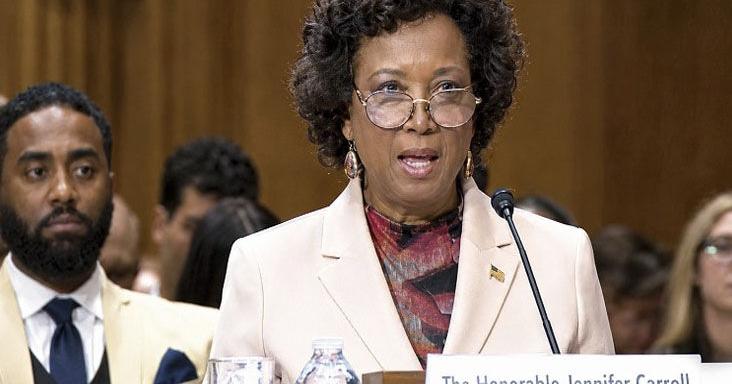
The pending nomination of Jennifer Johnson-Carroll to serve as the next United States Ambassador to Trinidad and Tobago has placed bilateral security cooperation and economic partnership under the spotlight, as the nominee laid out her strategic priorities during a recent Senate confirmation hearing.
First tapped for the diplomatic post by US President Donald Trump on June 2, 2026, Johnson-Carroll appeared before the US Senate Foreign Relations Committee on July 30 to answer questions and present her policy agenda. Following the hearing, her nomination requires a full confirmation vote from the entire US Senate before she can be sworn into office, and as of the latest update, no final vote has been held.
A unique personal background sets Johnson-Carroll apart from typical diplomatic nominees: she was born in Port of Spain, the capital of Trinidad and Tobago, and immigrated to the United States when she was 8 years old, carrying a lifelong deep personal connection to the twin-island Caribbean nation. Her decades-long career of public service to the US includes 20 years of service in the US Navy, where she rose from an enlisted jet mechanic to retire at the rank of lieutenant commander. She later went on to serve as the 18th Lieutenant Governor of Florida, where she led international trade missions that generated more than $70 million in new commercial activity for Florida-based businesses. Johnson-Carroll says she will draw directly on this hands-on experience in the Caribbean if confirmed as ambassador.
During the hearing, Johnson-Carroll emphasized that the US currently maintains a constructive working relationship with Port of Spain, noting that Trinidad and Tobago has been a consistent supporter of the US Caribbean Basin Initiative, a trade and development program for the region. She outlined four core priorities that would guide her tenure if confirmed, all aligned with the Trump administration’s vision for the Western Hemisphere.
Her top stated priority is protecting the safety and security of the more than 10,000 American citizens who travel to Trinidad and Tobago each year for business and tourism, as well as US residents based in the country. Second, she plans to expand mutually beneficial economic ties: she will push for greater access to new markets for American exports, attract increased US investment to the region, and support Trinidad and Tobago as it works to build a more resilient, diversified national economy. She also highlighted ongoing energy sector coordination between the two nations, noting that the US is moving forward with an approved license for a joint energy project between Trinidad and Tobago and Venezuela, a move that will open new commercial opportunities for US businesses.
On security issues, Johnson-Carroll acknowledged Trinidad and Tobago’s public recognition that its porous borders leave it vulnerable to transnational criminal activity, including illicit human trafficking and narco-terrorism. She specifically raised concerns about the multiple states of emergency that Trinidad and Tobago has implemented in response to years of elevated violent crime, saying the repeated emergency declarations signal a pressing unaddressed challenge.
Trinidad and Tobago is a founding member of the Americas Counter-Cartel Coalition and the Shield of the Americas, positioning it as a regional leader in counter-narcotics efforts and a key US partner in combating transnational organized crime. If confirmed, Johnson-Carroll says she will deepen bilateral security cooperation through existing frameworks like the Caribbean Basin Security Initiative, work to disrupt illicit drug trafficking that harms citizens in both countries, and develop targeted strategic goals to support Trinidad and Tobago’s efforts to reduce violent crime.
She also committed to advancing regional cooperation on border security and migration, working with Trinidadian authorities to prevent unauthorized migration and support orderly, lawful movement of people across the Caribbean. When asked about the stability of Trinidad and Tobago’s current government, Johnson-Carroll declined to comment, saying she needs to conduct on-the-ground consultations with government officials after confirmation to gain a full on-the-ground understanding.
Throughout her testimony, Johnson-Carroll emphasized that all US engagement with Trinidad and Tobago will prioritize advancing American national interests, uphold US sovereignty, and reinforce the United States’ right to govern its own borders, resources, and policy decisions. She summed up her priorities as aligned with the current administration’s goal of building a safer, more secure, and more prosperous Western Hemisphere.