In a major weather event impacting East Asia, Typhoon Dolphin has made landfall along China’s eastern coast, prompting widespread emergency preparations and travel disruptions after authorities evacuated more than 420,000 people from high-risk areas and canceled over 1,300 flights at Shanghai’s two main airports.
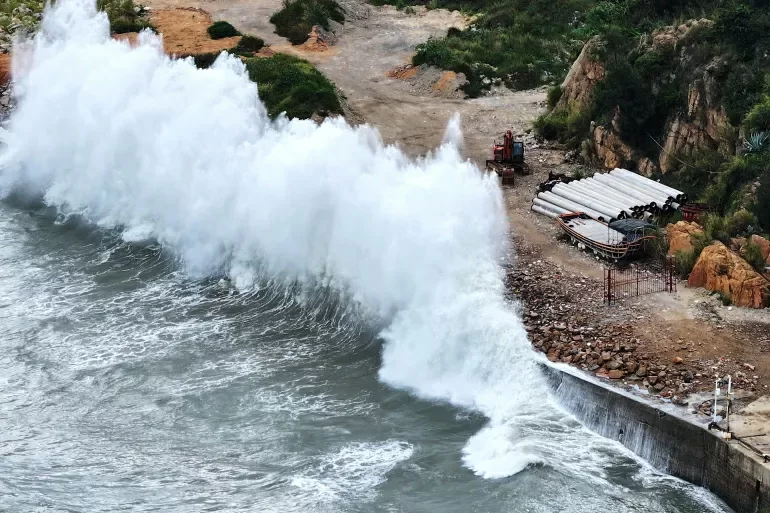
The powerful storm came ashore late Sunday in the coastal city of Taizhou, located in China’s Zhejiang province, packing sustained wind speeds of roughly 151 kilometers per hour. Gale-force winds and towering ocean swells battered Taizhou’s shoreline, with dramatic images of surging waves crashing against the coast of nearby Fujian province’s Huangqi town captured by news crews ahead of the storm’s arrival.
Meteorological officials warn that the extreme rainfall brought by Typhoon Dolphin has sharply elevated the risk of catastrophic flash flooding across large parts of Zhejiang, while authorities have also issued urgent alerts for dangerous landslides in hilly, high-risk areas of the region. Forecasters project that accumulated rainfall could reach between 200 and 400 millimeters in some hard-hit areas over the coming days.
According to Chinese state-run outlet The Paper, Shanghai’s Hongqiao and Pudong International Airports canceled approximately 60 percent of all scheduled flights on Sunday, accounting for more than 1,300 canceled services amid safety preparations for the storm. In addition to flight disruptions, local authorities in Shanghai evacuated more than 30,000 residents from low-lying and landslide-prone zones, while Zhejiang officials moved roughly 390,000 people in Taizhou to emergency shelters ahead of landfall. All maritime activities in Zhejiang, including inter-island ferry services and commercial cruise operations, have been suspended indefinitely until the storm passes and hazards subside.
The outer rainbands of Typhoon Dolphin first reached northern Taiwan, including the capital Taipei, on Saturday, bringing heavy downpours and strong gusts to the region. Local authorities in Taiwan responded by suspending dozens of ferry routes and canceling more than 180 domestic and cross-strait flights, while multiple Taiwanese airlines scrapped all Sunday services bound for eastern mainland China.
Before reaching the Chinese mainland, Typhoon Dolphin swept through Japan’s southern Okinawa Prefecture earlier this weekend, leaving seven people injured and cutting power to more than 50,000 buildings. As of the latest updates from Okinawa Electric Power Company, more than 5,000 households across the prefecture remained without electricity after the storm passed.
While the typhoon has begun to gradually weaken as it moves inland over eastern China, emergency management officials say they are maintaining a high state of alert to respond to potential delayed hazards from extreme rainfall and landslides that could threaten communities for days after the storm’s passage.