Nearly a decade after national elections faded from everyday public life in Haiti, the country’s top planning official has issued a urgent call to move the long-stalled democratic transition into full swing, pushing for widespread citizen engagement and immediate action from all electoral stakeholders.
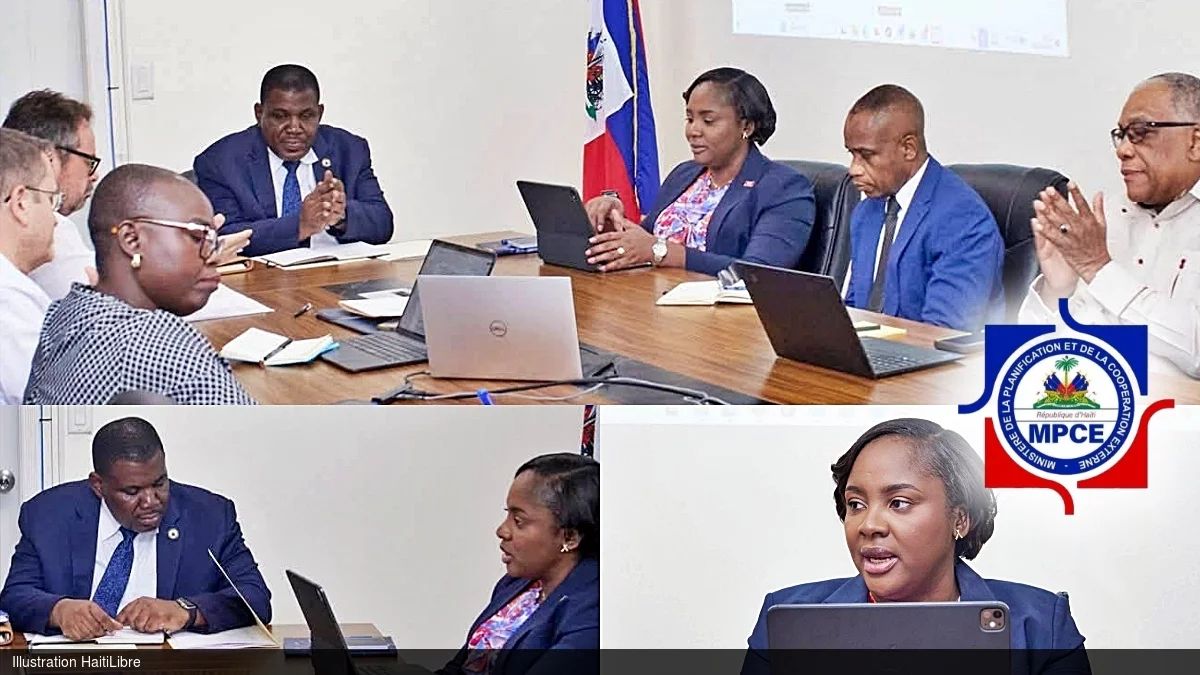
Speaking this week at a gathering of the Steering Committee for the Electoral Process Support Project, Sandra Paulemon, Haiti’s Minister of Planning and External Cooperation, joined a cross-section of national leaders and international partners for the high-level meeting. Attendees included Jacques Desrosiers, president of Haiti’s Provisional Electoral Council (CEP), senior electoral advisors, Carlos Ruiz Massieu — the UN Secretary-General’s Special Representative and head of the United Nations Integrated Office in Haiti (BINUH), Xavier Michon, UNDP’s resident representative in Haiti, plus delegates from the United Nations Office for Project Services, the Organization of American States, and other key technical and financial backers of the process.
In her address to the committee, Paulemon reaffirmed that organizing credible inclusive elections remains the Haitian government’s top national priority. She stressed that every public institution has already mobilized behind a unified strategic roadmap to align implementation of the official electoral timeline and eliminate coordination gaps.
Paulemon emphasized that a successful electoral process cannot rely on technical and financial inputs alone. She recalled that back in February of this year, the nation’s core stakeholders signed the National Pact for Stability and the Organization of Elections, a landmark agreement that binds state bodies, political parties, civil society groups, the private sector, religious institutions, media outlets, and all individual Haitians to a shared promise: deliver a credible, peaceful, and inclusive vote for the Haitian people.
One of the most pressing realities of the long electoral delay, Paulemon noted, is that an entire generation of young Haitians has reached adulthood without ever casting a ballot in a national election or participating in the open democratic debate that forms the backbone of functional democratic societies. While a formal electoral calendar has been outlined, the minister argued that Haiti has not yet shifted into full operational electoral mode. To address this gap, she called for the immediate rollout of a far-reaching national public awareness and information campaign that would make the electoral process visible and accessible to communities across every region of the country.
“We want to hear dedicated election programming on radio and television, see informational displays and posters across our public streets, outreach campaigns in local neighborhoods, young Haitians debating democratic priorities, families discussing voting rights, citizen organizations mobilizing their communities, and public institutions delivering a consistent message of hope,” Paulemon said. “We want every Haitian to feel that elections are truly approaching, and that democracy is gradually reclaiming its rightful place in our national life.”
With that goal in mind, she urged the Provisional Electoral Council to take decisive action to shift the entire nation into genuine electoral preparedness mode. “This is not just about adhering to a written schedule,” she explained. “It is about building a national momentum that can restore public trust, boost citizen participation, and revive hope for democracy. Elections need to be visible, audible, and present in the daily lives of all Haitians, so every person feels fully invested in this historic moment.”
Outlining the commitments the Haitian government has already locked in to deliver the vote, Paulemon noted that the word “election” has slowly disappeared from the daily vocabulary of Haitian people over the past 10 years. In recent weeks, she confirmed, all public institutions have convened to align their operations around the electoral timeline, and the government has committed $120 million in domestic funding to support election organizing. To avoid administrative holdups, she added, all necessary measures will be put in place to mobilize these funds immediately, bypassing routine bureaucratic delays. “Our commitment is unambiguous: the electoral calendar will not be slowed down by state budget procedures,” Paulemon stated.
The minister also outlined additional executive actions the government has implemented to speed up preparations: the government has prioritized the clearance of electoral materials at Haitian ports and customs, fully mobilized the National Identification Office to accelerate the issuance of national ID cards required for voting, established ongoing coordination between national security bodies and the Electoral Council, and partnered with local authorities to facilitate the deployment of polling stations and electoral materials across the country.
In her role leading the Ministry of Planning and External Cooperation, Paulemon confirmed her department will maintain its central coordinating function to track government commitments and remove any administrative, institutional, or financial barriers that could delay the electoral timeline. She also repeated her call for the CEP and UNDP to immediately release the funding required to launch the national electoral information and awareness campaign, so every Haitian can see, hear, and feel that the country is firmly moving toward elections.
“We want awareness messages to start airing across all radio stations, television channels, and digital platforms in the coming days. We want to see billboards and banners across our cities, public service messages on public transit, and targeted campaigns on social media, so every citizen knows Haiti is committed to the path of free elections,” Paulemon said. She went on to stress that elections are far more than just a one-day voting event: “They are the foundation for a return to legitimate state institutions, political stability, consistent public action, and long-term economic recovery for our nation.”
Elections, the minister reminded attendees, are not planned exclusively behind closed doors in CEP offices. “They are prepared in homes, schools, churches, marketplaces, newsrooms, and in the minds of every single Haitian citizen,” she said. “The Haitian people must feel, hear, and see that elections are coming. The government is ready. Now we call on all stakeholders to pick up the pace so the country moves decisively into electoral mode. History will judge our collective ability to keep this appointment with democracy. We cannot afford to waste another day.”
The Haitian government is calling on all state institutions, political actors, national and international partners, and every sector of Haitian society to mobilize without further delay. No delay can be allowed to put the Haitian people’s appointment with democracy at risk. Restoring the legitimacy of national institutions is an urgent national imperative that demands commitment from every stakeholder.