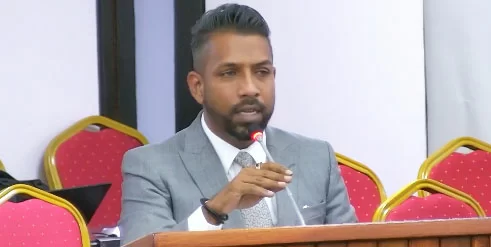
Nearly half a year after more than 500 kilograms of mercury went missing from the Geyersvlijt police station in Suriname, the official investigation into the high-stakes disappearance has yet to yield any concrete results, Suriname’s Minister of Justice and Security Harish Monorath has confirmed to the country’s National Assembly.
Addressing lawmakers on Tuesday, Monorath stated that the probe remains ongoing, with investigators currently working to analyze new sets of data from alternative channels, a process that is expected to take additional time. He added that he has received consistent updates on the case from the police corps commissioner, but this response failed to satisfy members of parliament, who are demanding full transparency around what happened to the toxic, controlled material.
Mahinder Jogi, a legislator from the ruling VHP party, pushed back hard on the minister’s update, noting that the case has been open for several months with no clear answers to fundamental questions: how the mercury was able to disappear from a guarded police facility, where the material is currently located, and which individual or group is responsible for the loss. Jogi questioned whether senior officials are intentionally withholding information from the legislature, arguing that the government cannot continue to deliver the same vague update to parliament indefinitely.
Rabin Parmessar, leader of the opposition NDP faction, echoed these concerns, raising a series of unanswered questions about the conduct of the investigation. Parmessar asked what investigators have learned from the police station’s security camera footage, which officers were on duty during the window when the mercury went missing, whether any cameras were deliberately disabled, and whether all required protocols for the storage and security of seized hazardous material were properly followed.
Parmessar emphasized that it is critical to avoid creating a public perception of lack of transparency, particularly when the incident involves the national police force. “Members of the public have to be able to trust that materials held in police custody are kept secure,” he said, “We need to be open and honest about what has gone wrong here.”
Defending the slow pace of the probe, Monorath reminded lawmakers that complex criminal investigations often require extended timelines, pointing to a prior high-profile case at the same Geyersvlijt station where 90 kilograms of cocaine disappeared from a police safe. In that case, it took more than a year before a suspect was identified, the minister noted.
Monorath also clarified the division of responsibilities in the case, stating that management of all seized goods falls under the authority of the police corps commissioner, while the criminal investigation is led by the Public Prosecution Service. The minister added that any breaches of integrity within the Suriname Police Corps will not be tolerated, and any officers found to have violated rules will face both criminal and disciplinary action. He also noted that decisions to release individuals detained as part of the investigation are not made by his office, but rest with the Public Prosecution Service, the investigating judge or the broader judiciary.