Over a 17-year period ending in 2025, the total number of agricultural operations across Suriname has expanded by 41%, rising from 10,234 registered enterprises in 2008 to 14,409 as of last year, according to newly released official census data. Agriculture, Livestock and Fisheries Minister Mike Noersalim framed the sharp growth as clear evidence of the agri-food sector’s enduring vitality and outsized importance to Suriname’s national economy.
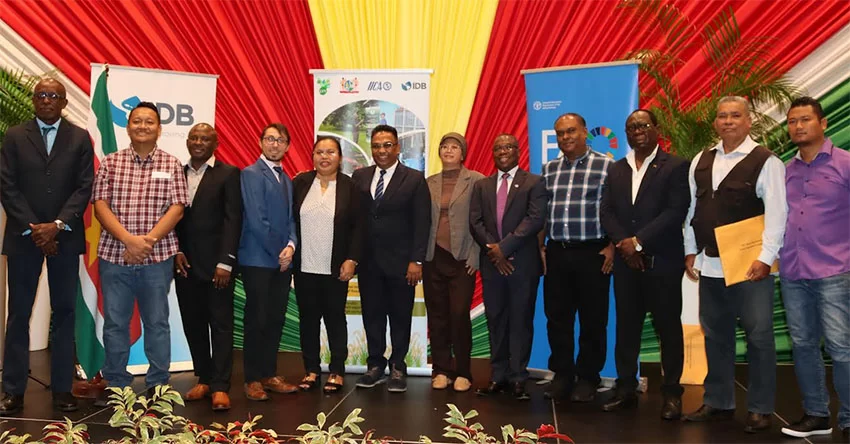
Minister Noersalim unveiled the full findings of the 2026 Agricultural Census Statistical Report at an official launch event held Friday in Torarica. Beyond tracking the overall growth in farm numbers, the comprehensive national census also delivers granular insights into the age demographics of farming professionals across different regions of the country, revealing stark geographic divides in generational composition.
Data from the report shows that aging workforces are a pressing challenge for the commercial agricultural sector concentrated in Suriname’s coastal districts. The capital district of Paramaribo stands out with the highest average farmer age across the nation, at 56.5 years old. In contrast, inland districts including Brokopondo and Marowijne report far younger average demographics among active agricultural workers, creating a sharp contrast with coastal aging trends.
For Minister Noersalim, the census data does more than document the current state of Suriname’s agriculture sector—it also maps out clear priorities for future policy intervention to support sustainable long-term growth. To build on the rising number of agricultural enterprises, the Ministry of Agriculture, Livestock and Fisheries (LVV) is prioritizing expanded access to affordable capital for producers. The ministry is pushing to broaden credit access through the National Development Bank of Suriname (NOB), a change that would allow both new entry-level farmers and established operations to secure capital more easily to scale up their activities.
Alongside financial reform, the ministry is also launching targeted initiatives to attract more young people to pursue professional, modern careers in agriculture, with the goal of accelerating generational turnover in aging regional sectors. To achieve this, LVV is strengthening strategic partnerships with domestic education institutions. “We are building out collaborative academic ties with training and higher education providers including ADEK, PTC and USTI, while also holding targeted outreach sessions at the primary school level to spark early interest in agricultural careers,” Noersalim explained in his launch address.
The national agricultural census initiative was made possible in part by financial backing from the Inter-American Development Bank (IDB), with technical and expert support provided by the Food and Agriculture Organization of the United Nations (FAO) and the Inter-American Institute for Cooperation on Agriculture (IICA). Noersalim extended gratitude to the thousands of Surinamese farmers who shared their data and on-the-ground experience with census researchers, as well as project lead Sheila Aldjah and the full team of field enumerators, administrative staff, and ICT specialists who delivered the final report.
Minister Noersalim emphasized that the completion of the census and publication of the report marks a starting point, not an end point, for sector-wide improvement. He noted that the detailed demographic and sector data will now serve as a foundation for evidence-based policy development and targeted, actionable reforms for Suriname’s agriculture industry. “The counting work is finished, but our shared mission begins today,” Noersalim said. “Let us turn these numbers into decisive action, into sustainable growth, and into a resilient, youth-driven agricultural sector that future generations can build on with pride.”