The Democratic Republic of the Congo (DRC) is facing one of the most severe Ebola outbreaks in recorded global history, with new official government data confirming confirmed cases have crossed the 4,000 threshold. Fueled by the rare, fast-spreading Bundibugyo strain of the virus, this epidemic is currently the second-largest Ebola outbreak the world has ever seen, and public health officials report it shows no signs of slowing down more than two and a half months after it was first detected.
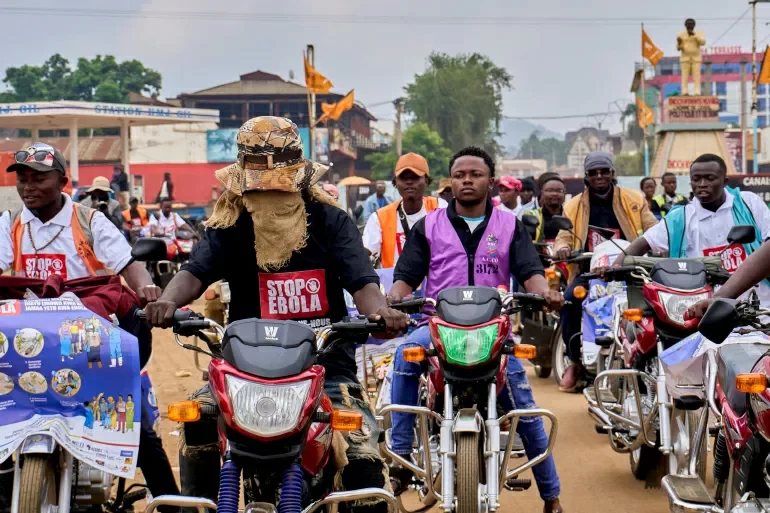
According to the latest update from the DRC Ministry of Public Health, a total of 4,053 cases have been recorded across the country since mid-May 2024, including 1,850 confirmed deaths from the virus. The outbreak has spread beyond initial containment zones, reaching 53 separate health districts across five of the DRC’s provinces. Ituri province remains the epicenter of the crisis, accounting for 87% of all confirmed cases, followed by North Kivu province, which has recorded 11% of total infections. Local authorities in North Kivu, including the city of Beni, have already begun rolling out public awareness campaigns to encourage residents to adopt preventive measures, with community groups like motorcycle taxi drivers participating in outreach efforts to spread critical information.
Epidemiologists describe this current outbreak as the fastest-spreading Ebola event on record, and many experts warn that the true number of infections is almost certainly higher than official counts reflect, due to limited access to affected areas and delays in case tracking. Only the 2014–2016 West African Ebola outbreak was larger, with more than 28,000 confirmed cases recorded over two years.
Efforts to curb the spread of the virus have faced significant obstacles. Ongoing military conflict in affected regions has disrupted access for medical teams, delays in contact tracing have allowed chains of transmission to continue unbroken, and the country currently faces critical shortages of targeted treatments and vaccines specifically developed for the Bundibugyo strain. Ebola spreads through direct contact with infected bodily fluids, making rapid intervention and contact tracing critical to stopping transmission.
In a major policy update released Friday, the World Health Organization (WHO) announced it is recommending large-scale human clinical trials of Ervebo, the only currently approved Ebola vaccine, which has already demonstrated strong effectiveness against the more common Zaire strain of the virus. Early preclinical research, including data from animal studies, suggests Ervebo may also offer protective benefits against the Bundibugyo strain driving the current DRC outbreak.
In one key study, three out of four vaccinated non-human primates survived exposure to the Bundibugyo strain, compared to just one out of four unvaccinated primates in the control group. Unpublished data from ferret studies has even shown 100% protection against Bundibugyo after vaccination with Ervebo. The WHO has emphasized that Ervebo should receive top priority for randomized controlled trials in the DRC, while noting that the vaccine may have reduced effectiveness at preventing mild symptoms and onward transmission, but appears capable of protecting against fatal outcomes.
Parallel to these trials, the United Nations Technical Advisory Group is working to develop new vaccines specifically targeted to the Bundibugyo strain. Two candidate vaccines have already entered early-phase clinical trials, and a third candidate is currently in development.
Gavi, the global vaccine alliance, maintains a stockpile of 500,000 doses of Ervebo, and a portion of these doses have already arrived in the DRC to support the upcoming clinical trials. Gavi Director Sania Nishtar emphasized that the current outbreak is the largest Ebola event in the DRC’s history, and noted that accelerating vaccine access is critical to reducing severe illness and death among affected communities and frontline healthcare workers responding to the crisis.
Just weeks ago, a fire at an Ebola treatment center in Rwampara further complicated response efforts, destroying critical infrastructure and requiring full decontamination of the facility before services could be restored, highlighting the ongoing challenges responders face as they work to bring the outbreak under control.