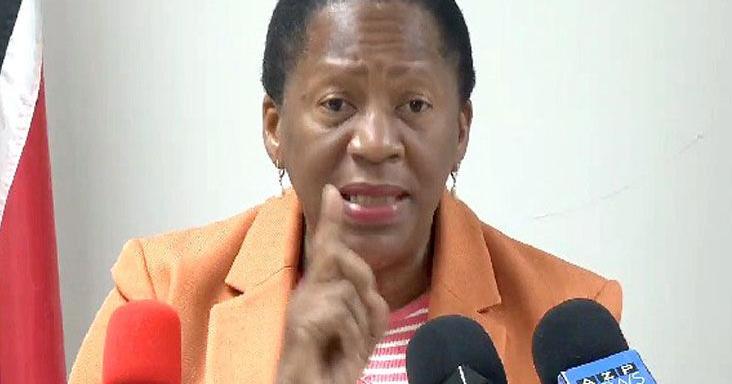
A deep political rift over Trinidad and Tobago’s employment landscape has erupted, as Opposition Leader Pennelope Beckles has publicly called into question Prime Minister Kamla Persad-Bissessar’s bold assertion that the current administration has added 15,000 new jobs to the national economy over a 12-month period.
Speaking at the Opposition’s weekly press briefing in Port of Spain on the previous day, Beckles anchored her challenge in official data released by the country’s Central Statistical Office (CSO). The official figures, she confirmed, show that total employment across the nation dropped by 5,900 positions between the final quarter of 2025 and the first quarter of 2026. Over the same window, the national unemployment rate climbed from 4.3% to 5.4%, with female workers bearing a disproportionate share of the employment decline.
Beckles rejected the government’s attempt to frame the contraction as a routine seasonal shift tied to post-Christmas holiday hiring patterns, noting that job cuts rippled across nearly every major sector of the national economy. CSO data, she said, recorded employment declines between January and March 2026 in petroleum and gas, mining and quarrying, manufacturing, utilities, construction, transportation and logistics, communications, community services, and agriculture. This broad-based drop directly contradicts the Prime Minister’s claim of 15,000 net jobs created between April 2025 and April 2026, she argued.
She also brought attention to Persad-Bissessar’s own admission that two major government work programs, CEPEP and URP, have been severely undermined by systemic inefficiency and widespread corruption. In a direct challenge to the Prime Minister, Beckles asked: “I want to ask the Prime Minister whether or not the Prime Minister stands by the figures that they have produced, 15,000 jobs delivered?”
Beyond the immediate 15,000 job claim, Beckles raised new doubts about the government’s core election pledge to create 50,000 new jobs during its term, noting that the latest official figures make meeting that target increasingly unlikely. She added that opposition constituency offices across the country continue to be flooded with requests from unemployed constituents seeking work, saying: “They can tell you the category when persons come to their offices. What are people coming for? Books and uniforms, jobs, jobs, jobs. But this Government will have you believe that they have created so much jobs.”
Beckles also pushed back against claims attributed to Persad-Bissessar that recent job losses stemmed from the elimination of so-called “ghost programmes” — state-funded schemes riddled with criminal activity and corruption. She argued that these remarks unfairly stigmatize thousands of innocent workers who have lost their livelihoods, calling on female workers, who have seen the steepest employment drops, to take note of the prime minister’s characterization. While Beckles acknowledged that a small share of working-age citizens may be unwilling to take up employment, she condemned the government for painting all recently laid-off workers with a broad brush of corruption and idleness: “But you want to tell the people of Trinidad and Tobago, having fired almost 50,000 people, that you want to tell everybody, all of them involved in drugs, everything was freeness, everything was corruption, and everything was ghosts.”
In addition to the broader national employment debate, Beckles criticized the government’s inaction on the looming crisis at Hilton Trinidad, where an unresolved lease dispute threatens to put up to 300 workers out of a job. The union representing hotel staff has confirmed that more than 250 people are currently employed at the property, and workers have been warned that the hotel could close within weeks if the lease is not renewed. Beckles demanded immediate clarity from both the Prime Minister and the Minister of Trade on the status of the lease negotiations to protect the affected workers’ livelihoods.