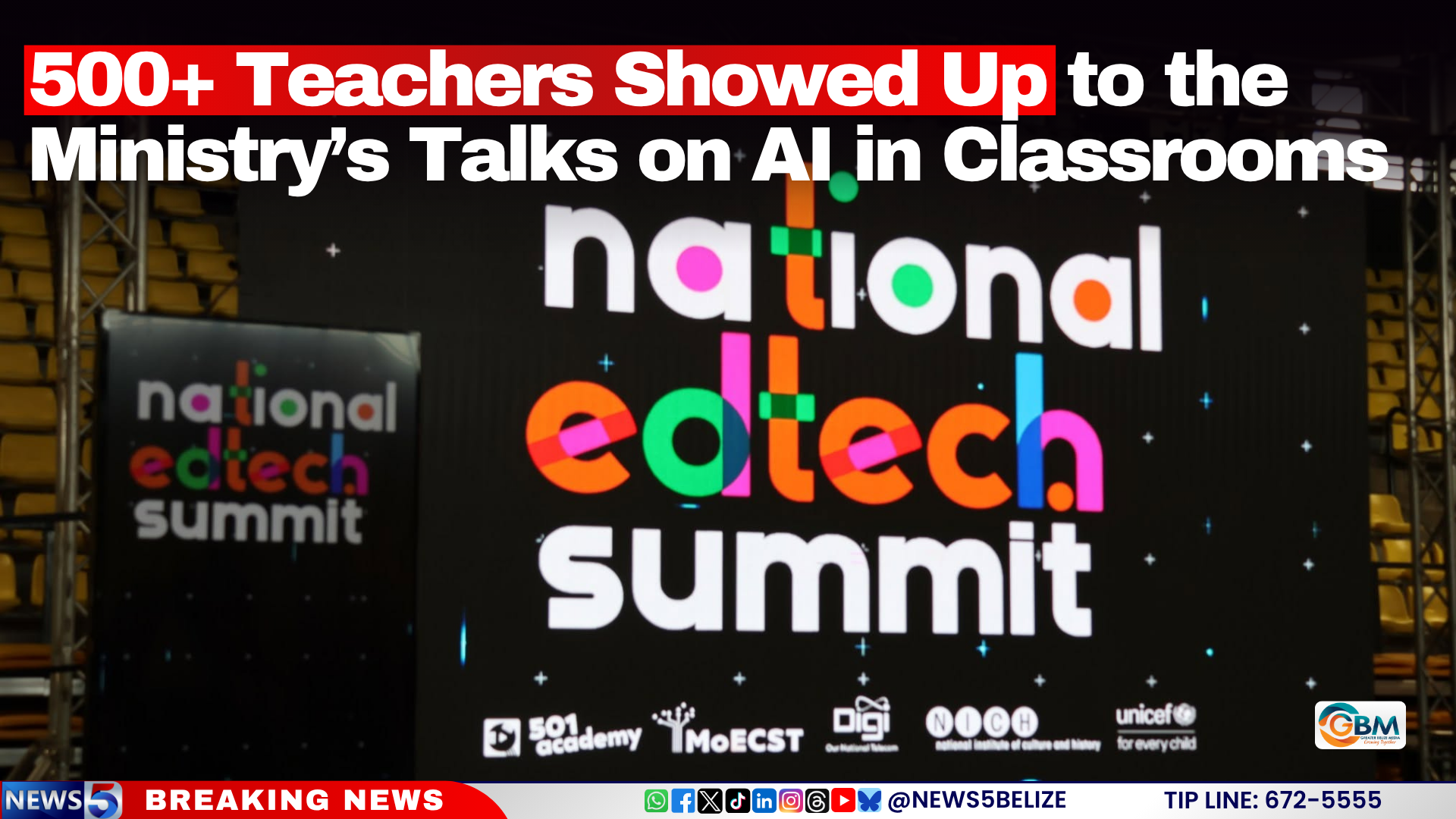
Belize’s Ministry of Education has concluded its two-day National Edtech Summit held at the Belize City Civic Center, closing out the event August 5, 2026 with focused conversations on how emerging educational technologies can reshape collaboration between school leadership, teaching staff and students. The summit brought together hundreds of education professionals across both days, with more than 500 teachers in attendance for the opening day focused on frontline educator perspectives, and the second day reserved for school administrators to explore how digital tools can improve institutional planning, cross-team communication, and data-driven decision-making.
Addressing attendees at the close of the summit, Minister of Education Francis Fonseca emphasized that the core goal of the gathering was to create an open, inclusive space for the ministry to engage directly with teachers, school leaders, and all other education stakeholders. The event was designed to foster thorough, meaningful dialogue around the growing intersection of modern education and rapidly advancing technology, he said.
Framed around this year’s theme “Teaching Hacks”, the summit redefined “hacking” not as a digital security practice, but as an innovative problem-solving approach centered on boosting efficiency across four core areas: educator time, creative imagination, learning space design, and curriculum delivery.
Multiple education leaders shared on-the-ground insights into how artificial intelligence is already shifting daily work for teachers. Jeanne Link, Assistant Dean of Sacred Heart Junior College, highlighted that AI tools are already delivering tangible relief for overstretched education staff, noting that automated AI editing and content generation can cut hours of administrative and preparatory work each week, freeing teachers to focus more energy on direct student engagement.
Still, the summit did not shy away from addressing key gaps that remain before widespread, effective AI integration can be achieved. Ray Lawrence, Principal of Stann Creek Ecumenical College, stressed that targeted, ongoing professional development for educators is a non-negotiable foundation for successful technology adoption. Lawrence argued that without proper training to help teachers themselves build fluency in leveraging AI and other edtech tools, schools cannot reasonably expect students to develop the digital skills they need to thrive in an increasingly technology-driven world.