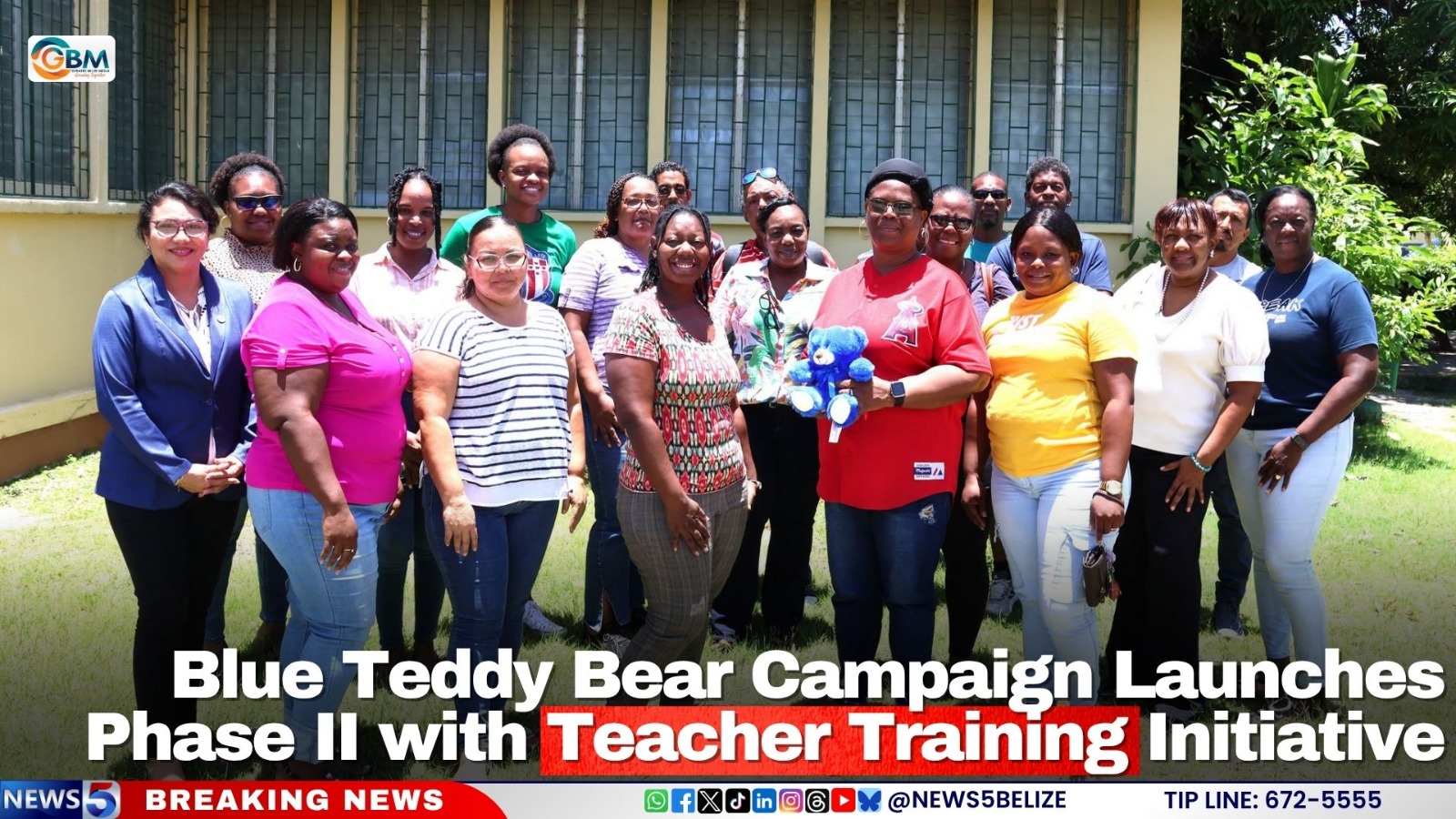
Belize’s leading national child protection effort, the Blue Teddy Bear Campaign, has entered its second implementation phase on August 5, 2026, introducing a targeted teacher training initiative designed to strengthen safeguarding frameworks for children across the country’s education system.
Moving beyond the campaign’s initial foundational work, Phase II broadens its mission to empower three key stakeholder groups – teachers, parents, and students – with evidence-based knowledge and practical tools to cultivate safer learning and living environments for minors. Unlike general awareness campaigns, this new phase prioritizes upskilling educators, who are often the first adults to spot signs of child harm in daily interactions.
The first two training cohorts have already completed their workshops. Most recently, 60 teaching staff from three prominent Belizean institutions – Maud Williams High School, Anglican Cathedral College, and Sadie Vernon Technical High School – gathered for an in-depth skills-building session. This follows an earlier workshop that trained 22 educators from other secondary schools across Belize City, with more sessions scheduled for educators in other districts in the coming months.
Carla Alvarez, lead consultant for the Blue Teddy Bear Campaign, outlined the core focus of the training modules in a press briefing. Participants learn to identify nuanced warning signs and indicators of all major forms of child harm, including physical abuse, sexual abuse, psychological maltreatment, and neglect. To build practical proficiency rather than just theoretical knowledge, the training uses interactive case studies that mirror real scenarios educators may encounter, guiding participants to map out appropriate, timely response pathways to support vulnerable students.
Denroy Tillett, a participating teacher from Anglican Cathedral College, emphasized that the initiative arrives at a critical moment for Belize’s education sector. He noted that broader society often overlooks the silent challenges many young people navigate in school settings. For example, some students rely on school feeding programs to meet their daily nutritional needs, others only own one full school uniform, and some miss classes repeatedly due to inability to afford transportation. Tillett explained that these visible struggles are rarely random – they are almost always outward symptoms of underlying neglect or systemic resource gaps at home that put children at greater risk of harm.
By equipping educators with these critical identification and early intervention skills, campaign organizers aim to create a proactive layer of protection that enables school staff to reach out to at-risk students sooner, recognize subtle warning signs that might otherwise go unnoticed, and intervene effectively to connect young people with the support they need.
The multi-phase child protection initiative is run as a sustained collaborative partnership between four key institutions: Belize’s National Commission for Families and Children (NCFC), the United Nations Children’s Fund (UNICEF), the Ministry of Human Development, Family Support and Gender Affairs, and the Office of the Special Envoy for the Development of Families and Children.