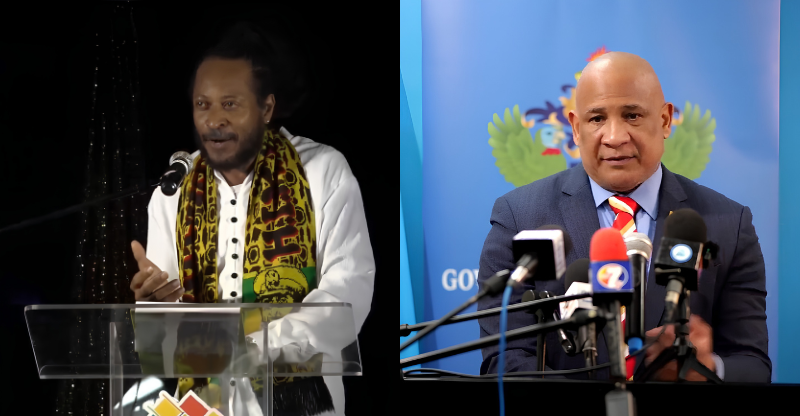
Thousands gathered in Vieux Fort on Sunday to mark Saint Lucia’s annual Emancipation Day observance, an event that spotlighted both a decades-long win for the island’s Rastafarian community and growing calls for accelerated action on long-awaited cannabis regulation reform.
Opening his address to attendees, Aaron Alexander, president of the Iyanola Council for the Advancement of Rastafari and Pan African People (ICAR), opened with a reflection on how far the national recognition of Emancipation Day has come, rather than immediately turning to the cannabis policy debate that looms over the Rastafarian community. For more than 40 years, Alexander explained, Saint Lucia’s Rastafari community has borne the full responsibility of organizing and celebrating Emancipation Day alone, with little formal support or national recognition from government bodies. What was once dismissed by many as “another Rasta ting,” a local, niche observance, has now grown into a core national holiday and is gaining traction across the Caribbean region as a critical marker of shared regional history. That shift, Alexander told the crowd, represents a long-overdue milestone worth celebrating.
After honoring that progress, Alexander shifted to the core policy priority his community has advocated for over decades: comprehensive cannabis reform that recognizes the cultural and spiritual role of cannabis in Rastafarian tradition, while building a formal, inclusive regulated industry. In his remarks, he emphasized that the drafting and parliamentary consideration of the necessary regulatory legislation has moved at a glacial pace, leaving the community waiting for action that has been promised for years. Despite that frustration, Alexander stressed that the Rastafarian community remains optimistic and committed to holding steady patience as the government works through the final stages of the policy process.
Earlier the same day, Deputy Prime Minister Dr. Ernest Hilaire responded directly to those community concerns in a pre-recorded address released by the Regulatory Substance Authority (RSA), the government body tasked with developing the new regulatory framework. Hilaire acknowledged that Rastafarian community members and other key stakeholders have grown increasingly frustrated with the slow timeline of reform.
“I hear your frustration… I assure you our work behind the scenes has been deliberate and unwavering,” Hilaire said in the address. The deputy prime minister added that regulators have prioritized building a robust, tightly controlled system that balances legal access for responsible use with strict public safety safeguards, a process that requires careful deliberation to avoid missteps.
Central to the proposed framework, Hilaire explained, is a commitment to inclusion: the policy is designed to ensure that generations of Saint Lucians who have long cultivated and used cannabis, often at great personal risk under existing laws, are not sidelined as the legal industry grows and develops. The final legislation will center the protection of domestic Saint Lucian interests while laying the groundwork for a transparent, responsible, and well-regulated national cannabis sector.
Closing his remarks, Hilaire struck an optimistic tone, telling stakeholders the reform process is nearly complete. “We are almost at the finish line. Together we will build a cannabis industry that serves and safeguards every Saint Lucian,” he said.