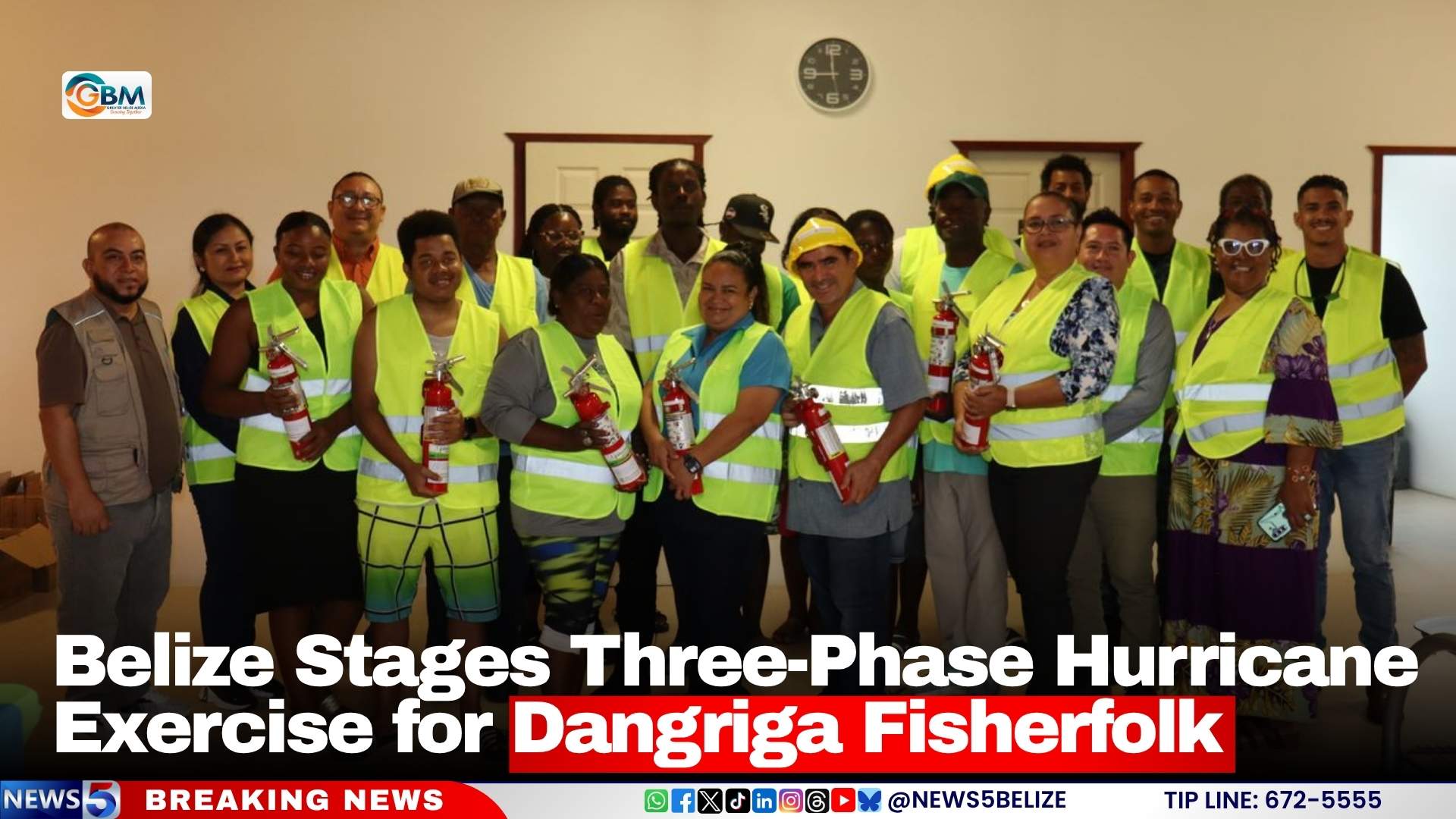
In a proactive step to strengthen climate disaster resilience among coastal fishing groups, the Government of Belize organized a comprehensive three-phase hurricane preparedness simulation exercise for fisherfolk and fishing cooperatives based in Dangriga Town. Held one month ahead of the August 5, 2026 official announcement, the full-day training and drill brought together three key stakeholders: Belize’s Ministry of Blue Economy and Marine Conservation (MBEMC), the United Nations Food and Agriculture Organization (FAO), and the country’s National Emergency Management Organization (NEMO).
The drill was designed around a hypothetical scenario where a major hurricane posed an imminent threat to southern Belize, allowing participants to test every stage of existing emergency response protocols through interactive training modules and a full-scale field simulation. Core evaluation areas covered the end-to-end handling of official early warning alerts, the ordered suspension of commercial fishing operations to avoid unnecessary risk, and the proper securing of fishing vessels, gear, and other critical industry equipment.
Beyond immediate pre-storm preparations, the simulation also assessed procedures for two often-overlooked but vital stages of disaster response: protecting the official membership and operational records held by local fishing cooperatives, and verifying pre-planned evacuation routes to ensure all community members can reach safe shelter in a timely manner. The exercise also put inter-stakeholder coordination to the test across the full timeline of a hurricane event—from pre-landfall preparations through the immediate post-storm recovery period.
Speaking on the purpose and outcomes of the drill, Beverly Wade, Chief Executive Officer of MBEMC, emphasized that continuous investment in upgrading emergency preparedness across the entire fishing sector is a critical priority for Belize. Fishing is not only a core economic driver for coastal communities, but also the primary source of livelihood for thousands of residents across the country’s southern coast. By equipping fisherfolk and cooperative leaders with the training and protocols to respond effectively to hurricane threats, Wade noted, the government and its partner organizations are working directly to protect these vulnerable livelihoods. She added that pre-event preparedness measures like this simulation also play a key role in cutting down post-disaster recovery timelines, allowing hard-hit coastal towns to restore normal economic activity far faster than would be possible without advance planning.