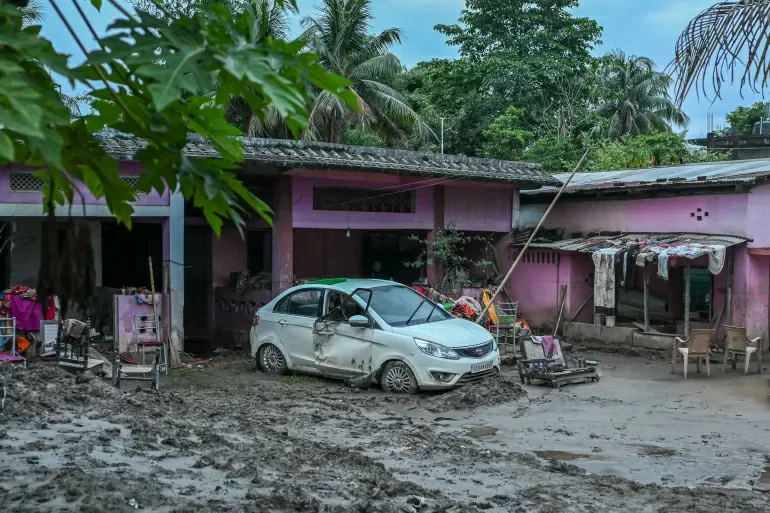
Extreme monsoon-driven flooding and landslides have claimed more than 100 lives across India since the start of July, as climate change and the El Niño weather pattern supercharge deadly weather events across South Asia and beyond. The northeastern Indian state of Assam has borne the brunt of the disaster, recording at least 87 confirmed deaths – 47 of which came from the hard-hit Sivasagar district, where receding floodwaters left entire neighborhoods and homes damaged in early August 2026. Kerala has reported 15 additional fatalities, with thousands of displaced residents now sheltering in emergency evacuation camps. At least 31 people have been killed by extreme rainfall in Indian-administered Jammu and Kashmir, and 14 more people died from lightning strikes in Jharkhand, a hazard that killed hundreds across the country just one year prior.
While the annual South Asian monsoon is a critical resource that sustains billions and supports the region’s $500 billion agricultural sector, scientists warn rising global temperatures are upending traditional precipitation patterns, turning predictable seasonal rains into increasingly erratic, deadly events. Climate change amplifies the atmosphere’s ability to hold moisture, leading to far more intense downpours when storms do form, while El Niño – a periodic warm ocean weather event in the Pacific – further disrupts global climate systems to worsen these extremes.
The extreme weather has not been confined to India. Neighboring Sri Lanka is currently facing a dual climate crisis: flash floods triggered by heavy monsoon rains have killed eight people and displaced more than 12,000, while other regions of the island nation are simultaneously grappling with severe drought that has forced authorities to deliver clean drinking water via truck to affected communities. This stark contrast of simultaneous flood and drought conditions in a single country highlights the growing volatility of weather patterns tied to global warming.
The crisis unfolding in South Asia comes as other regions of the world face their own unprecedented climate-driven extremes. In Europe, 2026 has already seen record-breaking heatwaves that pushed temperatures above 40 degrees Celsius across Spain, France, and Italy. The prolonged extreme heat has sparked destructive wildfires, drained critical water reserves, and caused widespread public health issues that disproportionately impact elderly, low-income, and other vulnerable populations.
Leading climate experts have repeatedly warned that as global average temperatures continue to rise due to fossil fuel emissions, events like the South Asian floods and European heatwaves will only grow more frequent and more severe. The 2026 extreme weather events serve as the latest reminder of the uneven and deadly impacts of climate change, with heavily populated, low-income regions in South Asia facing disproportionate risks even as they contribute the least to global greenhouse gas emissions.
Zware moesson in India eist meer dan 100 levens