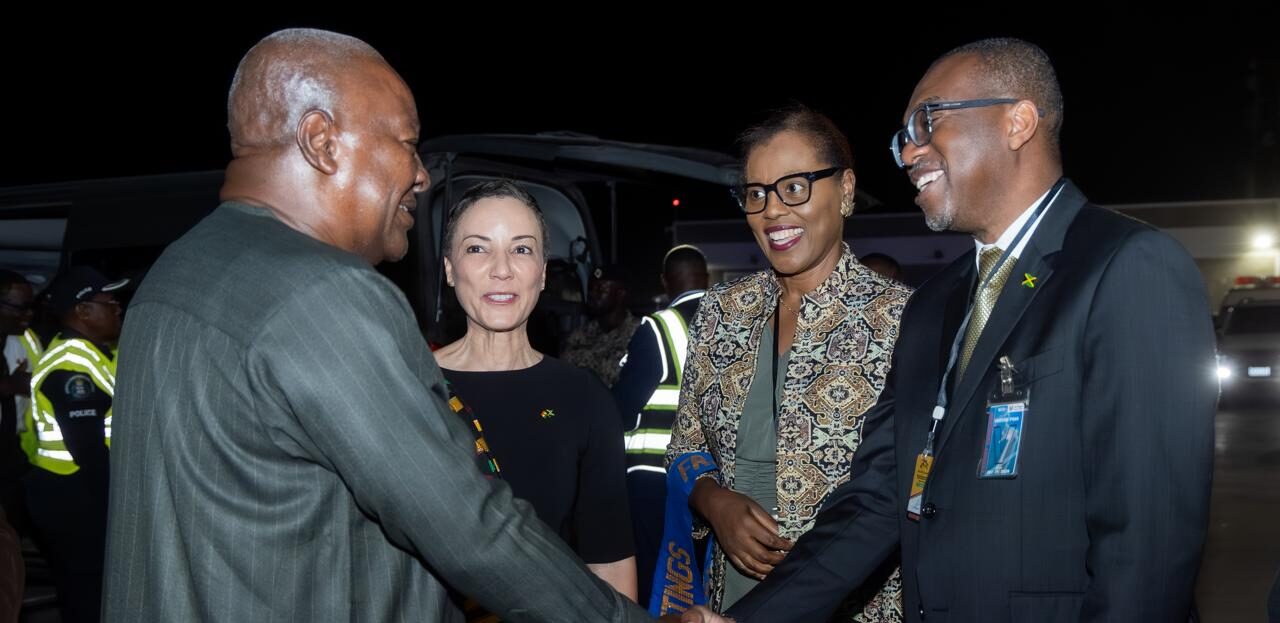
Against a backdrop of growing global momentum for reparatory justice for the transatlantic slave trade, Ghana’s President John Dramani Mahama centered the movement’s future during an official four-day state visit to Jamaica that ran from August 2 to 5, at the invitation of Jamaican Prime Minister Dr. Andrew Holness. The visit, which aligned with Jamaica’s annual Emancipation Day observances and the 64th anniversary of the country’s political independence on August 6, was framed by Ghana’s presidency as a mission to reinforce deep historical ties between the West African nation and the Caribbean island, expand cross-regional collaboration between Africa and the Caribbean, and move the international reparations campaign forward.
The centerpiece of Mahama’s program was a Special High-Level Reparation Dialogue, hosted by The University of the West Indies (UWI) in partnership with Jamaica’s Office of the Prime Minister. The discussion brought President Mahama together with UWI Vice-Chancellor Professor Sir Hilary Beckles, one of the world’s leading academic voices for reparatory justice, to connect centuries of historical trauma to modern policy demands and the growing global push for accountability. During the conversation, the two leaders explored the shifting priorities of the reparations agenda, outlined the shared responsibilities of national governments and global academic institutions, and emphasized the critical role of cross-regional partnerships in advancing global equity and redress for historical harms.
In a post-event statement shared on its official Instagram page, UWI expressed honor at hosting the high-profile conversation, noting that the dialogue united sitting heads of state and leading scholars to hold a timely, urgent exchange on historical memory, justice, and the path forward for the global reparations movement.
Beyond the landmark reparations discussion, Mahama’s agenda included a full slate of bilateral and ceremonial activities aligned with building long-term ties between the two nations. He held formal bilateral talks with Prime Minister Holness, where the pair laid out plans to expand collaborative work across key sectors including trade and foreign direct investment, education, cultural exchange, tourism, and sustainable agriculture. Both leaders reaffirmed their shared commitment to deepening institutional and people-to-people connections between the African continent and the Caribbean region.
One key proposal revived during the talks was the creation of a direct commercial airline route between Ghana and Jamaica. President Mahama emphasized that improved direct air connectivity would unlock new tourism opportunities for both nations and foster closer personal and cultural ties between African and Caribbean communities. “Our goal is to transform the Atlantic Ocean from a historical barrier that separated families and communities into a unifying bridge connecting West Africa and the Caribbean,” the Ghanaian presidency quoted Mahama as saying during a joint press briefing with Holness in Kingston.
The state visit included a full schedule of ceremonial engagements: Mahama received an official welcome at King’s House, Jamaica’s official governor-general residence, where he met with Governor-General Sir Patrick Allen; toured commercial operations at Kingston Wharves and the iconic Bob Marley Museum in Kingston; and explored the Independence Village exhibition hosted at the National Arena to mark the country’s independence anniversary. On the second full day of the visit, Mahama delivered a historic address to a Joint Sitting of Jamaica’s Parliament, laid a floral tribute at the shrine of iconic Black liberation leader Marcus Mosiah Garvey, visited the reconstructed Ghanaian Village at Seville Heritage Park, and attended an official state dinner hosted at King’s House ahead of his scheduled departure on August 5.