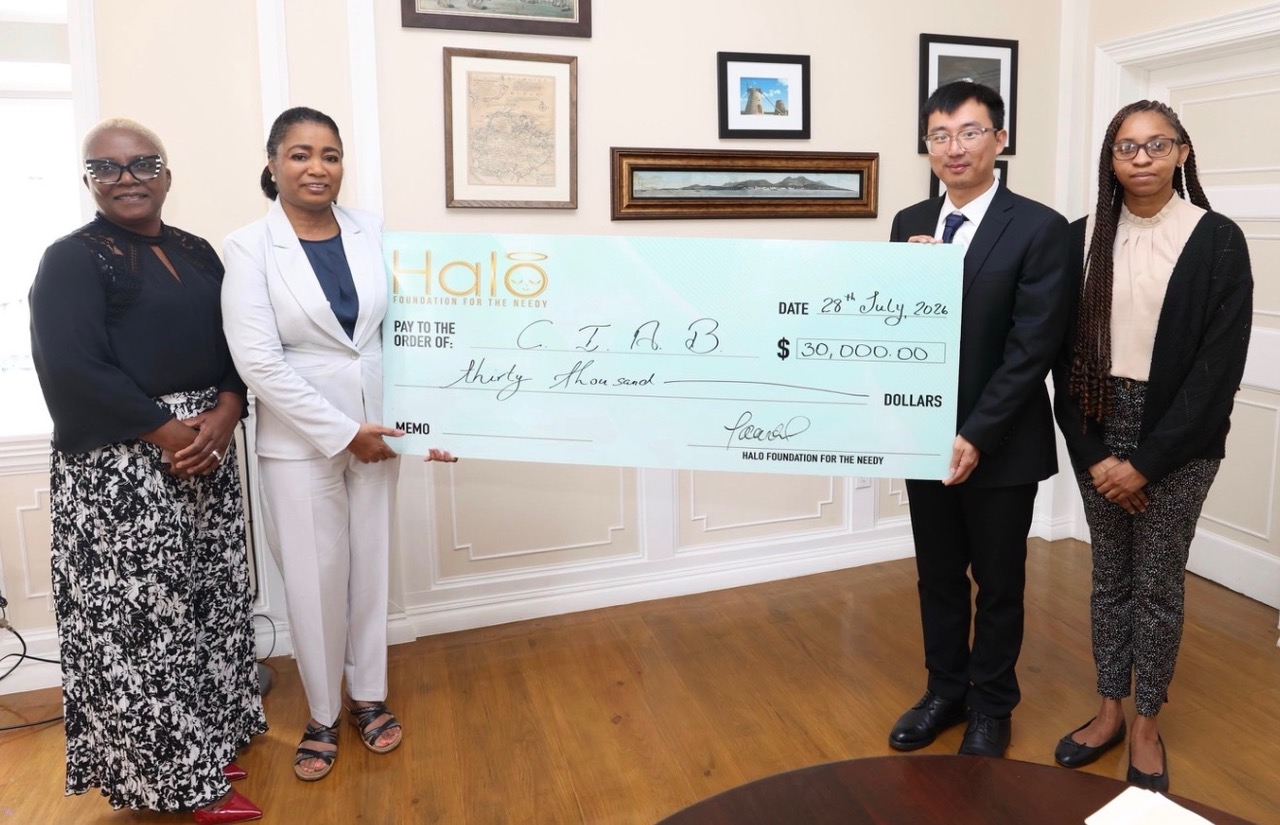
A $30,000 grant from the Halo Foundation has opened the door for a group of young learners from Antigua and Barbuda to experience authentic Chinese culture firsthand, as part of the Chinese Bridge Summer School program run by the local Confucius Institute (CIAB). The two-week cultural and educational expedition to China was built around three interconnected learning pillars: structured beginner-level Chinese language instruction, hands-on traditional performance training, and guided cultural site visits across the eastern Chinese city of Hangzhou.
At the conclusion of the language training segment, all participants sat for an internationally recognized beginner proficiency examination to formalize their learning progress. Beyond the classroom, attendees dove deep into a wide spectrum of centuries-old Chinese cultural practices, CIAB Principal Han Wen detailed. These immersive activities included learning the fundamentals of lion dance performance, traditional Chinese vocal and folk dance, mastering the art of the tea ceremony, creating hand-painted kites, crafting decorative lacquer fans, sewing fragrant herbal sachets, trying woodblock printing and stone rubbing, designing Peking opera facial masks, playing the traditional shuttlecock kicking game, and trying on flowing traditional Hanfu clothing.
To complement their hands-on cultural workshops, participants explored some of Hangzhou’s most historic and culturally significant landmarks. They cruised the iconic shores of West Lake, toured the Zhejiang Provincial Museum, explored the archaeological exhibits of the Liangzhu Museum, which showcases a 5,000-year-old ancient Chinese civilization, visited the China National Archives of Publications and Culture, and wandered the pedestrian lanes of historic Hefang Street, a hub of traditional crafts and local life.
Han Wen emphasized that the trip fundamentally shifted how participants view China. Rather than forming impressions from secondhand accounts, attendees got to observe modern Chinese society for themselves. “The participants transformed from ‘hearing about China’ to ‘seeing China,’” he said. “Through their time in Hangzhou, they witnessed a real, modern, and vibrant China with their own eyes — correcting previously vague or inaccurate perceptions and building a more objective and three-dimensional understanding of the country.”
Feedback from participants reflected the transformative impact of the trip, with many sharing enthusiastic reflections at the program’s closing ceremony. One participant wrote: “It was really nice meeting all of you and getting this opportunity—it has helped me a lot with my social skills and interacting with new people. This was an amazing journey that I do hope we can take again next year!” Another participant called the experience a transformative eye-opener, noting: “This has been a truly eye-opening and rewarding trip. We have certainly learned a great deal, and I am grateful for the opportunity to have been a part of this journey.”
Her Excellency Lady Williams, President of both the Halo Foundation and the Antigua and Barbuda China Friendship Association, echoed the educational value of first-hand international experience. Williams noted that building direct, personal understanding of global regions — including China and the broader East Asia — is a critical component of holistic education spanning culture, politics, economics, diplomacy, linguistics, and geography. “One is in a position to make more accurate and realistic assessments, rather than mere assumptions, once one has experienced international exposure,” Williams said. “Primary knowledge is a much sounder educational tool than vicarious information.”