Suriname’s men’s national football team has welcomed a new head coach, Henk Fraser, who stepped into the role earlier this week after a short stint as assistant coach under former manager Stanley Menzo. Fraser has signed a four-year contract to lead the side, putting him in a solid initial position to pursue long-term development goals for the program. His contract structure includes incremental milestones paired with regular evaluations and adjustments, allowing him to work steadily toward his core objective of building a competitive national side. While it is widely hoped that Fraser will receive consistent backing from all football stakeholders in the country to construct a strong, cohesive squad, a key open question remains: how solid are the guarantees that he will be able to call up the Surinamese-origin professional players based in Europe?
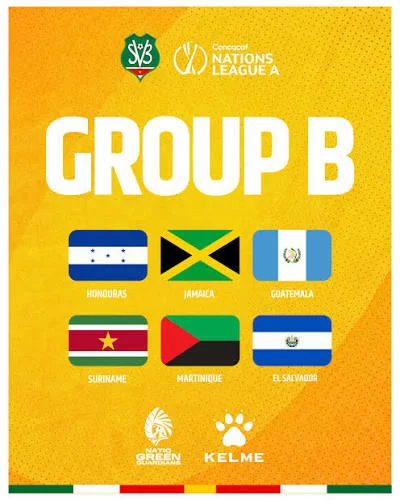
Many observers argue that relying solely on players from the domestic Suriname Major League (SML) will not be enough for Suriname to hold its own in the Concacaf Nations League. This is not a dismissal of local talent – it is widely acknowledged that Suriname has no shortage of skilled young footballers. However, industry experts and analysts agree that raw talent alone is insufficient to compete at the highest regional level. The recent Concacaf Nations League draw has underscored this reality, placing Suriname in a group with some of the region’s top football powerhouses. While Suriname debates the split between local and Europe-based players, other competing nations are moving ahead with unified national programs that outpace Suriname’s current progress.
The article points to Curaçao as a relevant example: the island nation qualified for the FIFA World Cup with a squad unified around a shared competitive goal, rather than enforcing a mandatory quota for local-based players. Critics argue that the repeated insistence on forcing a set number of local players into the national squad is embarrassing, given that the current crop of domestic players does not yet meet the standard required for top regional competition. Instead, the author argues, all stakeholders should align on a shared long-term vision: while Fraser builds the new-look senior national side now, the country should simultaneously launch a youth development project focused on training up-and-coming U-13 players, so that a new generation of homegrown talent will be ready to compete at the highest level eight years from now. In the interim, the current squad, regardless of where players are based, deserves full, unwavering support from the nation.
In the modern digital age, it takes little effort to examine the roster structures of other post-colonial national teams around the world. A quick review shows that many nations with a colonial history routinely call up players who developed in the former colonizing country. For Suriname, this pattern is natural: thousands of Surinamese people have migrated to Europe over the decades to access better training and career opportunities, and many of their children, though born abroad and holding other passports, still maintain deep cultural and family ties to their parents’ homeland. These players are part of the Surinamese football family, and they deserve the same love and support the nation gives to any of its own. The author closes with a call to embrace all eligible players, welcoming them to the squad with the same warmth one would extend to family.