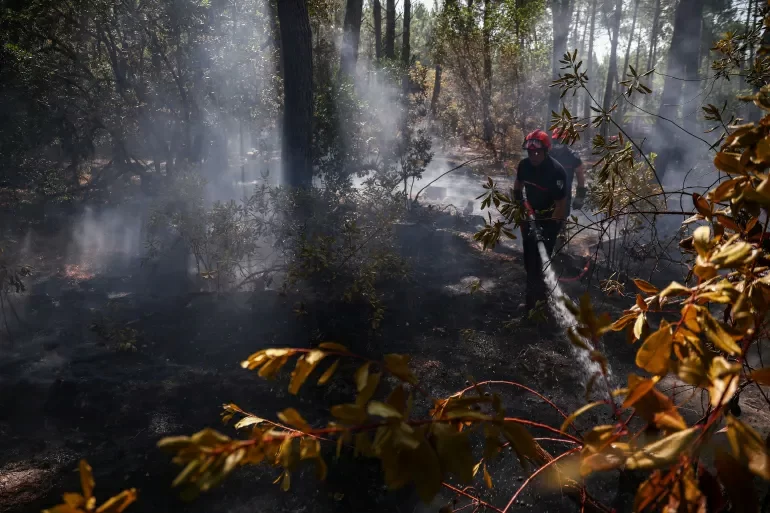
As Europe grapples with an escalating climate crisis, neighboring France and Spain are bracing for a new wave of extreme heat that threatens to rekindle and spread devastating wildfires already burning within reach of major population centers including Bordeaux and Madrid. Though fire containment efforts have slowed the spread of active blazes in recent days, national emergency authorities have issued urgent warnings that soaring temperatures will dry out vegetation further, stoke existing fires and trigger new outbreaks across drought-stricken regions.
In southwestern France, the Gironde department – a region world-renowned for its premium wine production and home to the historic port city of Bordeaux – has emerged as the hardest-hit area by the ongoing wildfire crisis. Nearly 4,000 additional people have been evacuated from popular tourist hubs surrounding Lacanau, pushing the total number of displaced residents across the region past 250,000. Visual footage published by French newspaper Le Figaro shows fine gray ash blanketing a popular Lacanau beach, a stark visual indicator of how far wildfire damage has spread into populated coastal areas. Gironde prefect Sophie Brocas has implemented a full ban on all public sporting and cultural events through August 8 to reduce wildfire risk and free up emergency response resources.
Eric Brocardi, spokesperson for the French national fire service, described the region’s precarious position in a Tuesday press briefing. “We are in an extremely vulnerable situation,” Brocardi said. “Our teams will continue to fight the flames relentlessly, even as forecasted temperature increases put additional strain on our operations.” France’s fourth heatwave of 2026 officially got underway Tuesday, with maximum temperatures projected to climb as high as 40 degrees Celsius across affected regions.
Across the border in Spain, where the emergency is already far more advanced, more than 116,000 people have been forced to evacuate their homes since wildfires first broke out amid earlier extreme heat. While some displaced residents have been cleared to return to their properties in recent days as containment improves, the crisis remains far from over. On Tuesday, residents of nine out of 11 evacuated villages in central Spain’s Toledo province were permitted to return to their homes, but the risk of reactivation remains high.
Spanish Interior Minister Fernando Grande-Marlaska noted that the public can be “slightly more reassured” after tangible progress in battling blazes concentrated in central parts of the country. Firefighting teams are still active suppressing fires in the Ávila and Toledo provinces, where roughly 800 square kilometers of land has already been reduced to ash. One evacuee from eastern Spain described the terrifying experience of fleeing the fast-moving blazes to Reuters, calling the situation “total chaos.” “It looked like hell had opened up beneath the ground, and all you could see was roaring red fire,” the evacuee said.
Spain is bracing for even higher extreme temperatures set to arrive on Wednesday, adding new urgency to ongoing containment efforts. The string of extreme heat events and devastating wildfires has amplified growing global concern about accelerating climate change, with top Spanish leaders framing the crisis as a clear symptom of ongoing planetary warming. Spanish Prime Minister Pedro Sánchez called the wildfires “the most painful expression of a climate emergency” this week. While Sánchez noted that there is “light at the end of the tunnel” in the battle to contain the active blazes, he stressed that the incoming heatwave will present a major new test for emergency response teams across the country.