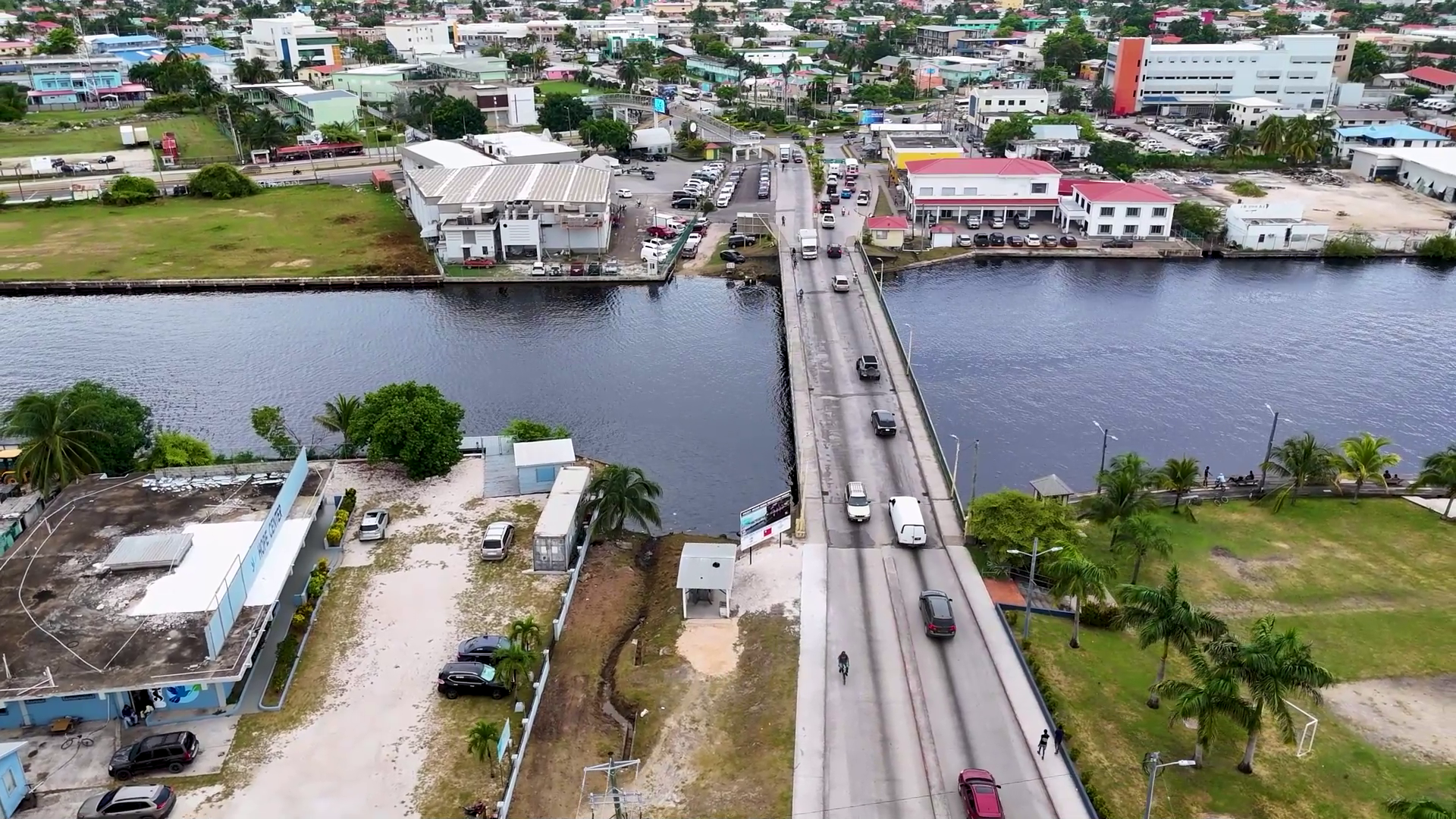
Starting in roughly one month, Belize City’s transportation network will undergo a dramatic, years-long transformation as contractors prepare to demolish and replace two of the city’s most iconic river crossings: the historic Swing Bridge and the busy Belcan Bridge. The simultaneous two-and-a-half-year construction project will force commuters, commercial drivers, and local residents to completely rearrange their daily travel routines, with officials warning of extended congestion and route changes that will test the patience of anyone navigating the old capital.
While overall construction is running several weeks behind the original schedule, work on the first of two new temporary one-way crossings is progressing steadily, according to Evondale Moody, Chief Engineer at Belize’s Ministry of Infrastructure Development and Housing. The first temporary span, built to accommodate the Belcan Bridge replacement, will be positioned behind the Save-U supermarket, stretching from Evergreen Street behind the Belize Water Service facility to connect directly to the Phillip Goldson Highway, Moody confirmed. This crossing will exclusively handle northbound traffic from the city’s south side.
For drivers needing to travel from the north side to the south side during construction, two alternative routes will be available: the already heavily congested BelChina Bridge, or a second temporary crossing being built near Bottom Dollar, the site of one of Belize’s deadliest transportation disasters. This second temporary span will run from Hyde’s Lane across Haulova Creek, landing on Regent Street West at the former location of Mike’s Club.
The original timeline for the project has already been adjusted: taxi operators who were supposed to relocate their stands by July 26 will not need to move until the temporary bridges officially open to traffic, a delay that gives local stakeholders extra time to prepare for the new traffic pattern.
The Bottom Dollar area carries heavy historical significance for Belize: the last temporary crossing installed in this location was a pontoon bridge erected after Hurricane Hattie destroyed existing infrastructure in 1961. That bridge infamously capsized in June 1962, killing multiple people. Moody emphasized that the new temporary structure is engineered for long-term, reliable use over the multi-year construction period, unlike the emergency 1961 pontoon span.
In total, officials estimate that Belize City residents and visitors will face travel disruptions for approximately three years. In a statement shared through local outlet News Five, Moody urged commuters, pedestrians, and local businesses to practice patience as the infrastructure upgrades are carried out, framing the short-term inconveniences as a necessary step toward long-term progress for the city. The report was filed by News Five correspondent Shane Williams from Belize City.