When severe thunderstorms swept across New Providence, Bahamas, on Sunday, an unexpected incident unfolded at the country’s flagship Princess Margaret Hospital: floodwater breached the freshly completed Accident and Emergency (A&E) Department, just weeks after officials declared its long-delayed renovation finished and fully operational. While hospital authorities and the Bahamas Nurses Union quickly moved to contain the issue and restore services, the flooding has ignited a sharp political debate over the government’s management of public health infrastructure.
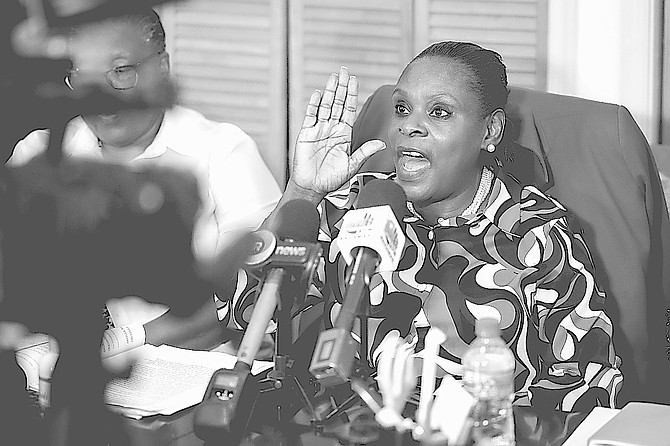
Muriel Lightbourne, president of the Bahamas Nurses Union, confirmed that the incident caused no major disruption to critical care services. According to reports from frontline staff, the water did not penetrate through flaws in the newly renovated building structure, as some critics later claimed. Instead, an extraordinary volume of rainfall overwhelmed local drainage around the facility, causing surface flooding that seeped into the department through the open ambulance bay entrance.
Immediately after flooding began, clinical teams moved patients and staff out of the affected zones, while cleanup crews were deployed to pump out standing water. Lightbourne noted that when she reached out to hospital leadership shortly after learning of the incident, staff were already midway through clearing the affected areas. Though nurses raised understandable concerns about the risk of standing water interacting with nearby electrical medical equipment, Lightbourne said the situation was handled swiftly and professionally, with no formal complaints submitted by union members.
Visual evidence of the flooding, shared widely across social media Sunday, showed sections of the A&E with shallow standing water, with staff and visitors traversing affected zones in disposable protective shoe covers. Hospital officials echoed Lightbourne’s account, emphasizing that the flooding did not stem from roof or ceiling defects, and clarified that Princess Margaret Hospital sits in a low-lying area that experienced widespread inundation during the extreme storm. Neighboring commercial buildings and private properties also flooded amid the record rainfall, they added.
To prevent disruption to care, hospital administration immediately relocated all critical services from the affected area, placed temporary barriers at the impacted ambulance bay entrance, and diverted incoming ambulance traffic to an alternate access point while safety assessments were conducted. Within hours, all core A&E services had resumed normal operation. Hospital officials added they will collaborate with government and construction partners to identify additional mitigation measures that can reduce the risk of future flooding during severe weather events, to better protect patients, staff and visitors.
The timing of the incident, coming just weeks after Health and Wellness Minister Dr Michael Darville announced the completion of the years-long, repeatedly delayed A&E redevelopment project, created an opening for political opposition. Free National Movement chairman Dr Duane Sands launched a scathing attack on the governing Progressive Liberal Party administration, framing the flooding as symptomatic of widespread systemic failures in the country’s public health sector.
Sands argued that the incident directly contradicts the government’s public claims of progress on upgrading public health infrastructure. He questioned the hospital’s explanation that the site is located in a natural flood zone, asking sarcastically whether the hospital’s location had changed after the multi-million dollar renovation. Sands linked the A&E flooding to a pattern of what he called ongoing infrastructure failures under the current administration, pointing to recurring nationwide power outages, persistent operating room disruptions at both Princess Margaret Hospital and Grand Bahama’s Rand Memorial Hospital, and widespread shortages of essential prescription medications. He accused the government of prioritizing elite perks over meeting the basic public health needs of ordinary Bahamian citizens.