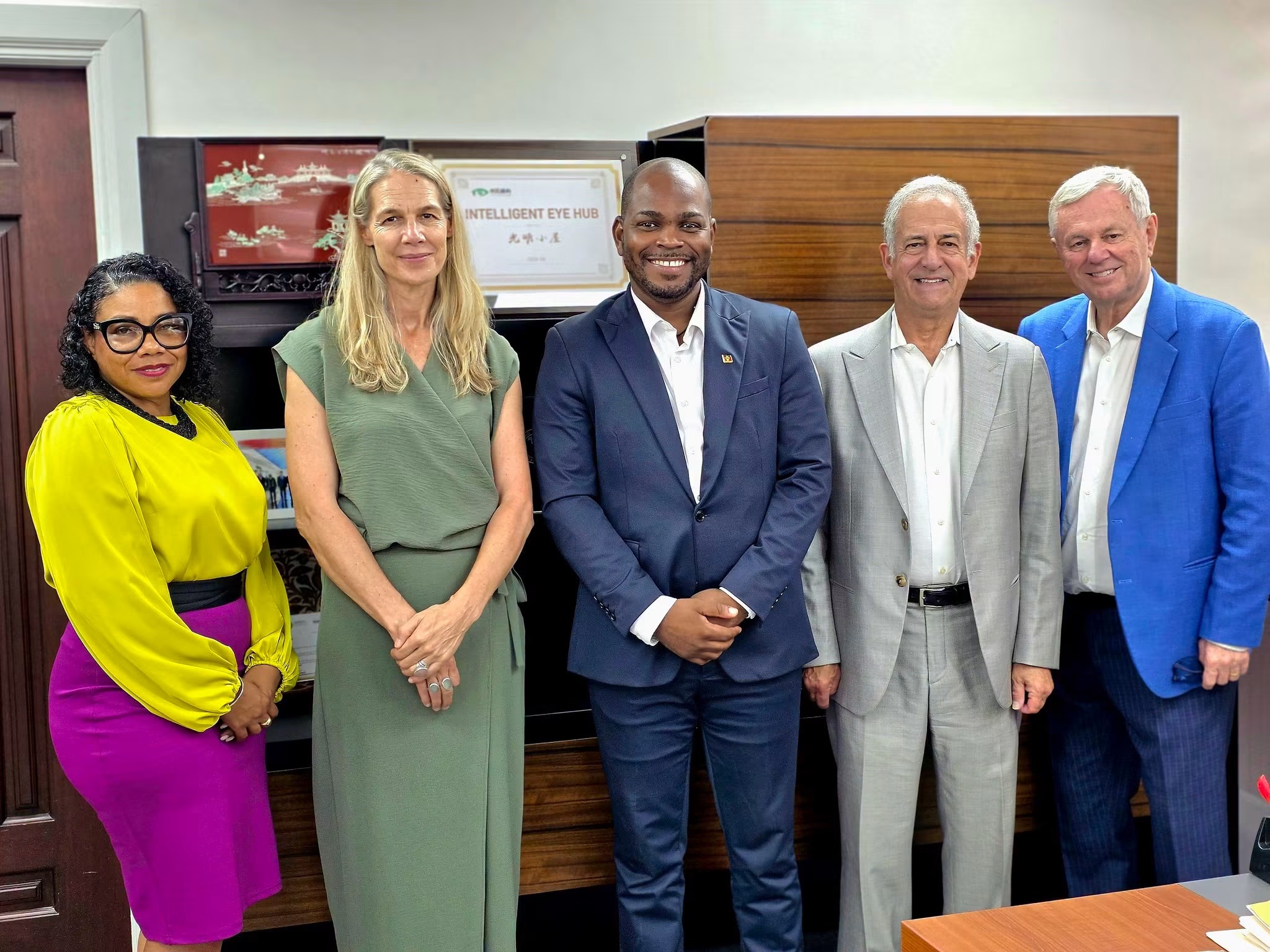
As global efforts to safeguard planetary biodiversity gain increasing momentum, the twin-island nation of Antigua and Barbuda has stood firm in its pledge to deliver on the world’s landmark 30×30 conservation goal — an ambitious initiative designed to protect and sustainably manage at least 30 percent of the planet’s terrestrial and marine ecosystems by the end of the decade.
In a high-level meeting this week, the country’s top environmental leadership welcomed a visiting delegation from the Campaign for Nature, a global coalition dedicated to advancing coordinated conservation action around the world. Representing Antigua and Barbuda were the Honourable Michael Joseph, Minister with oversight for the environment portfolio, and Ruleta Camacho Thomas, Acting Director of the national Department of Environment. The Campaign for Nature delegation brought together a roster of experienced global leaders: Michael David Rann AC CNZM, former Premier and Climate Change Minister of South Australia and a former Australian senior diplomat; Senator Russ Feingold, one-time United States Senator, former U.S. Special Envoy, and current Chair of the Campaign for Nature Global Steering Committee; and Alice Jay, the coalition’s International Director.
During the talks, the Campaign for Nature delegation publicly praised Antigua and Barbuda’s longstanding role as a global climate advocate and a leading voice for Small Island Developing States (SIDS), a group of nations that face disproportionate climate and biodiversity risks despite contributing minimally to global emissions. The coalition also emphasized its expectation that the Caribbean nation will continue to steer global progress on biodiversity conservation in the lead-up to 2030.
Minister Joseph used the meeting to once again cement Antigua and Barbuda’s formal commitment to the 30×30 target, while drawing attention to the mounting threats eroding the country’s unique ecosystems and native wildlife. Climate change, he noted, has emerged as one of the most severe stressors, intensifying coastal erosion, ocean acidification, and habitat loss across the nation’s land and seascapes. To effectively meet conservation goals, he argued, long-term, sustained, and programmatic financial investment is non-negotiable: such funding would strengthen the management of existing protected areas and help the country build greater ecological resilience in the face of ongoing climate disruption.
Beyond financing, Joseph stressed that successful conservation cannot separate human communities from nature management. He emphasized that healthy ecosystems are not just environmental priorities — they are foundational to local livelihoods, community well-being, and long-term resilient economic prosperity for the people of Antigua and Barbuda. Any effective 30×30 strategy, he argued, must center this interconnectedness and recognize the intrinsic and practical value of intact ecosystems for resident populations.
By the end of the discussion, both sides reaffirmed shared alignment on a people-centered approach to the 30×30 target. For Antigua and Barbuda, the outcome of the meeting reinforces a national vision that balances robust nature protection with improved community resilience and equitable, long-lasting benefits for all citizens.