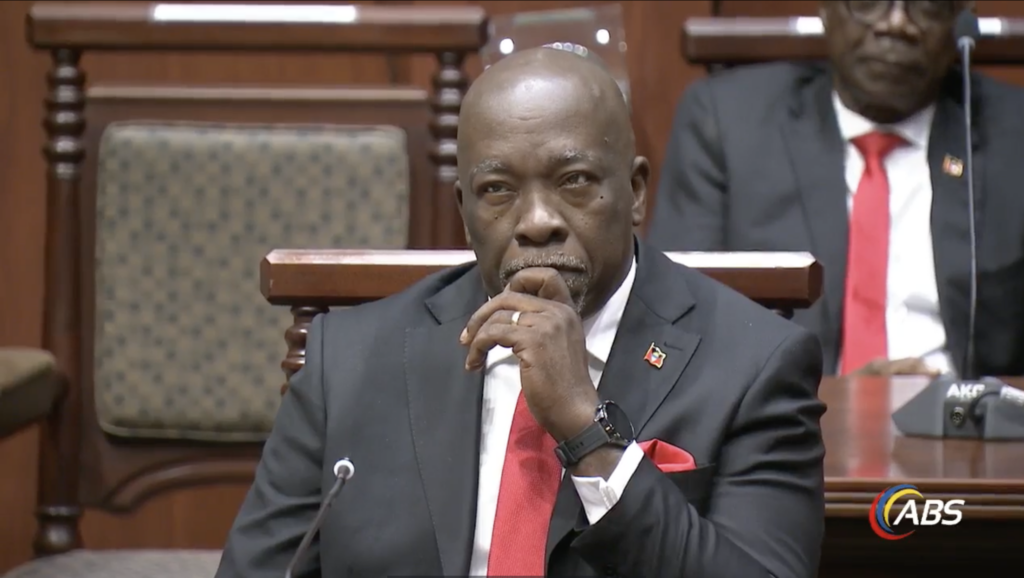
Against a backdrop of growing global cyber risk, the government of Antigua and Barbuda is moving forward with plans to establish a dedicated national Computer Incident Response Team (CIRT) – a unified defense framework designed to protect the country’s most critical digital infrastructure from coordinated cyberattacks. The initiative was formally outlined by Information and Communication Technologies Minister Melford Nicholas during the National Cybersecurity and Fraud Prevention Forum, where officials emphasized that proactive preparation has become a non-negotiable priority for the small island nation.
Currently, Antigua and Barbuda operates a smaller in-house government cybersecurity unit that conducts vulnerability testing on public sector systems, detects security gaps, and leads service recovery after digital incidents. The proposed national CIRT will expand this existing capacity to create a coordinated structure that brings all key critical institutions – from financial services to public utilities – under a unified protective umbrella. Nicholas explained that the cross-sector scope is intentional: a single cyber intrusion at any level can quickly cascade across multiple industries, impacting residents and businesses far beyond the initial target.
A core focus of the new strategy is protecting the country’s essential utility infrastructure, which is increasingly reliant on connected digital systems. Antigua and Barbuda’s national electricity grid already runs on a centralised Supervisory Control and Data Acquisition (SCADA) system, and a similar digital management framework is scheduled to be rolled out for the country’s water distribution network before the end of the year. Nicholas warned that without robust defensive measures, this critical infrastructure could be left exposed to malicious cyber activity. While the Caribbean region has not yet recorded a major successful cyberattack on utility infrastructure, Nicholas stressed that waiting for an incident to occur would be a catastrophic mistake. “There’s always day one when something happens,” he noted. “We have to be prepared.”
Beyond physical infrastructure protection, officials framed the national cybersecurity push as a foundational pillar of the country’s long-term economic development. Nicholas pointed out that international investors routinely evaluate jurisdictions based on global cybersecurity indexes, and nations with weak digital protections are often sidelined as too high-risk for business operations. “Cybersecurity is, in fact, national security,” he emphasized, adding that unaddressed vulnerabilities could deter foreign investment and undermine Antigua and Barbuda’s position as a competitive digital and business hub.
Gordina Hector-Morrell, director of cybersecurity at the Ministry of ICT, added that technical capacity-building is being paired with updates to the country’s legal and regulatory framework to combat transnational cybercrime. The Antigua and Barbuda government is currently evaluating membership in three key international cyber agreements: the Budapest Convention, the United Nations Convention Against Cybercrime, and the United Nations Global Mechanism on the use of information and communication technologies in cyberspace. Because cybercrime is inherently transnational – with perpetrators often operating from outside the country’s borders – these international partnerships would enable local law enforcement to access cross-border assistance, trace illicit activity, and recover stolen funds more effectively. Hector-Morrell noted that existing relationships with CIRT units across the Caribbean, Latin America, Europe and North America already provide a strong foundation for this international collaboration.
Looking ahead, the national CIRT is designed to be inclusive, with plans to eventually incorporate representatives from law enforcement agencies, commercial banks, telecommunications providers, local universities, and nongovernmental organisations to ensure coordinated response across all sectors. Hector-Morrell stressed that technical and legal reforms must be paired with widespread public education to build a resilient national cybersecurity culture. “Knowledge is power,” she said. “If persons are not aware, then they can’t act accordingly. Cybersecurity is everybody’s responsibility. All of us have a part to play.”
According to Nicholas, work on the national CIRT will accelerate once the government concludes its current preparations for the upcoming Commonwealth Heads of Government Meeting, putting the initiative on track to move from planning to implementation in the near term.