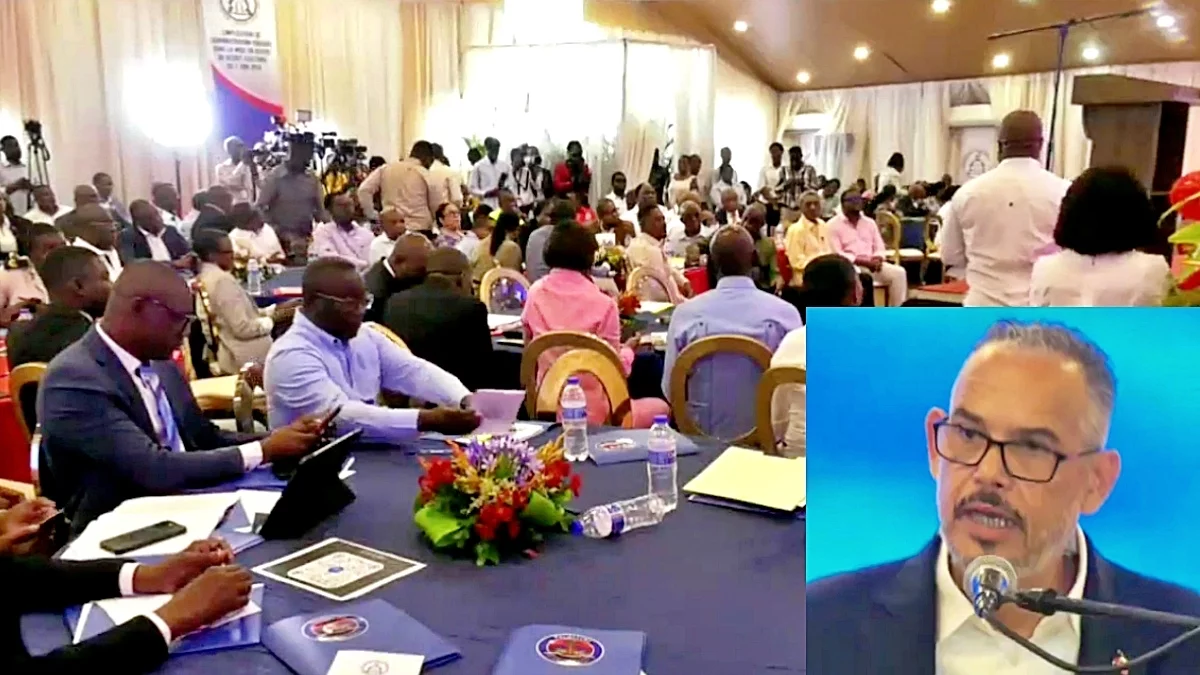
On July 25, 2026, Haitian Prime Minister Alix Didier Fils-Aimé convened a high-stakes strategic gathering at the National Palace, centered on advancing the implementation of the June 2 electoral decree that lays the groundwork for the country’s upcoming general elections. Held under the theme “The Involvement of the Public Administration in the Application of the Electoral Decree”, the meeting drew a broad cross-section of key institutional and international actors, including cabinet members, senior public administration leaders, Provisional Electoral Council (CEP) President Jacques Desrosiers, national security force representatives, and global partners backing Haiti’s democratic transition. Among the attendees was Carlos Ruiz Massieu, Special Representative of the United Nations Secretary-General for Haiti, who used the occasion to reaffirm the UN’s ongoing backing for Haitian authorities as they work to stage the historic vote.
This coordinated gathering marks a clear demonstration of the Haitian government’s commitment to mobilizing the full weight of the country’s state apparatus, operating in full alignment with constitutional and institutional rules, to support the CEP in carrying out its mandate. The overarching goal is to establish the conditions required for a vote that meets global democratic standards: free, credible, and transparent.
In his remarks to attendees, CEP President Jacques Desrosiers praised the prime minister’s efforts to rally the country’s key national forces around this urgent priority. He stressed that a successful electoral process can only be achieved through shared responsibility, requiring collaboration between the CEP, national republican institutions, local stakeholders, and international supporting partners.
Much of the discussion at the session focused on refining operational mechanisms to put the electoral decree into practice. The decree is widely viewed as a critical framework that will allow Haiti to take a decisive step toward restoring long-term democratic governance and concluding the country’s ongoing transition period.
In his closing address, Prime Minister Fils-Aimé doubled down on his administration’s pledge to back the CEP throughout the election organization process. He noted that while the constitution assigns the CEP formal responsibility for staging the vote, delivering successful elections is fundamentally a national undertaking that demands buy-in from every state institution and core sector of Haitian society.
“Organizing elections, although entrusted to the CEP, represents a mission of national importance that demands the firm, coordinated, and responsible commitment of the entire state,” Fils-Aimé said. “Democracy is not built in isolation; it is the collective work of a people and its institutions, united around a common ambition: to rebuild national trust and guarantee the sovereign expression of the Haitian people.”
The prime minister called on all involved stakeholders to approach this historic moment with a sense of responsibility, dedication, and patriotism, working together to create the conditions for inclusive, transparent, and credible elections that can launch a new institutional era for Haiti.
By the conclusion of the working session, Fils-Aimé reiterated that his government will prioritize strengthening the security, institutional, and logistical infrastructure needed for the electoral process to succeed. He also confirmed that all required resources will be allocated to provide the CEP with the support it needs to fulfill its mandate in the best interests of the Haitian nation.