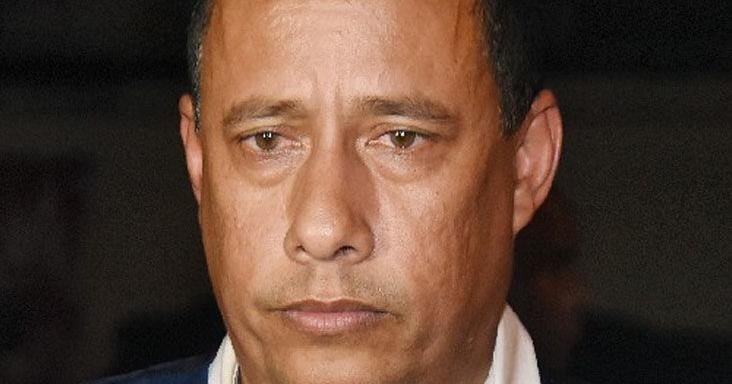
A major political firestorm has erupted in the country’s national security circles after former police commissioner Gary Griffith publicly called for the immediate dismissal of Homeland Security Minister Roger Alexander. Griffith’s demand came just moments after Alexander announced he was revoking controversial preventive detention orders (PDOs) that had been in place for months against local businessman Dominic Hadeed and his wife Genevieve.
In his official statement following Alexander’s announcement, Griffith launched a scathing attack on the government’s handling of the entire case, labeling it as “total incompetence at the highest level” of government. He issued a stark warning that ordinary taxpayers could end up being forced to cover a massive multimillion-dollar legal settlement if the couple pursues legal action over their wrongful detention. “Somebody must pay for this—and not the taxpayers,” Griffith emphasized, pushing directly for the minister to step down to take accountability.
Alexander defended his decision to revoke the PDOs, outlining that he made the call after a full re-evaluation of all circumstances surrounding the couple’s detention. Key factors that shaped his ruling included an official recommendation from the State of Emergency Review Tribunal, which concluded that keeping the Hadeeds in detention was “not necessary or expedient in the public interest,” as well as new, undisclosed medical information related to Dominic Hadeed’s health. The minister also stressed that the active criminal investigation into the alleged plot to assassinate Prime Minister Kamla Persad-Bissessar and other senior government leaders remains fully ongoing, with no changes to the probe’s status.
Despite this explanation, Griffith argued that the sequence of events—first detaining the couple for months without charges, then releasing them—lays bare deep, systemic flaws in how the government is exercising emergency powers granted during the state of emergency. He pointed out that Alexander alone, acting on his sole authority and citing what was claimed to be “credible intelligence,” ordered the couple’s months-long incarceration without any formal criminal charges being filed.
“This is tantamount to what takes place in a police state or a dictatorial country,” Griffith said, adding that if the initial intelligence used to justify the detention had actually been as solid as the government claimed, law enforcement and investigators would have been able to convert that information into court-admissible evidence to support formal criminal charges. Instead, Griffith said, the intelligence failed so completely that authorities were never able to meet that basic legal threshold.
The former police commissioner also publicly questioned Alexander’s professional qualifications to hold the senior national security post, arguing that the minister lacks the relevant, on-the-ground experience needed to properly oversee the country’s entire national security apparatus. He reiterated his warning that the legal consequences of the botched detention will likely carry a huge price tag for public coffers, saying “This incompetence is now likely to cost taxpayers tens of millions of dollars.”
Griffith also pushed back against Alexander’s previous claim that he only signed off on the detention orders based on materials put before him by other officials. “He is not a rubber stamp,” Griffith said, noting that the emergency powers legislation explicitly places sole authority for approving PDOs with the minister—no other official, including the Commissioner of Police or Chief Justice, holds that power. He warned that the broad discretionary authority granted to the minister under the Emergency Powers Regulations, which allows for depriving citizens of their liberty based solely on intelligence assessments, carries a high risk of abuse, noting that what counts as “credible intelligence” is ultimately a subjective call dependent on the minister’s personal judgment.
Griffith concluded by saying that Alexander’s mishandling of the high-profile case has already caused significant embarrassment to both the sitting government and the country as a whole. He added that this embarrassment could be prolonged as the case moves through domestic courts and potentially even reaches the Judicial Committee of the Privy Council, the country’s highest court of appeal.