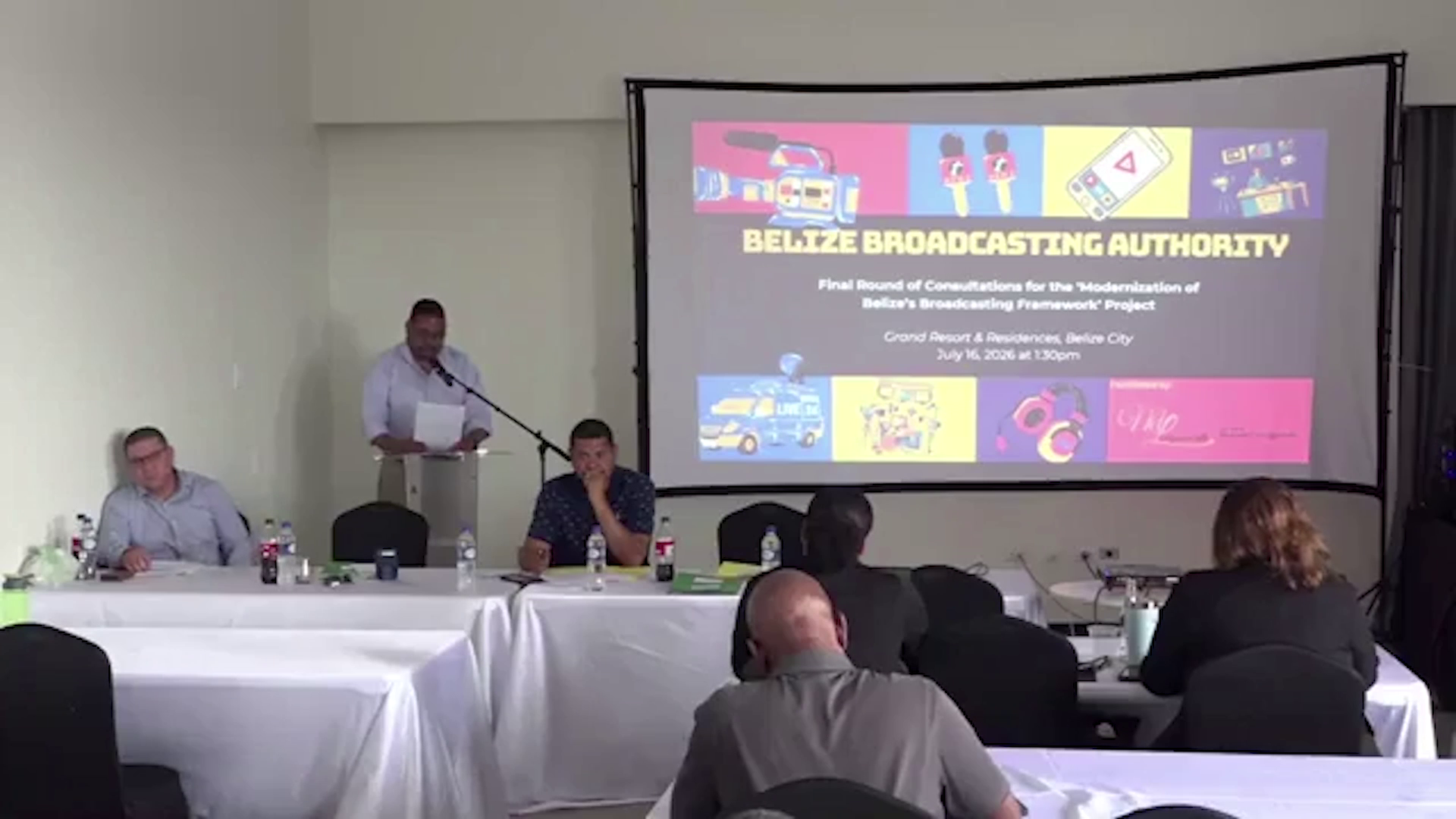
As of July 24, 2026, a controversial draft Broadcasting Bill in Belize that seeks to extend the country’s existing broadcasting regulatory framework to select online media services is facing mounting pushback from digital creators, business owners, and legal stakeholders, who warn that vague language in the legislation could erode freedom of expression and create crippling barriers for small online enterprises.
The Belize Broadcasting Authority (BBA) has framed the bill as a much-needed update to outdated, decades-old broadcasting regulations, emphasizing that the new rules will only apply to entities that operate as formal broadcasters, not average users posting content on major social platforms including Facebook, TikTok and YouTube. But critics argue the draft’s overly broad wording opens the door to arbitrary enforcement and abuse of power, even targeting regular internet users who never intended to operate as full broadcasters.
Prominent Belizean attorney Orson “OJ” Elrington, who is currently representing social media user Sharon Mae Peters in a high-profile defamation case stemming from comments Peters made during a livestream, is one of the most vocal opponents of the current draft. Elrington pointed out that while BBA officials claim ordinary users will not be subject to the law, the text of the legislation is far-reaching enough to include almost any online content creator. The bill grants the BBA broad discretionary power to determine which accounts and services fall under its scope, a structure that Elrington says creates obvious opportunities for targeted enforcement against voices the government or regulators dislike. “Once you have a piece of legislation that has this type of wide discretion over who falls under it and who does not, it opens itself up to abuse and wrongdoing,” Elrington explained. “If they don’t like what you’re saying, nothing stops them from turning around and saying the law applies to you after all.”
Under the current draft, Elrington notes, even small businesses that use standard livestreaming tools to connect with customers would be subject to the law’s licensing requirements. Cristian Silva, founder of Belizean tech firm Silvatech, has joined the growing chorus of critics, stressing that opponents do not oppose all online regulation – they just object to the bill’s poorly structured approach. “Silvatech is not against regulation. Belize should protect copyright, children, public safety, and professional journalism off the bat,” Silva said. “The concern with the draft is that it applies a traditional broadcast permissioning model to ordinary online activity before it defines clear thresholds for who needs a license.”
Silva explained that the bill’s current timeline for licensing approval could derail time-sensitive digital marketing and community content for small businesses across key sectors of Belize’s economy, particularly tourism. For example, if a coastal hotel in San Pedro wants to host a last-minute sponsored livestream to promote an upcoming weekend festival, the draft requires the organizer to wait up to four weeks to receive regulatory approval. That delay would mean losing the marketing opportunity, cutting off potential visitor bookings, wasting pre-produced content, and losing out on tax revenue and local advertising spending that would have supported the local economy. “Essentially, what’s lost there is that content, potential visitors, the production work, GST, and the local ad spend that would’ve been infused into that local economy,” Silva noted.
Elrington added that existing Belizean legislation already addresses harm caused by harmful online content, including the Defamation Act and the Cyber Bullying Act. The new bill’s provisions, which include fines as high as $50,000 BZD, seizure of digital and broadcast equipment, and even authority to block internet access, are unnecessary and disproportionately restrictive, he argued, calling the overly broad regulatory regime inconsistent with democratic principles.
Not all stakeholders oppose the bill, however. Attorney Tiffany Cadle, who is currently suing Peters and two other social media users for defamation over livestream comments, has voiced support for the legislation, arguing it would help hold users with large online platforms accountable for the content they publish. Still, critics are unified in calling for far broader public and stakeholder consultations before the bill moves forward to finalization.
The BBA is currently accepting public feedback on the draft Broadcasting Bill and associated regulations, with written comments open through August 24, 2026. The BBA has not yet issued a formal response to the specific concerns raised by Elrington, Silva and other opponents. This report was compiled from original on-the-ground reporting by Britney Gordon for News Five.