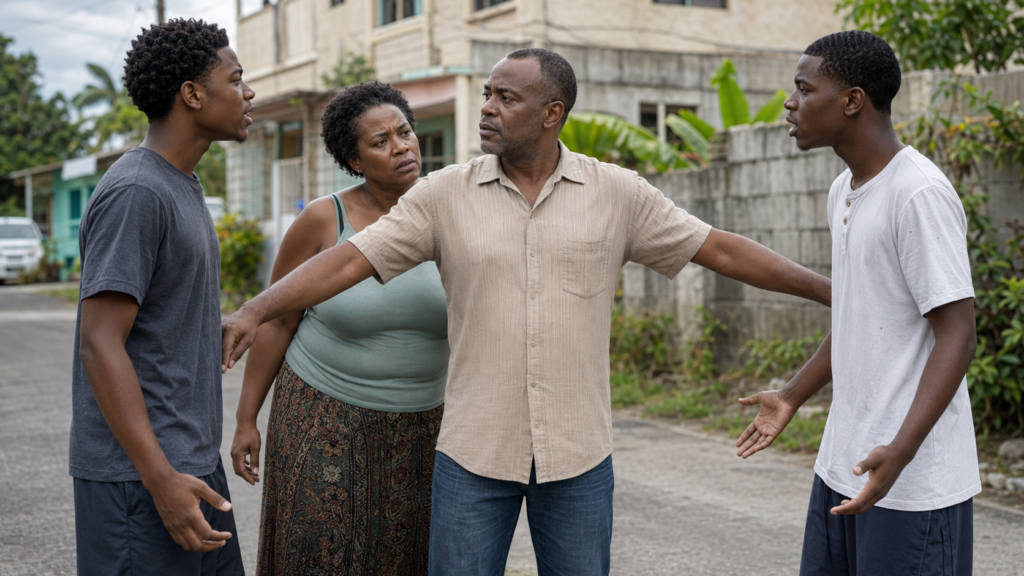
Against a rising tide of shootings and violent incidents involving teenagers and young adults, the Cabinet of Antigua and Barbuda has launched targeted discussions to identify evidence-based solutions to the growing public safety crisis, placing heightened focus on expanded parental engagement and systematic conflict-resolution education.
During a Thursday post-Cabinet press briefing, Director General of Communications Maurice Merchant laid out key takeaways from the lengthy deliberations held by the Cabinet on Wednesday. Merchant noted that the gathering was framed by growing public alarm over the recent string of youth-involved violence, which has pushed the issue to the top of the government’s policy agenda.
“Cabinet recognizes that this is a worrying trend,” Merchant told reporters, adding that ministers’ analysis of the root causes of youth violence found a critical gap in the conflict-resolution skills many young people possess. Unlike generations that learned to negotiate and communicate through disagreements, today’s young people often lack exposure to peaceful problem-solving strategies. When disputes arise between peers, many do not engage in constructive dialogue or rational negotiation to reach a mutually acceptable resolution. Instead, violence has become the most familiar go-to response for a large share of young people navigating conflict, Merchant explained.
The discussion opened with a meditation led by Pastor Baltimore, who opened the full Cabinet meeting by raising urgent concerns about rising youth violence, widespread vandalism, and a broader erosion of core moral values among young people across the nation.
Following this opening, Cabinet identified stronger parental involvement as a non-negotiable cornerstone of any effective intervention strategy. Merchant framed the core question guiding this line of thinking: “What role should parents play in ensuring that certain morals and certain attitudes are developed within our young people towards conflict resolution?” Under the framework ministers explored, consistent reinforcement of peaceful conflict-resolution skills must happen across every part of a young person’s life: starting in the home, continuing through school environments, and being reinforced by community institutions and programs. Only through this holistic approach can young people internalize healthy strategies to work through disagreements without resorting to harm, Merchant said.
In addition to addressing the social roots of youth violence, Cabinet also advanced discussions on a complementary security measure: expanding the network of public surveillance cameras across strategic high-traffic locations throughout Antigua and Barbuda. The expanded camera infrastructure is designed to support local law enforcement in both preventing criminal activity and solving cases when violence does occur.
At the time of the briefing, Merchant did not announce any specific new parental support programs to back up the call for greater engagement, nor did he provide a clear timeline for when new youth violence intervention measures would be finalized and rolled out to the public.