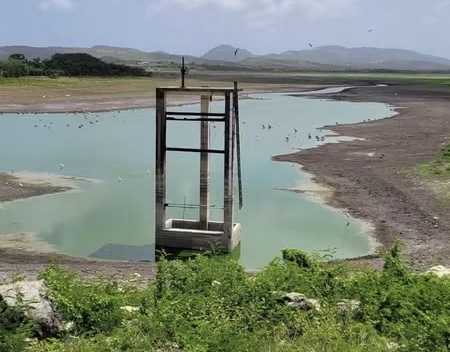
A devastating prolonged drought has pushed Antigua’s critical water infrastructure to the breaking point, forcing the Antigua Public Utilities Authority (APUA) to implement emergency adjustments to its national water distribution network, officials confirmed this week. At a post-Cabinet media briefing Thursday, Director General of Communications Maurice Merchant shared that while APUA’s network of reverse-osmosis desalination plants, the country’s primary source of treated drinking water during dry conditions, remain online, they are currently operating at maximum capacity to meet ongoing public demand. The relentless strain of the extended dry period has taken a heavy toll on key equipment: multiple facilities now require ongoing frequent maintenance and regular replacement of the specialized membrane modules that power the reverse-osmosis purification process, adding further operational challenges for the authority. Recognizing the severe disruption that inconsistent water access creates for residential households across the island, APUA has moved to revise its official water distribution schedule with a core goal of cutting the duration of unplanned supply outages in the hardest-hit communities. “Water is an absolute necessity, and that reality becomes even clearer when taps stop running,” Merchant noted, acknowledging the hardship placed on communities. Despite the targeted adjustments to distribution, Merchant cautioned that temporary supply interruptions will remain unavoidable as the authority carefully manages its limited available water reserves through the drought event. He urged the Antiguan public to extend patience and understanding to utility teams as they work to mitigate the crisis. Merchant emphasized that while Antigua and Barbuda has long been classified as a drought-prone nation, current dry conditions rank among the most severe that national meteorological experts have recorded in decades. The drought-related water crisis is not isolated to Antigua, he added: several other Caribbean nations and regions across the globe are grappling with similar drought-driven water scarcity challenges, underscoring the growing scope of the climate-linked event. APUA’s emergency revisions represent a proactive effort to balance limited supply with public needs while long-term adaptive measures are developed to address increasingly frequent severe drought events linked to shifting global climate patterns.
APUA Adjusts Water Distribution Schedule as Drought Strains Plants