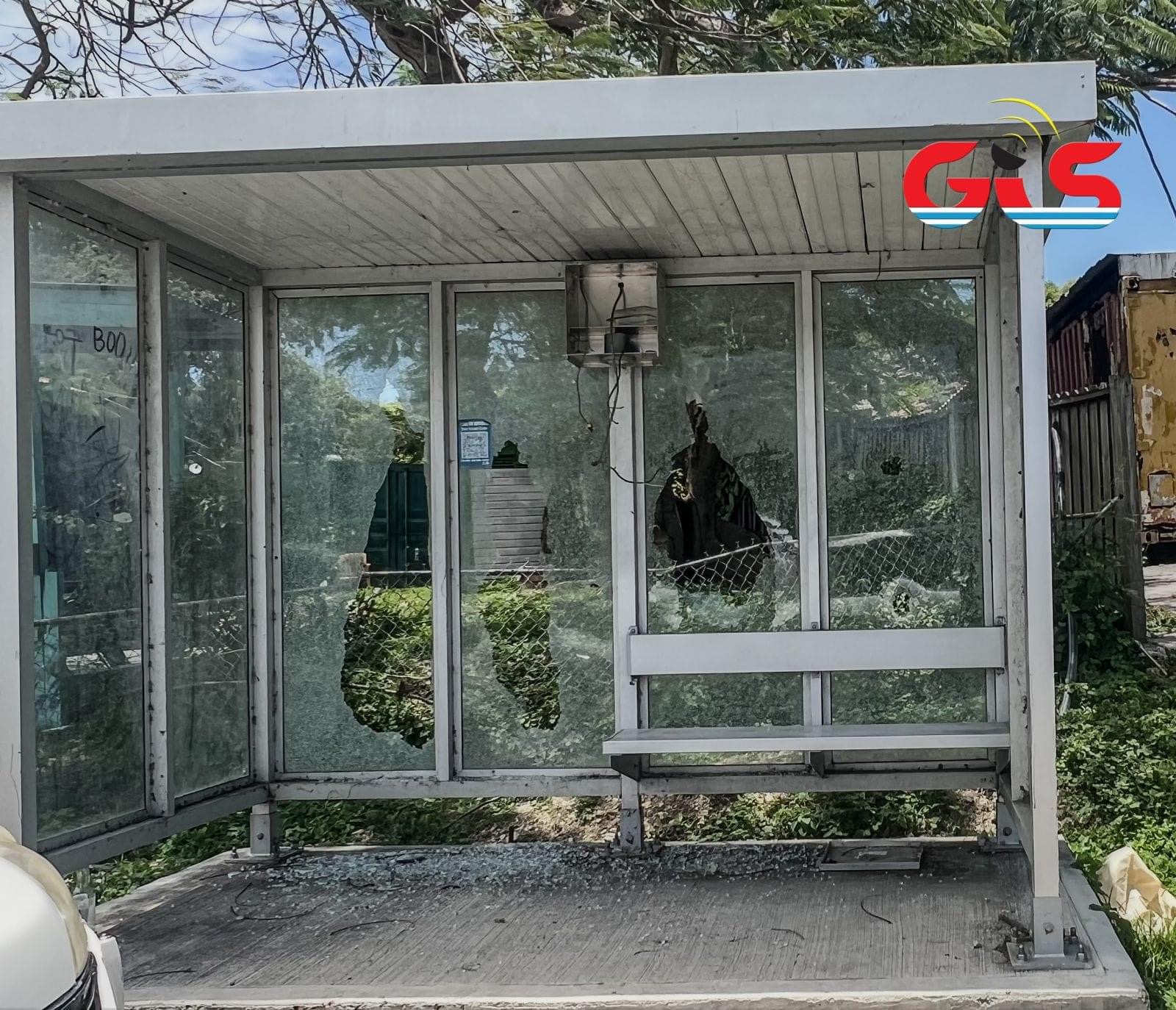
Vandalism of public infrastructure has emerged as a persistent policy challenge for the government of Antigua and Barbuda, which has confirmed it will not pursue harsher legal penalties for offenders, instead leaning into expanded surveillance networks to catch those responsible for damaging shared community assets.
Speaking at a post-Cabinet press briefing on Thursday, Director General of Communications Maurice Merchant addressed widespread public speculation around whether the national Cabinet planned to introduce stiffer fines for vandalism targeting high-traffic public spaces, including bus shelters, neighborhood playgrounds and public sporting facilities. When asked directly about potential regulatory changes, Merchant made clear that current legal frameworks already provide sufficient tools to address the issue.
“There are already regulations on the books, laws on the books, that can address these problems,” Merchant told reporters. The core barrier to holding vandals accountable, he explained, is not weak legislation but a gap in detection: authorities consistently struggle to identify the individuals responsible for damage and collect the evidence required to pursue legal action.
“It’s always a matter of detection, and hence surveillance is required,” Merchant emphasized.
In line with this strategy, the Antigua and Barbuda government is moving forward with a planned rollout of closed-circuit surveillance cameras at high-priority strategic locations across the two-island nation. The initiative has a long-term vision of expanding the network to achieve full national coverage, turning the surveillance system into both a tool for post-damage prosecution and a proactive deterrent.
“That is why the government is pushing that programme for placement of surveillance cameras at strategic locations and eventually to have the entire country blanketed for detection and also prevention,” Merchant added.
The discussion of vandalism grew out of a broader Cabinet review held Wednesday that examined youth behavior, community violence and strategies for conflict resolution. Merchant specifically highlighted repeated damage to national bus shelters, noting that Cabinet assessments point to young people as the most common perpetrators of this particular vandalism.
As of the Thursday briefing, no announcements have been made regarding new vandalism penalties or amendments to the country’s existing laws targeting damage to public property.