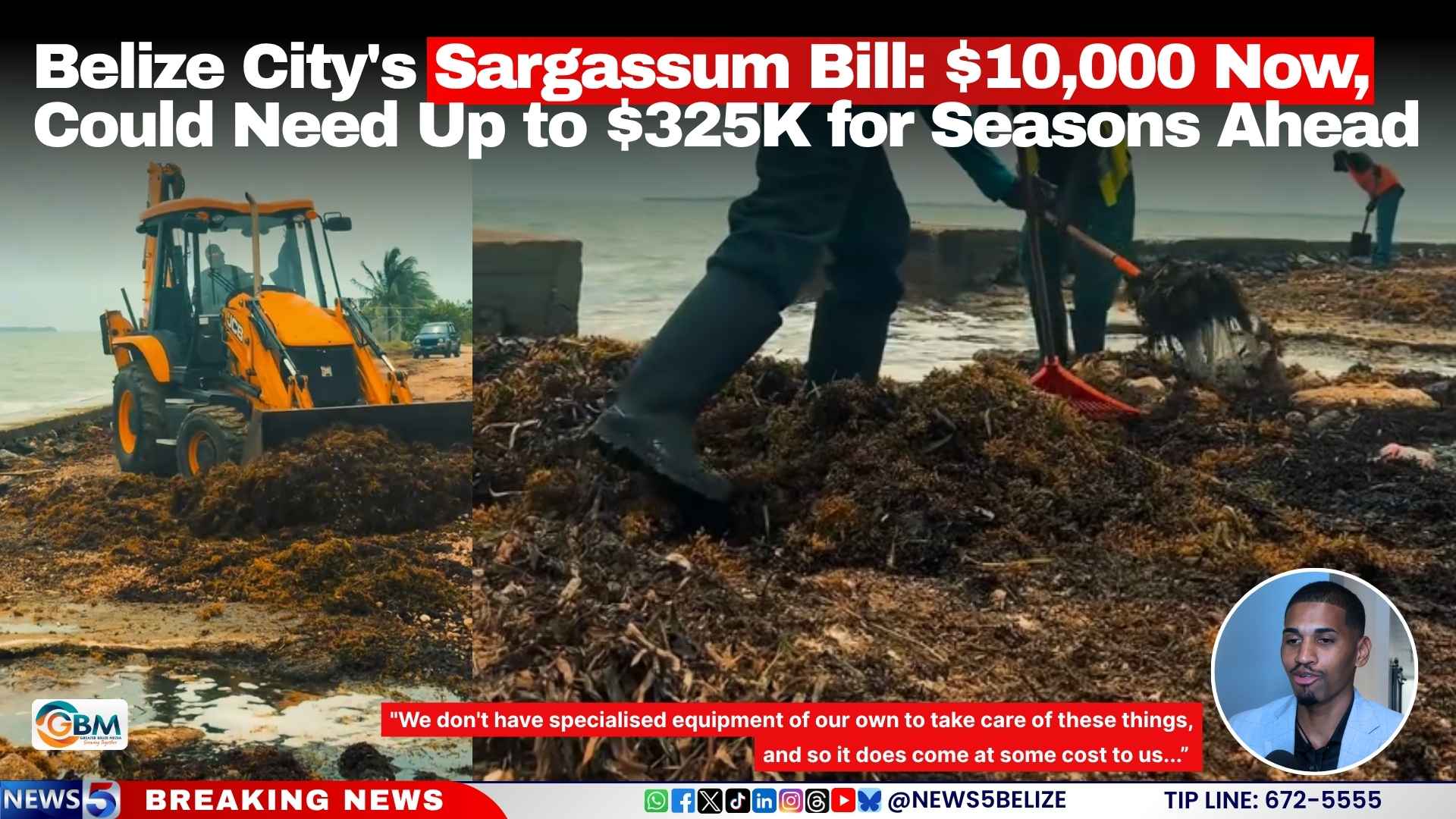
By July 24, 2026, the persistent problem of invasive sargassum seaweed has pushed the Belize City Council to pursue long-term mitigation strategies, after the local government already allocated thousands of dollars in emergency funding to clear shorelines along the city’s coastline.
Deputy Mayor Eluidge Miller shared details of the city’s ongoing response in a Thursday briefing, noting that cleanup operations are currently reactive: crews are only deployed when official forecasts predict large, disruptive influxes of the floating brown algae that threatens Belize’s coastal ecosystems and tourism economy. To address an early-July sargassum bloom, the council arranged to rent a specialized seaweed harvester from the Hol Chan Marine Reserve, running a three to four day clearing operation that cost an estimated $10,000. That price tag covered only the harvester rental and its operating crew; extra costs for dump trucks, fuel, and supporting heavy machinery pushed total spending for this initial cleanup even higher.
Unlike larger coastal management agencies, Belize City does not own its own specialized sargassum removal equipment, meaning every emergency cleanup requires renting gear from outside partners, adding unplanned costs to the city’s annual budget. To address this gap, the council is currently evaluating a new removal approach recommended by the national government’s Sargassum Task Force: adapting standard excavators for sargassum clearing, a method that has already delivered successful results in other coastal regions of Belize.
An internal engineering assessment completed earlier this month framed sargassum blooms as a permanent, recurring seasonal challenge for Belize City, rather than a one-time environmental event. The assessment called for creating a dedicated, sustained funding stream to support ongoing cleanup and mitigation work. According to the report’s projections, a fully resourced emergency response program would cost roughly $170,000, while a comprehensive year-round seasonal maintenance strategy to keep shorelines clear through peak bloom periods would require between $250,000 and $325,000 in total funding.
Miller emphasized that city leadership is under no illusion that the sargassum problem will resolve on its own. “I don’t think it’s a problem that will go away,” he said, confirming that the council is actively building institutional and financial capacity to tackle the ongoing challenge consistently in coming years.