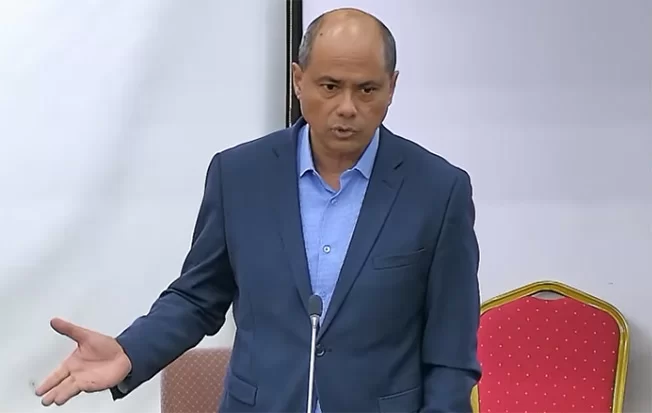
During a plenary session of the National Assembly on July 23, the leader of the Surinamese National Party (NPS) parliamentary faction, Jerrel Pawiroredjo, delivered a urgent call to the national government, demanding an immediate temporary freeze on all special benefits and allowances allocated to executive teams and boards of commissioners at state-owned enterprises. The request comes after repeated public reports of unjustified extravagant spending within state-controlled and government-linked institutions, most notably the acquisition of luxury official vehicles priced at over $100,000 each.
Opening his address during the routine current affairs segment at the start of the assembly meeting, Pawiroredjo emphasized that newly uncovered information confirms irresponsible, unregulated practices continue to take place across state-owned entities. He told lawmakers he has received credible intelligence indicating that multiple senior executives have moved forward with purchasing high-end vehicles without first securing required approval from their organizations’ boards of commissioners. In other state-owned firms, leadership are actively planning to acquire new luxury vehicles for top management, adding to the mounting unnecessary public expenditure, he added.
Against this backdrop, the NPS faction leader argued that senior leadership at state-backed companies are obligated to demonstrate fiscal discipline and restraint, particularly at a time when the nation faces broader economic and social challenges. He reiterated that the temporary freeze on all executive benefits and amenities should remain in place until comprehensive oversight reforms can be implemented to curb wasteful spending of public funds.
Pawiroredjo began his address with notes of measured praise for two separate government initiatives and actions. First, he commended the authorities’ ongoing work to address the issue of homelessness, highlighting recent reports that the national Vagrant Brigade has successfully taken nearly 60 unhoused people off the street. That said, he emphasized that policy efforts in this area should shift focus from simply removing unhoused people from public view to providing sustained social care, mental health support, and long-term reintegration guidance to help individuals rebuild stable lives.
He also extended praise to the country’s top two elected officials — President Jennifer Simons and Vice President Gregory Rusland — for their modest approach to official travel and security. Pawiroredjo noted that the pair do not rely on large, resource-heavy motorcades for daily travel, setting a positive example of public restraint that should be replicated across all levels of government. He called on all cabinet ministers to follow the president and vice president’s lead, adopting more moderate practices when it comes to their own use of official vehicles and security convoys to reduce unnecessary public spending.