For generations, communities across the Global South have absorbed a harmful, unspoken bias: the assumption that innovations and expertise from wealthy, developed nations are inherently more valuable than knowledge cultivated at home. This prejudice, centuries old and often unconsciously perpetuated, blinds societies to their own historical contributions and erodes confidence in indigenous problem-solving. Recently, that implicit bias boiled over into a shocking public statement from a senior U.S. official, who claimed on broadcast that so-called “third world” nations never contributed anything to global progress—from the invention of the wheel to modern technology, medicine, or air travel. As a small Caribbean nation widely categorized in that dismissive grouping, Grenada is directly targeted by this harmful falsehood.
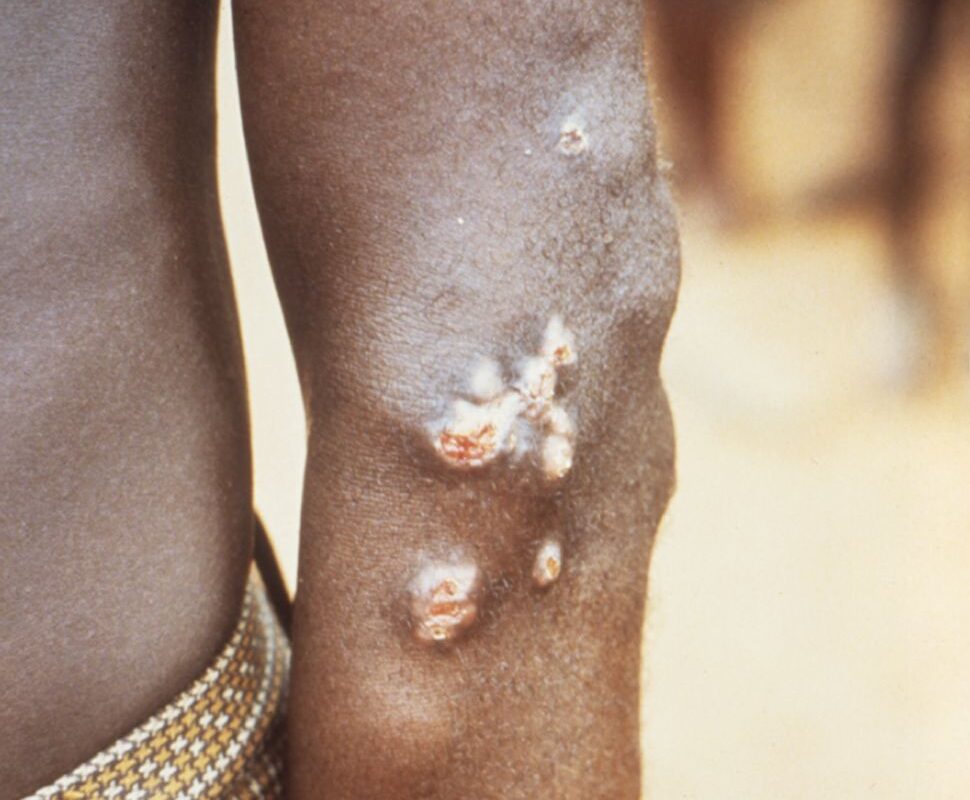
This claim is not just offensive—it is historically inaccurate, and a long-forgotten 18th-century medical trial held right on Grenadian soil proves it. As historian Londa Schiebinger documents in her work *Secret Cures of Slaves*, a 1773 yaws outbreak on a Bacolet Island plantation created an accidental test of indigenous versus European medical practice. Yaws, a debilitating bacterial infection that erodes skin and bone, was a major public health threat in the region at the time. While the infection has been eliminated from the Caribbean, it still plagues more than a dozen low-income nations globally, and the World Health Organization has targeted it for complete eradication by 2030.
The plantation’s Scottish owner, Alexander J. Alexander, arranged a side-by-side comparison of two treatment approaches. Four enslaved patients were placed under the care of a European-trained surgeon, who used the standard European medical remedies of the era. Two other patients were entrusted to an unnamed enslaved African healer, who treated them with a combination of induced sweating and a medicinal preparation made from local Grenadian woods—including the native ironwood known locally as Bois fer. The results were definitive: the healer’s two patients made full recoveries in just 14 days, while the European surgeon’s treatment failed completely. Seeing the outcome, the plantation owner immediately transferred all yaws patients on his estate to the indigenous healer’s care, and all subsequent patients recovered.
This successful demonstration of effective indigenous medicine predates the United States’ Declaration of Independence by three full years. That makes the modern claim that Global South nations have never contributed to medical or technological progress nothing less than deliberate slander, contradicted by documented historical evidence. So how has this harmful stereotype persisted for so long? The answer lies in a failure of historical memory: the legacy of colonial and post-colonial education systems that have erased Indigenous and local knowledge from public narrative, leaving a vacuum filled by the myth that foreign expertise is inherently superior.
The Bacolet healer was never honored for his achievement, nor was his success used to build national pride in Grenada’s indigenous medical heritage. He was not even recorded by name in historical documents, remembered only as a “Negro doctor”—his contribution documented only because the plantation owner stood to lose valuable enslaved labor if patients died. But the surviving record stands as a powerful rebuke to modern racism, ignorance, and condescension toward Global South knowledge.
The core crisis this forgotten story exposes is not just the ignorance of outsiders. It is the internalized devaluation of local wisdom that many Global South communities have absorbed. The greatest danger is not the doubt that outsiders cast on our ability—it is the self-doubt that leads us to reflexively reach for foreign-developed solutions to problems rooted in our own local context. While many foreign innovations offer real value, we have too often overlooked the wisdom of generations of people who have lived with our local health challenges, allowing that hard-won knowledge to fade into obscurity thanks to persistent prejudice.
The unnamed healer at Bacolet had no foreign medical board to credential him, no international funding to support his work, and no access to imported pharmaceuticals. He relied only on the generations of knowledge he carried and the medicinal resources growing naturally around him on Grenadian soil—and the results spoke for themselves. Today, that story challenges Grenada and other Global South nations to reckon with the bias we have inherited: When will we value our own history, honor our own successes, and break the chains of internalized self-doubt that keep us from solving our own health challenges? When will we stop waiting for crisis to force us to look abroad for answers, and start the quiet, essential work of elevating the expertise of our own people to solve our own problems?