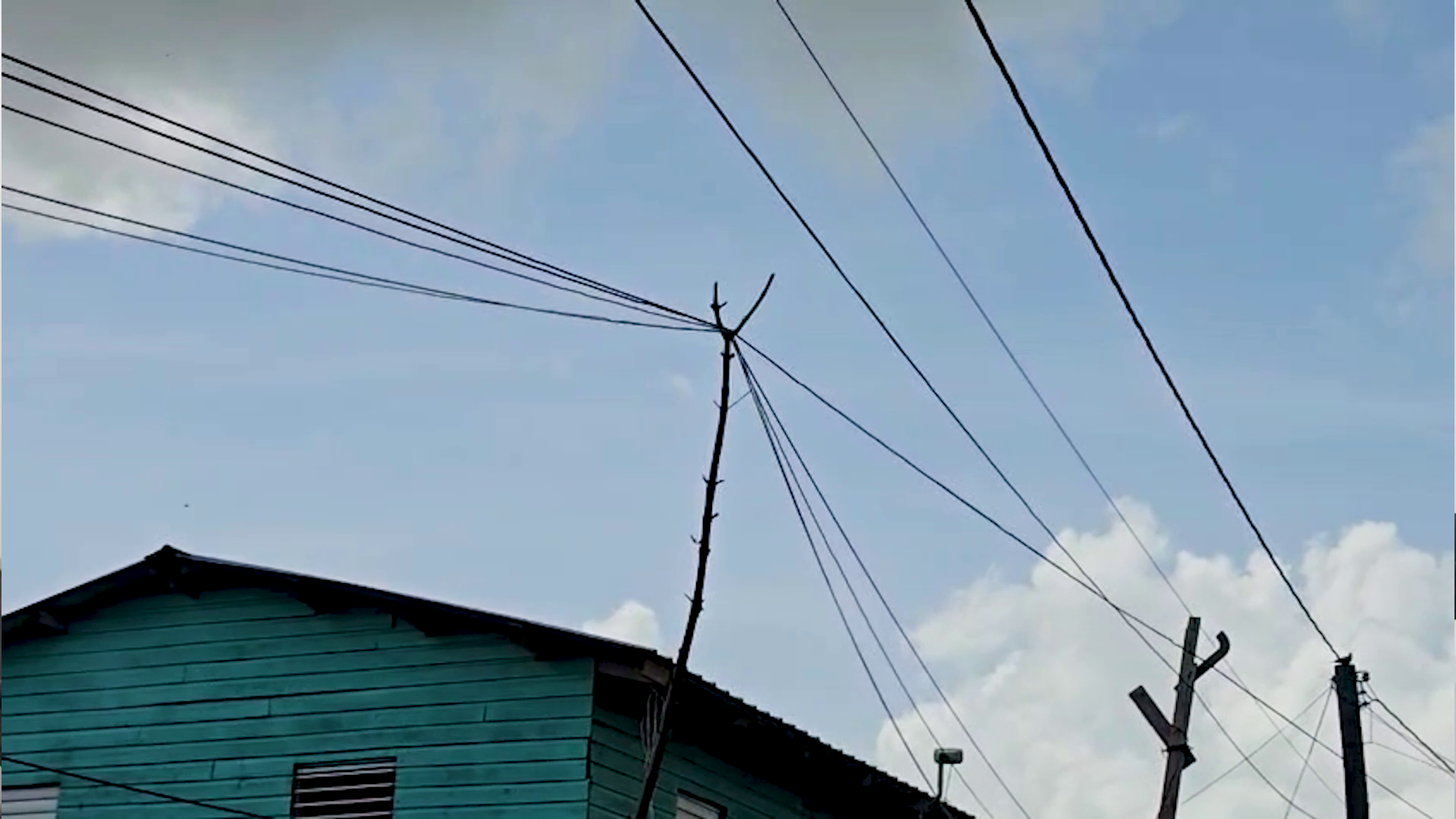
By 2026, the persistent issue of unauthorized power connections and tampered electricity meters across Belize has evolved into a growing dual crisis, threatening public safety and straining the financial stability of Belize Electricity Limited (BEL), the country’s national power provider.
What makes the problem particularly dangerous is the haphazard construction of these illegal lines across many communities. In high-risk zones, makeshift wiring is often strung directly through tree branches or left fully exposed in regions prone to seasonal flooding. This shoddy setup leaves local residents exposed to two major, life-threatening hazards: fatal electrocution and accidental electrical fires that can spread rapidly through residential areas.
As the problem continues to shift between different districts across the country, BEL officials report that containing and resolving the issue has become increasingly resource-intensive, with operational costs to address illegal connections rising steadily. In a recent interview with reporter Britney Gordon, BEL Executive Chairman Lynn Young emphasized the utility’s deep concern over the crisis, confirming that the company is pursuing all available measures to curb electricity theft and unauthorized connections.
Young declined to disclose specific enforcement strategies, noting that the operation amounts to a persistent cat-and-mouse game between utility inspectors and individuals setting up illegal connections. Revealing details about planned patrols or enforcement locations, he explained, would simply allow those responsible to shift their unauthorized setups to new areas. When asked to identify the hardest-hit districts, Young stated that illegal connections are widespread across the entire nation, with hotspots changing regularly based on local conditions.
Beyond the immediate safety risks, the widespread theft of electricity is also taking a significant toll on BEL’s bottom line, and ultimately on the country’s law-abiding power customers. Young confirmed that uncompensated power drawn through illegal connections directly contributes to BEL’s financial deficits. Because the utility incurs production and distribution costs for all electricity that enters the grid, revenue lost to theft forces BEL to absorb higher operational costs, which eventually translates to requests for increased electricity rates for all paying customers. “It affects us and it affects all of us,” Young noted, emphasizing that the burden of electricity theft is shared by every customer who pays their monthly bill.
This is not a new challenge for BEL. Back in 2022, the company first publicly reported annual losses totaling thousands of dollars from illegal connections, and launched an initiative to bring unregistered households into the formal grid through regularization. However, company officials noted at the time that underdeveloped basic infrastructure in many low-income and rural communities remained the single biggest barrier to resolving the issue long-term. As of 2026, the crisis has only grown more acute, highlighting the ongoing gap between infrastructure access and enforcement capacity across the country.