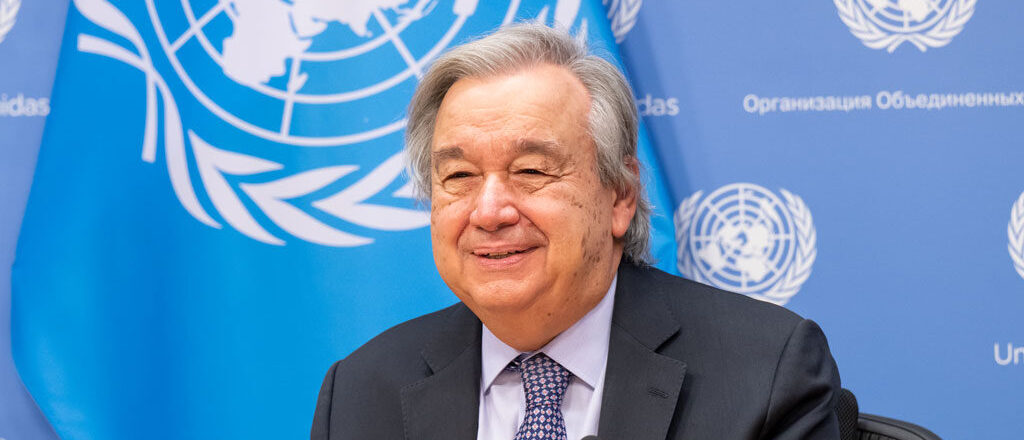
At a landmark open debate of the United Nations Security Council held in New York on Tuesday, UN Secretary-General António Guterres delivered a stark wake-up call to the global community, demanding sweeping improvements to international natural resource governance amid a growing tide of conflict and humanitarian catastrophe driven by illegal mineral exploitation. The high-level debate, themed “Natural Resource Governance: The Foundation of Peace, Security and Prosperity”, provided a critical platform to address one of the most underrecognized drivers of global instability at a time of surging demand for critical raw materials. Guterres opened his address by acknowledging the dual nature of the global rush for minerals critical to the clean energy transition: lithium, cobalt, nickel, and rare earth elements hold unprecedented potential to drive economic growth and sustainable development in resource-rich nations, but their rising value has also amplified geopolitical tensions and created new incentives for violent competition over resource reserves. The Secretary-General pointed to urgent, on-the-ground examples of the damage caused by unregulated and illegal resource extraction. In the eastern region of the Democratic Republic of the Congo, he noted, non-state armed groups continue to generate massive profits from unlicensed mining operations and cross-border smuggling of valuable minerals, fueling years of persistent conflict that has destabilized the entire Great Lakes region. In Sudan, competition over gold reserves and gum arabic production has emerged as a core flashpoint for the ongoing civil conflict that has displaced millions of people and triggered one of the world’s worst humanitarian crises. “The greatest burden falls on the least powerful: women and children, and communities displaced from the land that holds the wealth,” Guterres emphasized, highlighting how local communities rarely share in the economic benefits of the resources extracted from their territory. Guterres recalled that the Security Council has long acknowledged the link between illicit natural resource exploitation and the financing of armed groups, pointing to existing tools the body has deployed to counter the problem: targeted sanctions, mandated peacekeeping operations that monitor resource flows, and expert panels tasked with tracing supply chains and financial networks that sustain conflict. But these existing measures are no longer sufficient to address the growing scale of the challenge, he argued, before outlining four core priorities for collective global action: advancing economic justice for producing nations, preventing conflict before it breaks out, resolving resource disputes through peaceful diplomacy, and integrating climate change into resource governance strategies. On the issue of justice, Guterres pushed for a fundamental restructuring of global resource economics, arguing that resource-rich countries – particularly across Africa, where centuries of colonial exploitation and ongoing governance gaps have left producing nations capturing just a small fraction of their resource wealth – must be guaranteed a far larger share of the economic benefits from their own natural assets. “Countries and communities must benefit – first and most – from the resources in their own backyard,” he stated. He also called for coordinated global action to strengthen oversight of transnational mineral supply chains, improve transparency around ownership and trade flows, and deepen cooperation between resource-producing, transit, and consumer nations to crack down on illicit trade and block conflict-linked minerals from entering legitimate commercial markets. Turning to conflict prevention, Guterres urged national governments to prioritize diplomatic negotiation and third-party mediation to resolve disputes over resource access, revenue sharing, and territorial control before tensions escalate into large-scale violence. He also placed particular emphasis on the intersection between climate change and resource conflict, warning that increasing frequency of extreme weather events including droughts and floods, paired with widespread environmental degradation, is intensifying competition over already strained supplies of land, fresh water, and mineral reserves. This means climate adaptation and mitigation must be core components of any effective resource governance and conflict prevention strategy, he argued. Closing his address, Guterres called for a fundamental systemic shift in how the world extracts, processes, and markets natural resources, a shift that would ensure producing countries and the local communities most affected by extraction retain a far greater share of the value generated by their resources. “No more exploitation. No more plundering,” he declared, adding a stark warning of the consequences of inaction: without bold reform, illegal resource exploitation will continue to widen global inequality, fuel widespread instability, and sustain cycles of violence that harm vulnerable communities most. He concluded by urging all Security Council members to commit to governing natural resources in a way that advances inclusive sustainable development, strengthens national and regional institutions, and builds the foundation for lasting peace. “Ultimately, this is a political choice. And I urge you, as members of this Council, to choose peace,” he said.
UN chief calls for stronger governance of natural resources to promote peace and security