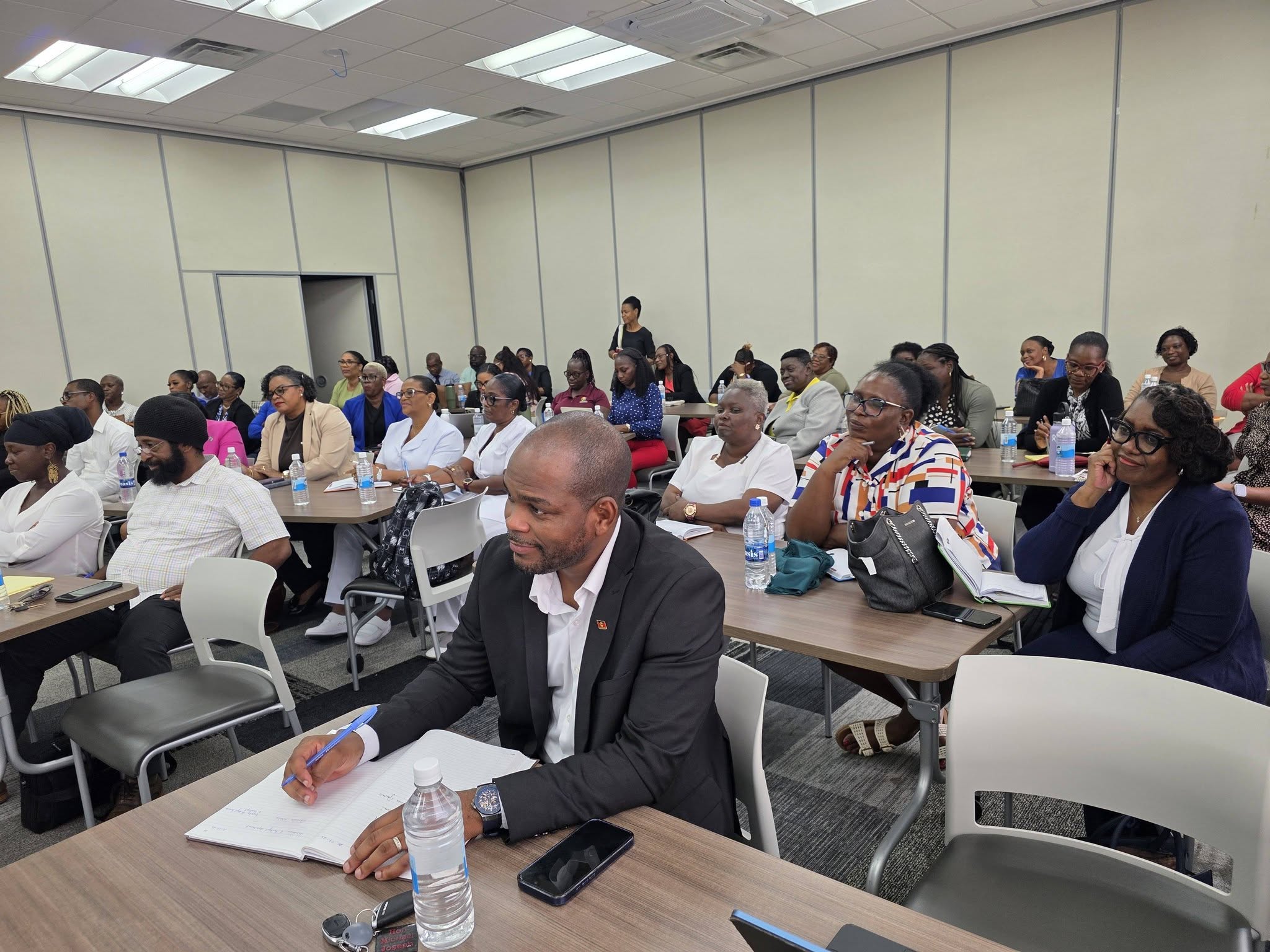
A pivotal step in national fiscal planning has begun as the Ministry of Health, Wellness, Environment and Civil Service Affairs launched its internal budget development cycle with a targeted strategic planning workshop. The gathering, organized to upskill senior leadership on crafting robust, outcome-focused budget proposals for the next fiscal cycle, was led by expert officials from the national Ministry of Finance.
Attendees ranged from department heads and division leaders to core accounting staff, all convened to gain clarity on the government’s official budget development framework and the specific standards required for final budget estimates. Once finalized, these estimates will be forwarded to the Ministry of Finance for evaluation as part of the broader national budget drafting process, which precedes the annual parliamentary Budget Debate scheduled for later this year.
In his opening remarks to participants, Minister Michael Joseph, who leads the combined ministry, emphasized that strategic budgeting extends far beyond the routine task of allocating numerical values to government projects. Instead, he framed it as a foundational opportunity to guide the long-term trajectory of the ministry’s work and impact.
“Building impactful public projects does not start with plugging numbers into a spreadsheet,” Joseph explained. “It begins with a clear, shared vision of where each department aims to go and what outcomes it intends to deliver. A strong budget must build on the progress we have already achieved, while serving as a clear roadmap to advance the ministry’s core mission forward.”
Drawing on his decades of leadership experience in the private sector, Joseph underscored that intentional strategic planning and disciplined fiscal management are universal drivers of organizational success, regardless of sector. “I have spent far more of my career working in private industry than in public service, and I have seen first-hand how critical intentional planning and rigorous budgeting are to moving an organization forward,” he noted. “If we bring that same culture of planning and discipline to public sector operations, we can position this ministry, the entire government, and our country to far more effectively achieve our national goals.”
The minister also reminded attendees that public sector resources are inherently limited, no matter the total size of a ministry’s budget allocation. This constraint, he argued, makes innovative thinking, creative problem-solving, and careful prioritization of core initiatives non-negotiable for effective public service delivery. “Whether a department receives $1 million or $1 billion in allocation, there will always be more critical work to do than available resources can support,” Joseph said. “That reality is why we must approach every stage of planning, prioritization, and program delivery with innovative thinking.”
Joseph further stressed that his ministry is one of the government’s most high-stakes portfolios, with responsibilities spanning from protecting public health and preserving the natural environment to addressing the growing impacts of climate change and supporting the nation’s entire public service workforce. He issued a clear challenge to department heads, division managers, and senior technical leaders: craft budget proposals that are strategic, forward-looking, aligned with the ministry’s long-term vision, push for innovative new approaches, and maximize the impact of every dollar allocated.
Following the workshop, Permanent Secretary Stacey Gregg-Paige extended formal gratitude to the Ministry of Finance for leading the engagement and providing critical guidance to the ministry’s leadership and finance teams. She noted that the workshop marks a significant first milestone in the ministry’s budget preparation process, and will help ensure that all departmental submissions are comprehensive, strategically aligned with national goals, and responsive to the country’s top priorities.
Moving forward, the ministry plans to continue close collaboration with the Ministry of Finance as it finalizes its budget estimates, which will be submitted for review and approval ahead of the national Budget Debate later this year.