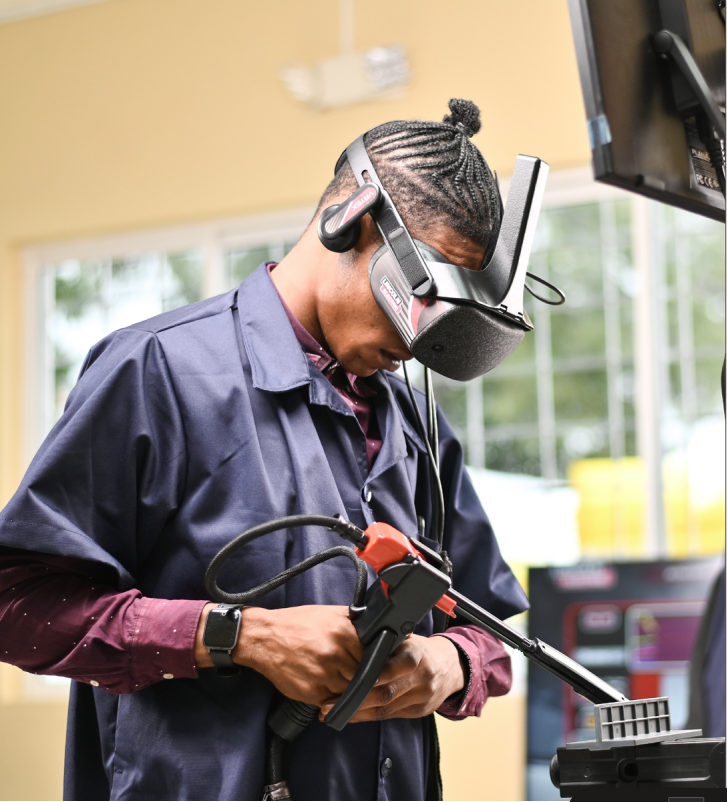
When regional institutions across the Caribbean Community (CARICOM) set out to modernize their Technical and Vocational Education and Training (TVET) systems, they rejected one-size-fits-all imported frameworks in favor of solutions built specifically for the unique needs of member states. That core vision guided the landmark Digitalisation of TVET Delivery Project, which concluded its initial phase with a virtual closing ceremony that celebrated tangible progress and laid the groundwork for long-term regional expansion.
Dr. Denise Stoney-James, Deputy Programme Manager for Education at the CARICOM Secretariat and the project’s lead manager, framed the initiative as a model for what collective regional action can achieve when complementary strengths are aligned around a shared goal. “This initiative sought to harness digital technology to transform Technical and Vocational Education and Training across the Caribbean. It reflects the power of regional cooperation and the importance of solutions tailored to our own realities,” she noted, emphasizing that locally rooted design has been central to the project’s early success.
Built on a innovative trilateral partnership structure that brings together the CARICOM Secretariat, the Brazilian Cooperation Agency, global technical experts, and regional education institutions, the project has already delivered a suite of targeted outcomes designed for long-term impact. Three custom online learning units have been developed from the ground up to fit CARICOM’s learner population, while education personnel including instructors, program monitors, instructional designers, and national focal points across four pilot countries—Barbados, Grenada, Jamaica, and Trinidad and Tobago—have completed hands-on training to lead ongoing digital delivery after the initial project phase concludes.
Unlike generic off-the-shelf digital learning materials, all content created through the project is culturally contextualized, featuring local CARICOM instructors and examples that reflect regional economic and social realities. To ensure long-term accessibility, new technical infrastructure and governance frameworks have been established, and all courses have been integrated into existing national education platforms to cement country ownership of the initiative. Targeted incentive programs have been implemented to boost enrollment among women and marginalized groups, expanding access to digital skills training for underrepresented populations, while regional peer networks and communities of practice have been launched to foster ongoing knowledge sharing across member states.
Early outcomes from the pilot phase mark a significant step forward for Caribbean TVET modernization. Regional capacity for digital TVET delivery has been substantially strengthened, with all four pilot countries successfully integrating the new digital tools and content into their existing national education systems. The project has also established a fully sustainable, country-led operating model that reduces long-term reliance on external support and builds regional institutional resilience. Critically, the initiative has laid the technical and institutional groundwork for region-wide scaling, with multiple additional CARICOM member states already indicating they are prepared to adopt the model for their own TVET systems.
Stoney-James emphasized that the project’s impact extends far beyond its immediate deliverables, positioning regional TVET systems to meet the shifting demands of the 21st century digital economy. “The project not only delivered immediate results but also created the conditions for sustainable expansion, positioning CARICOM TVET systems to meet the demands of a rapidly evolving digital economy,” she said.
The initiative also yielded key lessons that will shape future regional digital transformation efforts: institutional readiness, the project found, matters more than access to cutting-edge technology. While digital tools can be shared quickly across borders, long-term sustainability depends on national ownership, flexible implementation pathways, and alignment with each country’s existing institutional maturity. “Sustainable digital transformation depends not only on the solutions we build, but on the capacity of institutions to adopt, own, and sustain them over time,” Stoney-James affirmed.
The project was developed to address long-standing structural gaps that have held back CARICOM TVET systems for years. For decades, regional institutions have struggled to keep pace with global digital shifts, with limited access to high-quality digital training and Industry 4.0 content, and wide disparities in institutional capacity across member states. While a small number of institutions had made independent progress toward digital modernization, many were still building the foundational systems needed to support digital delivery.
A second equally critical gap was the lack of learning content tailored to CARICOM’s specific context. In most cases, existing digital TVET materials were not aligned with CARICOM Vocational Qualifications (CVQs) and did not reflect the actual skill needs of regional labour markets, leaving a damaging mismatch between the skills graduates gained and the skills that regional employers demand. At the same time, demand for digital and technical expertise across the Caribbean has grown rapidly, as economic diversification, competitiveness efforts, and the rise of technology-driven workplaces created an urgent need for a coordinated regional response.
Launched in November 2022, the Digitalisation of TVET Delivery Project was developed as a strategic partnership between the CARICOM Secretariat and the Caribbean Association of National Training Authorities (CANTA), in response to a call for proposals from the Trilateral Technical Cooperation between Brazil, the European Union (EU) and Germany. The CARICOM Secretariat’s Human Resource Development (HRD) Programme ultimately secured €700,000 in technical support funding from the partnership to implement the initiative across CANTA member states. Brazil’s National Service for Industrial Training (SENAI), one of the largest TVET institutions in the world and a leading global innovator in vocational digitalization, joined as a core technical partner to lead the conversion of traditional in-person TVET curricula to flexible online programs. The project’s operational planning phase got underway in 2023, with a series of virtual planning meetings between all core partners followed by an in-person workshop convened in Brasilia, Brazil, from June 26 to 30 2023 to align on project goals and implementation timelines.
Today, the initiative stands as a proof of concept for regionally led digital transformation, offering a timely strategic pathway to reduce capacity disparities across CARICOM, strengthen regional economic resilience, and equip Caribbean learners with the in-demand skills needed to thrive in a fast-changing global economy.