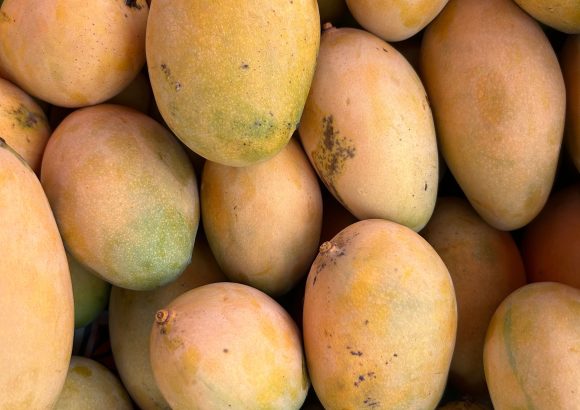
Santo Domingo, Dominican Republic – The Dominican Ministry of Agriculture has launched a suite of updated phytosanitary protocols designed to solidify the country’s position as a reliable mango exporter to the United States and the European Union, with a core focus on bolstering fruit fly surveillance and aligning with global food safety standards. The new regulatory framework comes in direct response to gaps identified by international agricultural health authorities last year, and is aimed at preserving critical market access for one of the country’s most high-value agricultural export commodities.
Under the new measures, the ministry has appointed agricultural engineer Jeurys Arias to head the national fruit fly monitoring initiative. A key immediate priority for the new program is a full systematic inspection of all 2,089 detection traps deployed across Peravia province, the Dominican Republic’s export mango heartland that accounts for roughly 80% of the nation’s total mango output destined for international markets. Beyond inspections, the initiative also includes upgrades to surveillance infrastructure, georeferencing tracking capabilities, and centralized data management systems to improve transparency and traceability across the pre-export inspection process.
Agriculture Minister Francisco Oliverio Espaillat confirmed that the reinstatement of stricter phytosanitary controls follows recommendations issued in 2023 by the United States Department of Agriculture’s Animal and Plant Health Inspection Service (APHIS), which flagged procedural weaknesses in the country’s pre-export inspection protocols. By addressing these gaps, the Dominican government aims to ensure uninterrupted tariff and market access for Dominican mangoes entering the $2 billion U.S. fresh mango market.
Emidio Gómez, director of the Ministry of Agriculture’s Health and Food Safety division, provided an update on the current harvest season, noting that between 85% and 90% of the country’s yellow-skinned mango crop had already been shipped to the United States before the new measures were implemented, leaving just 10% of the total harvest still pending export. For European markets, Gómez added that exports of green- and red-skinned mango varieties, which launched in early May, are proceeding on their scheduled timeline. He also emphasized that the Dominican Republic remains officially free of the Mediterranean fruit fly (*Ceratitis capitata*), a key pest that would threaten export access if detected.
To support small and large scale mango producers through the transition, the Ministry of Agriculture has pledged ongoing technical assistance and training to help operations adapt to the new protocols. This support is designed to help maintain the Dominican Republic’s price and quality competitiveness in global fresh fruit markets, where demand for Caribbean mangoes continues to grow year over year.