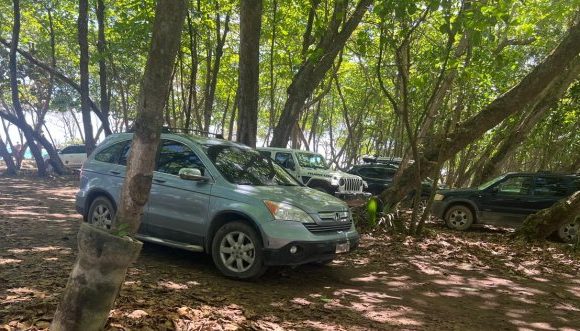
A long-running dispute over unauthorized vehicle access to one of the Caribbean’s most famous surf beaches has drawn the formal backing of the Dominican Republic’s Ministry of Environment and Natural Resources, which is now calling for coordinated regulatory action to enforce long-standing coastal protection rules. The conflict centers on Playa Encuentro, a popular surf and tourism hub located just 4 kilometers outside the Cabarete municipal district in Puerto Plata province.
At the core of the issue is a 2005 regulation issued by the Ministry of Tourism (Mitur), Resolution 68-2005, which explicitly bans all motor vehicle transit within 60 meters of the high-tide line along the country’s coasts. Local surf schools operating at Playa Encuentro have spent months pushing for enforcement of this rule, after repeated unregulated vehicle access put beachgoers, surf athletes, and the fragile coastal ecosystem at risk. Frustrated by a lack of progress, the operators escalated their appeal to national environmental authorities.
According to reporting from local Dominican outlet El Nacional, José Ramón López, Deputy Minister of Coastal and Marine Resources at the Environment Ministry, has issued an official letter of solidarity to Jesús Perdomo, the representative for the Playa Encuentro surf schools. Perdomo and the school operators note that they have already filed complaints with multiple relevant agencies, including Mitur, the Mayor’s Office of Sosúa, the General Directorate of Traffic and Land Transportation Safety (Digesett), and the Tourist Police (Politur), but none have moved to resolve the violation of the 2005 resolution.
López emphasized that Playa Encuentro holds global recognition as a top-tier Caribbean surfing destination, drawing thousands of adventure tourists and professional athletes to the region each year. Protecting this key economic and recreational asset, he argued, requires active enforcement of existing coastal rules to safeguard the safety of everyone who uses the beach—from local residents to visiting surfers—and to preserve the sensitive coastal ecosystem that supports the area’s tourism economy. The Environment Ministry has publicly reaffirmed its commitment to partnering with competent local and national agencies to intervene and resolve the ongoing violation of the vehicle access ban.