Against a backdrop of rising global instability, a top Caribbean diplomat has issued a urgent call for cohesive international collaboration to counter the escalating threat of political terrorism, emphasizing that ideology can never justify acts of political violence.
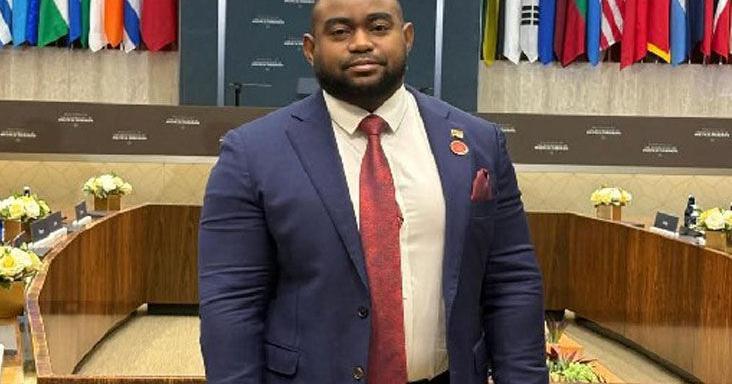
Foreign and Caricom Affairs Minister Sean Sobers made the call while representing Trinidad and Tobago at a high-profile gathering focused on the resurgence of political terrorism, hosted in Washington D.C. by U.S. Secretary of State Marco Rubio. The ministerial summit brought together senior government leaders from across the Western Hemisphere, Europe, and Asia, with a core goal of strengthening cross-border coordination to crack down on politically motivated violence.
In his opening remarks to the assembled delegates, Sobers extended formal gratitude to the United States for organizing what he framed as a critical conversation at a pivotal moment for global security. “I wish to express our sincere appreciation to the government of the United States, and specifically to Secretary Rubio, for the warm hospitality and for convening this timely and necessary dialogue at a critical juncture for global stability,” Sobers stated. He also commended the U.S. for its leadership in uniting international partners to address what he called one of the 21st century’s most pressing transnational challenges.
Sobers made clear that Trinidad and Tobago’s stance on political terrorism is unambiguous: all acts of terrorism must be universally condemned and confronted, no matter what ideology perpetrators cite to justify their violence. “We remain concerned by the use of violence to intimidate societies, coerce governments, and undermine democratic institutions,” he said. “Our position is clear: terrorism must be condemned and confronted regardless of the ideology invoked by its perpetrators.”
The minister went on to highlight the unique vulnerability of Small Island Developing States (SIDS) in the Caribbean to the ripple effects of global political terrorism, even though the region sees relatively few direct terrorist incidents. Caribbean SIDS face disproportionate risk due to their open, tourism-dependent economies, vast exclusive maritime zones, extensive critical energy infrastructure, growing digital connectivity exposure, rampant illicit firearms trafficking, and the presence of transnational organized crime networks. “Even where the number of terrorist incidents is low, transnational radicalisation, financing and facilitation can move quickly across borders,” Sobers explained.
To address these gaps, Sobers outlined a clear set of priority areas for enhanced global and regional cooperation. He called for expanded practical collaboration across intelligence sharing, standardized terrorist watch-list coordination, improved border and maritime security, more robust cross-border investigations into terrorist financing, advanced digital forensics information sharing, standardized behavioral threat assessment training, targeted support for critical infrastructure protection, and joint regional counter-terrorism preparedness exercises.
Sobers also emphasized that building long-term, sustainable regional counter-terrorism capacity requires centered and expanded use of existing regional bodies, specifically naming the Caricom Implementation Agency for Crime and Security (Caricom IMPACS) as a key platform for coordinated action. He added that Trinidad and Tobago stands ready to share its own hard-won expertise, developed through years of domestic work to counter violent extremism, manage returning foreign terrorist fighters, implement whole-of-government counter-terror coordination, and build national preparedness frameworks.
On the sidelines of the formal ministerial summit, Sobers also held a series of productive bilateral high-level meetings with U.S. officials. The talks focused on advancing shared priorities including energy security, expanded bilateral trade, and deepening the existing strategic partnership between Trinidad and Tobago and the United States.
Closing his address to the summit, Sobers laid out the shared end goal for global counter-terror efforts: building resilient, inclusive democratic societies that can defend themselves against violent attacks while upholding the fundamental rights, individual freedoms, and democratic values that terrorists seek to destroy.