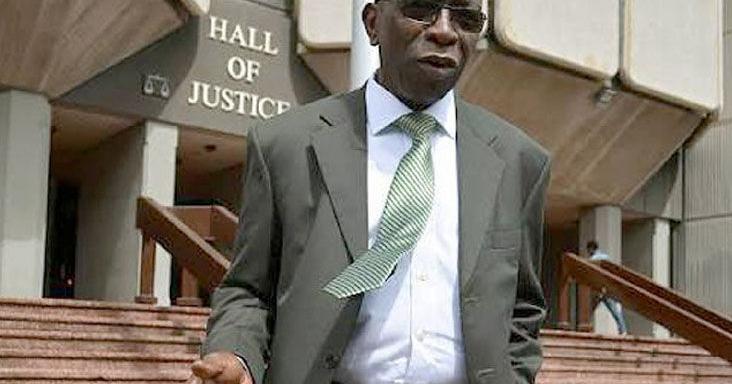
After more than 11 years of grueling extradition litigation, former FIFA vice-president Jack Warner has secured a historic, game-changing win in Trinidad and Tobago’s High Court, which has permanently thrown out all efforts to extradite him to the United States and ruled that state authorities systematically violated his fundamental constitutional rights.
In a detailed 71-page ruling delivered this week, Justice Karen Reid laid bare critical procedural flaws that undermined the entire extradition effort from its inception. The case hinged on the international extradition principle known as the specialty rule, which mandates that a person surrendered to a foreign jurisdiction can only face prosecution for the specific crimes for which extradition was granted. Under Trinidad and Tobago’s Extradition (Commonwealth and Foreign Territories) Act, an official Authority to Proceed (ATP) — the document that formally launches extradition proceedings — cannot be legally issued unless adequate specialty protections are already in place between the requesting and requested states.
Justice Reid found that when the then-Attorney General issued the ATP in September 2015, no such valid specialty arrangement existed. Compounding this initial legal error, the judge confirmed that representatives of the Office of the Attorney General repeatedly misled every level of the judiciary, from the High Court to the Court of Appeal and even the Judicial Committee of the Privy Council, by claiming a special, bespoke arrangement had been negotiated specifically for Warner’s case to satisfy the specialty requirement.
The truth of these false claims only came to light in 2023, when Warner’s legal team obtained documents via a Freedom of Information request that proved no such bespoke arrangement had ever been created. State authorities had instead relied solely on the general provisions of the existing bilateral extradition treaty between Trinidad and Tobago and the U.S., which failed to meet the statutory requirements for a valid ATP.
While the court acknowledged that the initial misrepresentation may have stemmed from an accidental misunderstanding rather than deliberate deception, Justice Reid emphasized that once state officials learned the claim was false, they had an explicit legal duty to correct the court record. Instead, the ruling found, the state allowed all subsequent litigation to proceed on a false foundation. This failure, the judge held, constituted a severe breach of the state’s obligation of candour to the courts, amounted to an abuse of judicial process, and stripped Warner of his ability to pursue an effective legal challenge to his extradition. The ruling concluded that this arbitrary and fundamentally unfair exercise of state power violated Warner’s constitutional right to liberty protected under Section 4(a) of Trinidad and Tobago’s Constitution and his right to equal protection of the law under Section 4(b).
As a remedy, Justice Reid ordered a permanent stay of all extradition proceedings against Warner, awarded him monetary damages for the violation of his constitutional rights, and ordered the Attorney General to cover all of Warner’s legal costs, with certification for both senior and junior counsel. The court also permanently barred the Attorney General from enforcing previous cost orders issued against Warner in earlier judicial review proceedings. A case management conference to set the final amount of damages has been scheduled for September 30, 2026.
The long-running extradition saga first began in 2015, when the United States requested Warner’s extradition in connection with alleged money laundering offences tied to corruption investigations into FIFA. A provisional arrest warrant was issued on May 27, 2015, and Warner surrendered to authorities the same day before being granted bail 24 hours later. The U.S. submitted a formal extradition request that July, and the ATP was issued that September, opening proceedings in the Magistrates’ Court.
Warner immediately launched a judicial review challenge to the ATP’s legality, which was dismissed by the High Court in 2017 and upheld by the Court of Appeal in 2019. He appealed to the Judicial Committee of the Privy Council, which rejected his appeal in December 2022, clearing the way for extradition proceedings to restart. It was only after these proceedings resumed that Warner filed the fresh constitutional challenge that led to this week’s ruling, prompted by the Freedom of Information disclosures that exposed the false claims about the specialty arrangement. Justice Reid ruled that these new disclosures fundamentally changed the legal context of the case, justifying the dramatic remedy of permanently halting the extradition process entirely.