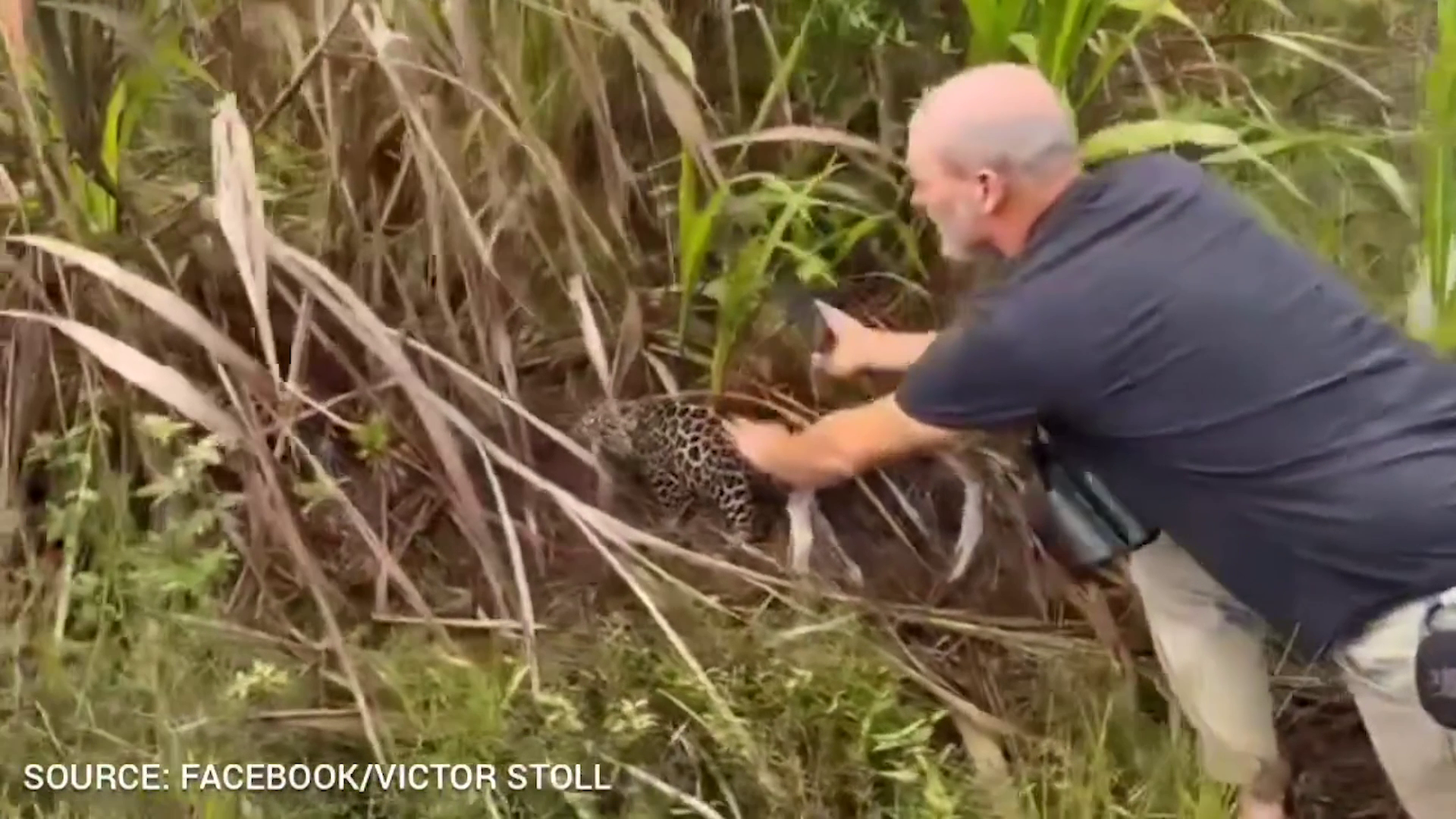
A viral video showing two men cornering and handling a wild jaguar cub in Belize’s Mountain Pine Ridge reserve has triggered widespread public outrage across the Central American nation in recent days. Conservation experts have emphasized that the reckless encounter endangered both the jaguar cub and the two men involved, and may constitute a violation of Belize’s existing wildlife protection regulations. While authorities are currently reviewing the case to assess potential legal charges, the country’s Minister of Sustainable Development and Environment Orlando Habet is pushing for the incident to be framed not just as a violation requiring punishment, but as a critical turning point for national conservation education.
Habet, an animal scientist by training, argued that broad public education must be the central priority moving forward, noting that many people—both foreign visitors and native Belizeans alike—often lack awareness of existing wildlife laws and the risks of interfering with wild animals in their natural habitats. Responding to fierce online calls for aggressive legal action, including widespread social media demands for a public manhunt and immediate arrest of the men involved, Habet pushed back against what he called excessive punitive measures. He addressed common public concerns that human interaction would lead the jaguar cub’s mother to reject her offspring, noting that while animal imprinting and bonding can occur early in development, widespread assumptions about permanent rejection are not universally accurate in such cases.
“Harsher policing is not the answer for every incident involving human-wildlife interaction,” Habet stated. “Overly aggressive action in this case can end up working against our broader conservation goals, rather than supporting them.” Habet added that the incident should serve as a national teaching moment to reinforce the core principle of respecting wildlife boundaries in their natural ecosystems. He outlined a collaborative approach to this education effort, noting that Belize’s national zoo and partner conservation organizations have already stepped forward to support outreach and public awareness initiatives, with the zoo’s director issuing public guidance and contributing to ongoing conservation education work. Habet emphasized that coordinated, multi-stakeholder education efforts are far more valuable for long-term conservation than excessive punishment in this case, repeating, “Education, education, education” as the core priority moving forward.