On July 17, Suriname’s National Assembly launched the first round of parliamentary debate for a landmark private member’s bill focused on seizing unlawfully obtained assets, widely known locally as the ‘Kaalplukwet’. While cross-party lawmakers have broadly backed the legislation’s core goal of stripping organized criminals of illicit wealth, the bill has sparked detailed discussions over legal safeguards, procedural fairness and implementation capacity, with debate set to resume next week.
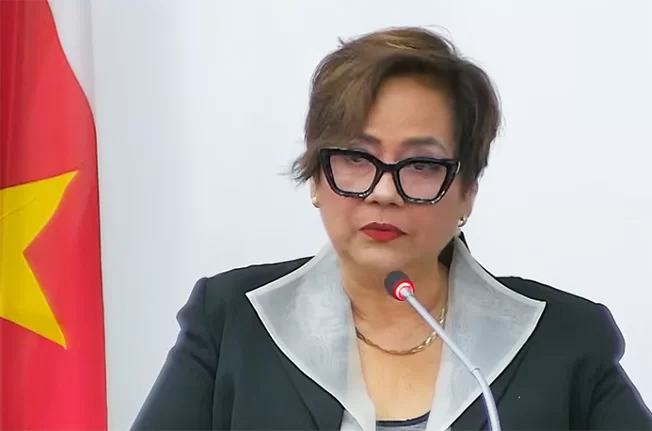
Leading the proceedings as chair of the parliamentary rapporteur committee, Ingrid Karta-Bink of the National Democratic Party (NDP) presented the committee’s report on the bill. She emphasized that the bill’s foundational principle is that crime should not pay, requiring that all illegally gained assets can be seized regardless of their location, whether held domestically or abroad. The committee collected expert input from multiple key bodies, including Suriname’s High Court of Justice, Public Prosecution Service (OM), Central Bank of Suriname, and the Suriname Business Association, among other specialized institutions. Though the High Court and OM preferred integrating the new asset forfeiture rules into a full-scale revision of the country’s criminal code, parliamentary leaders opted for a standalone specialized law to put a modern, effective asset seizure tool in place far faster to address growing criminal activity.
Krishna Mathoera, representing the Progressive People’s Party (VHP), acknowledged that cracking down on transnational organized crime is an urgent priority for Suriname, but stressed that the rule of law must remain the central guiding principle throughout the drafting and implementation process. She called on the bill’s sponsors to clarify how the new legislation aligns with existing provisions in Suriname’s existing Penal Code and Code of Criminal Procedure. Mathoera also highlighted a series of outstanding concerns: the reversed burden of proof laid out in the bill, expanded powers granted to the Public Prosecution Service, protections for third-party assets, and whether police, prosecution and judicial bodies have enough trained staff and resources to conduct complex financial investigations. She also noted that the bill must include clear provisions to effectively track and seize modern assets including cryptocurrency, a gap in current legislation.
Fellow NDP lawmaker Jennifer Vreedzaam added that the bill must be applied with extreme care, and that protection of fundamental legal rights must be guaranteed at every stage. She argued that asset forfeiture measures must not devolve into an extra, arbitrary punishment for defendants, and should only serve the sole purpose of stripping illicit gains. Vreedzaam raised questions around the specific role of the investigating judge, the implementation capacity of the OM and judiciary, and the need for clearly defined procedural rules to prevent arbitrary application of the law.
BEP party lawmaker Ronny Asabina described the bill as a critical new tool in the fight against organized crime, but warned that core fundamental rights must not be sidelined to speed up asset seizures. He raised specific concerns over the reversed burden of proof, and called for clearer protections for third parties, including family members and business associates who may be inadvertently drawn into asset forfeiture investigations. Asabina also pushed for increased investment in specialized training for police and prosecution staff, and called for specific safeguards for indigenous and tribal communities to prevent asset seizure from disrupting traditional land rights.
VHP representative Cheryll Dijksteel focused on Suriname’s international obligations to counter money laundering and terrorist financing. She stated that the bill must align with global regulatory standards, while also being carefully integrated with existing national legislation to avoid legal conflict. Dijksteel pointed to the risk of overlapping provisions with existing criminal code rules, and called for a mandatory effectiveness and implementation review of the law a few years after it enters into force.
Steven Reyme from the A20 party noted that prison sentences alone fail to deter organized crime, as defendants often retain access to their illicit assets even after completing their sentences. He argued that the new bill consolidates scattered existing asset forfeiture provisions into a clear, unified framework, and better addresses modern forms of financial crime that existing rules were not designed to tackle. Reyme expressed appreciation for the bill’s sponsors, who incorporated feedback from a wide range of expert institutions during the drafting process. That said, he stressed that the bill can only deliver on its goals if implementing agencies have sufficient resources: trained financial investigators, specialized prosecutors, expert judges, and modern investigative tools. He also called for strengthened legal protections for whistleblowers to help expose illicit hidden assets.
Rossellie Cotino, another member of the rapporteur committee, did not speak during the opening round of debate. After committee members concluded their opening contributions, VHP lawmaker Asis Gajadien became the first non-committee lawmaker to address the chamber. Gajadien confirmed that his parliamentary faction also supports the core principle of seizing all unlawfully obtained assets, but argued that the biggest challenge to effective asset forfeiture is not a lack of legislation, but gaps in on-the-ground implementation. He asked the bill’s sponsors to clarify what specific problem the new legislation addresses that cannot already be resolved under existing laws, and emphasized that strong institutions, a well-functioning Tax Administration, an effective Financial Intelligence Unit (FIU), and improved cross-agency cooperation are all critical preconditions for success. Without these foundational elements in place, Gajadien warned, the law will deliver far less impact in practice than its supporters promise.
The private member’s bill was originally submitted to the National Assembly on December 10, 2025 by NDP lawmaker Ebu Jones and NPS lawmaker Ivanildo Plein.