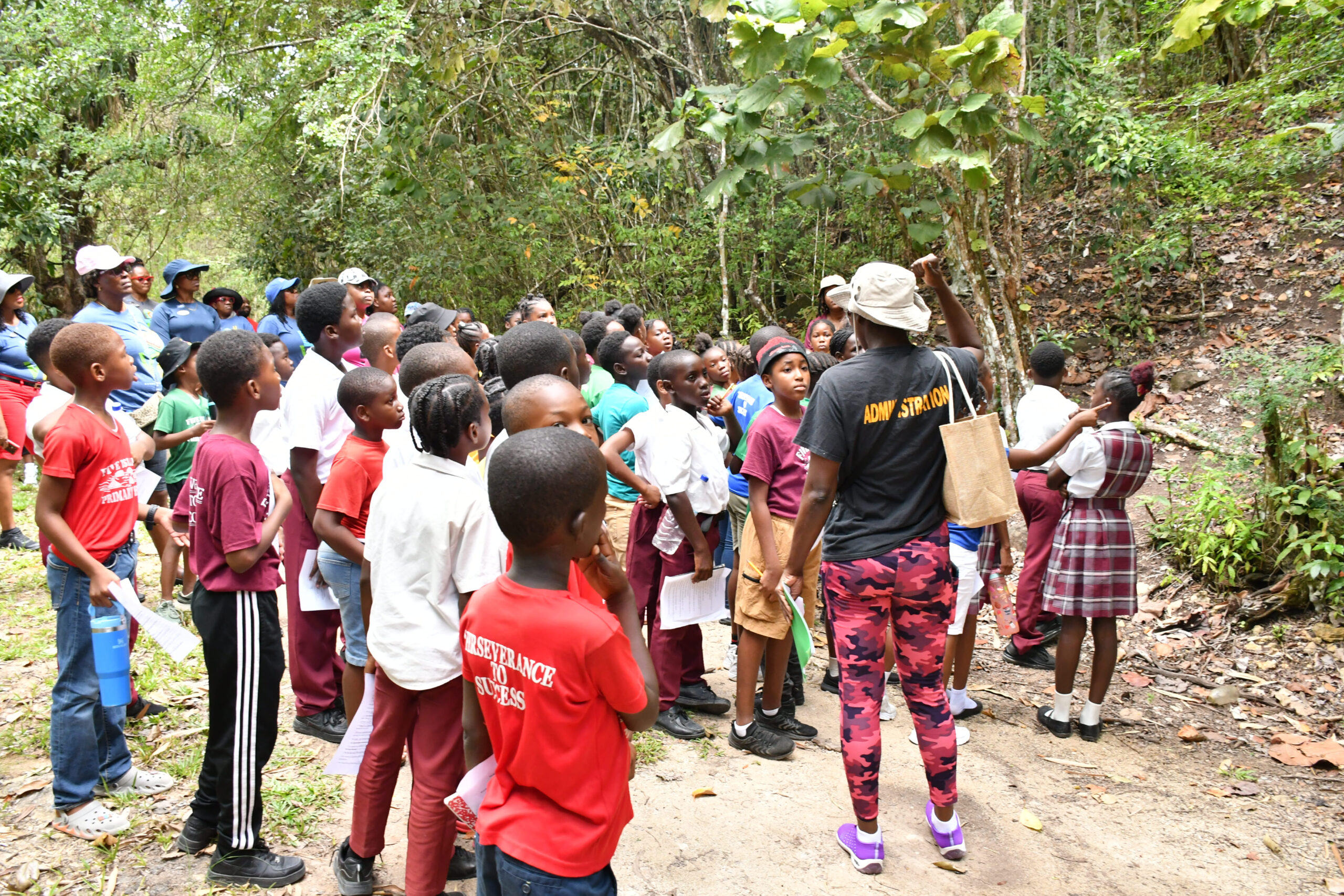
A recent summer camp outing to Antigua’s Wallings Forest Area has exposed a devastating collapse in the once-lauded conservation site, prompting a public call out for urgent government intervention to reverse the damage. On a July 16 visit to the protected woodland, a group of camp participants witnessed firsthand the total decay of an area long celebrated as a shining example of community-driven environmental stewardship.
Today, the forest lacks every basic amenity required to host visitors and support its own conservation. Functional restrooms, educational signage that once guided guests and explained local ecosystems, and formal visitor orientation systems have all vanished. What little organization remains exists only through the unplanned, volunteer work of former site manager Refica Attwood, who stepped in as an informal guide for the visiting camp group. Her quick thinking and on-the-spot problem-solving prevented what could have been a dangerous, disorganized disaster for the group of children in the party, according to the letter writer.
Despite Attwood and her small volunteer team’s tireless efforts to keep the day incident-free, the visit laid bare a grim truth: decades of collaborative community conservation work have been completely undone. The once-thriving reserve is now left abandoned, trapped in a state of administrative limbo stemming from unresolved government disputes.
The letter’s author leaves no question of where blame lies: the Antiguan government, specifically the Ministry of Agriculture, has made a catastrophic error that puts this critical ecological site at permanent risk. By allowing public-private partnership negotiations to lapse and failing to put in place a permanent, structured system for local trail wardens to maintain the site, the ministry has allowed one of Antigua’s most biodiverse “crown jewels” to deteriorate into disrepair.
The public has a right to know how this once world-class protected reserve was allowed to crumble, the writer argues. The call to action is clear: government officials must intervene immediately, resolve the ongoing administrative disputes that have paralyzed management, and restore dedicated, organized oversight of Wallings Forest before this irreplaceable environmental asset is lost forever.