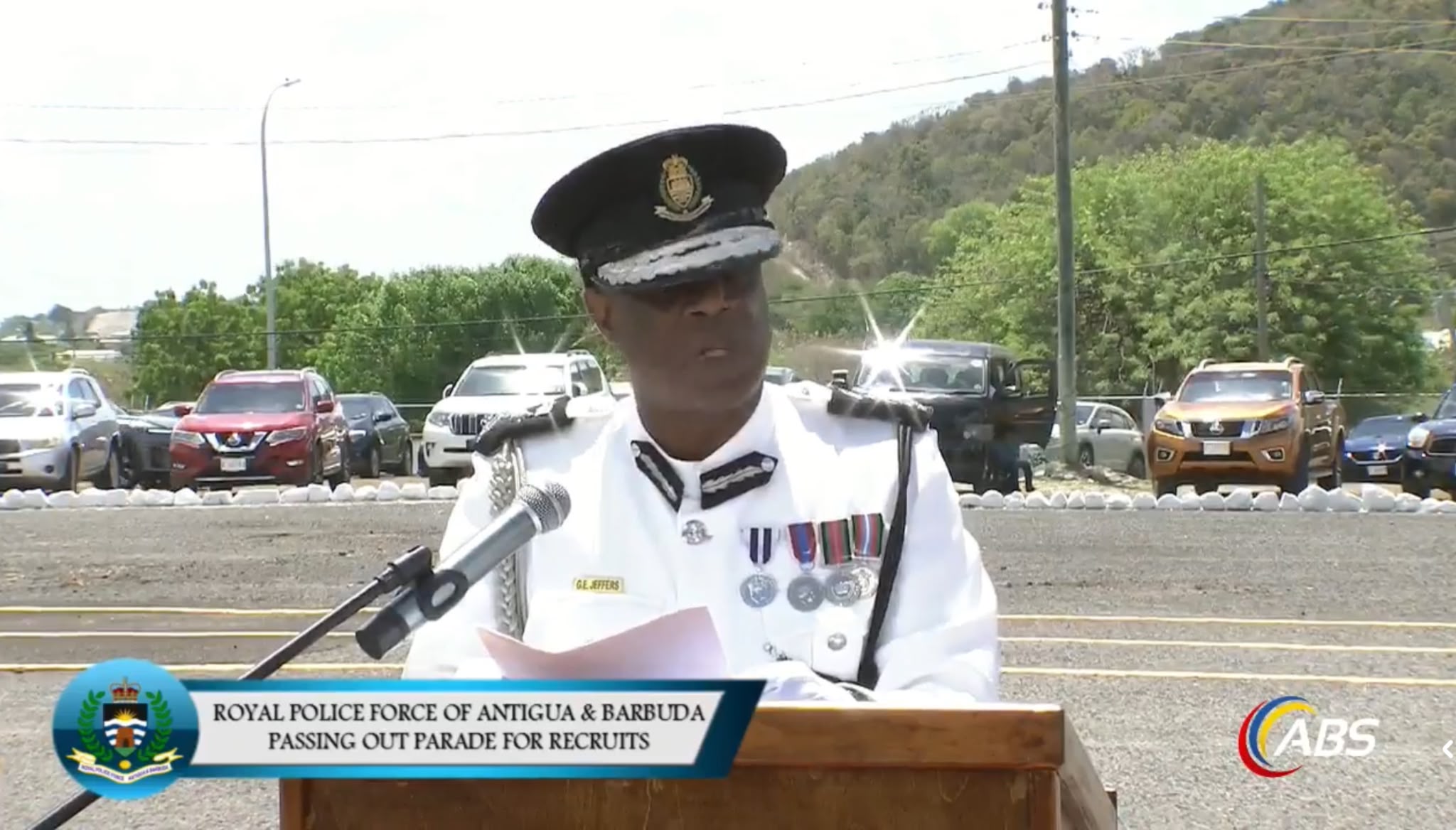
At a milestone graduation ceremony for the 50th Recruit Training Course held at the Sir Wright F. George Police Academy, Antigua and Barbuda’s top law enforcement leader has laid out clear expectations for the country’s newest class of police officers, emphasizing that public service must be the core of every officer’s career.
Police Commissioner Everton Jeffers addressed the 43 graduating recruits, who successfully completed a rigorous six-month training program to earn their placements. With an overall 95.6 percent pass rate for the course, the graduating class marks a new generation of law enforcement officers joining the Royal Police Force of Antigua and Barbuda.
Jeffers stressed that the new officers are not merely entering a traditional nine-to-five career, but accepting a public commitment that demands far more than just showing up for a paycheck. “Today, you’re not just simply receiving a certificate of completion. You are accepting a sacred trust,” he told the assembled graduates and guests. He framed the legal authority granted to police officers not as a personal privilege to be exploited, but as a weighty responsibility that must always be exercised for the good of the Antigua and Barbuda public.
“From this day forward, you are the guardians of the law, protectors of the vulnerable and ambassadors of the Royal Police Force of Antigua and Barbuda,” Jeffers said. “The authority you now carry is not a privilege for you to abuse, but a responsibility to exercise with fairness, humility, compassion and unwavering integrity.”
The commissioner made clear that technical training alone is not enough to build an effective, trusted police force. The force needs officers who bring strong personal character to their work: dependability, courtesy, empathy for community members in need, and the ability to maintain composure and professional conduct even when facing high-stakes, adversarial situations. Every interaction with the public, from investigating routine complaints to responding to emergencies, must be carried out with the highest respect for the rights and dignity of all people, he added, noting there are no shortcuts to delivering quality public service.
Jeffers also issued a firm warning that unprofessional conduct will not be tolerated within the force. Zero tolerance will apply to laziness, consistent lateness, unproductive work, and any behavior that erodes public trust in law enforcement. He acknowledged that new officers will face repeated tests of their honesty and integrity throughout their careers, and urged them to uphold ethical standards even when no oversight is present.
In closing, Jeffers called on veteran senior officers across the force to step into mentorship roles for the new recruits, noting that early career guidance is critical to helping new officers build long, successful careers. Young officers need experienced role models to show them what ethical, effective policing looks like, and senior leaders have a responsibility to prevent new recruits from straying from the force’s core values, he said.
He ended his address by reminding graduates that their police badge carries far more meaning than just a symbol of legal power. “Your badge represents far more than authority. It represents sacrifice, honour, courage and service. Wear it with humility. Protect it with integrity. Live worthy of it every single day,” he said.