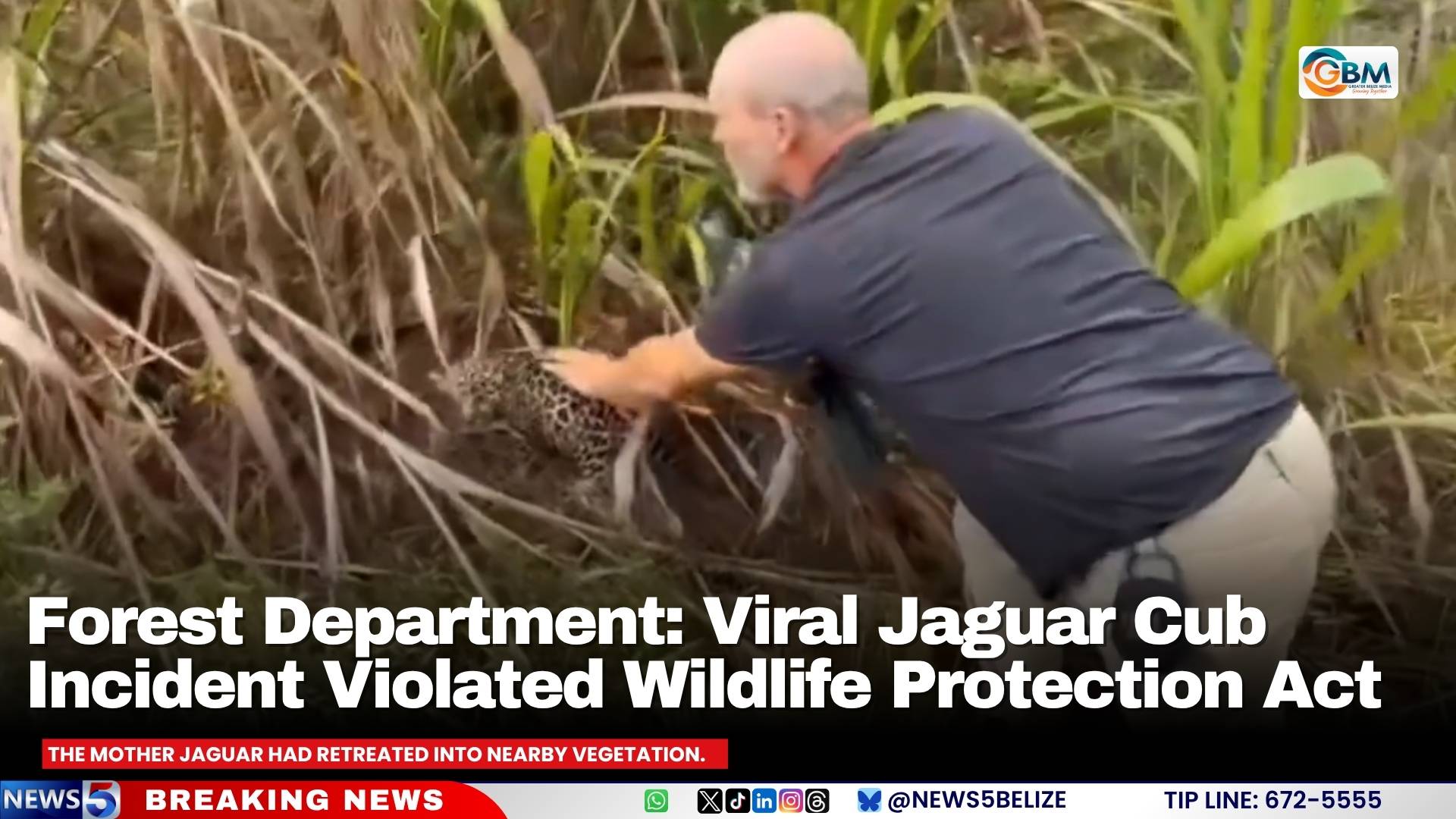
In a developing story out of Belize dated July 15, 2026, the nation’s Forest Department has launched a formal investigation into a widely circulated social media video that captured a group of people violating the country’s core wildlife protection legislation during an encounter with a jaguar mother and her newborn cub in the Mountain Pine Ridge Reserve.
The incident, which drew global attention after being shared across social platforms, unfolded along an active logging track deep within the protected reserve. Footage from the encounter shows several members of the group leaving the safety of their vehicle to approach the big cat pair. By the time the group intervened, the mother jaguar had already fled into surrounding dense vegetation to avoid contact, leaving her young cub vulnerable. One person was filmed following the small cub and making physical contact with it, while another member of the party can be heard saying they wanted to hold the infant animal themselves.
In an official public statement released this week, the Forest Department confirmed that the actions caught on video clearly violate provisions laid out in Belize’s Wildlife Protection Act, Chapter 220 of the country’s body of law. Investigators have already begun compiling evidence to support formal enforcement action against the individuals responsible for the incident. Under the act, the legal definition of “hunting” is far broader than just lethal pursuit of game: it explicitly covers any attempt to kill, capture, or molest wild animals through any method. The legislation additionally bans molestation of three specific groups of protected wildlife that all apply to this encounter: protected species, immature wild animals, and female wild animals accompanied by their dependent young.
Beyond the legal violations, department officials emphasized the unnecessary danger the group placed themselves in by approaching the jaguars. “Female jaguars are extremely protective of their offspring, and they will almost always react aggressively if they believe their cubs are under threat,” the statement warned. It went on to remind both visitors and local residents that wild animals should never be approached, touched, handled, cornered, or separated from their dependent young under any circumstances.
The Forest Department’s position aligns with urgent warnings issued earlier in the week by Dr. Celso Poot, Managing Director of the Belize Zoo. Poot told local outlet News Five that the cub, estimated to be only two weeks to one month old, endured extreme psychological stress during the unregulated human contact. Professional wildlife managers follow strict, non-intrusive protocols to avoid this kind of disturbance, Poot explained, relying on remote camera monitoring to track young big cats instead of direct physical interaction.
Poot also outlined severe long-term health risks the cub could face as a result of the incident, including capture myopathy – a potentially fatal stress response in wild animals that causes muscle paralysis and organ failure. Even if immediate symptoms do not appear, Poot noted, the lasting physiological damage from the flood of stress hormones released during the encounter cannot be ruled out. He also addressed a common misconception about jaguar parenting: while mother jaguars do not automatically abandon their cubs after human contact, the transfer of human scent can still put the cub at increased risk of predation or rejection.
One member of the group, Leslie Penner, who was leading a birdwatching excursion that included the two brothers at the center of the incident, has since come forward to share his firsthand account. Penner identified the man who touched the cub as Ruben Stoll, one of the two brothers in the party. Penner said he attempted to stop the interaction by positioning his vehicle door between Stoll and the cub, but he did not realize physical contact had already been made before the cub moved off the trail.
Penner described Stoll’s action as “unnecessary” and “reckless,” noting that the encounter created unnecessary risk of future human-wildlife conflict in the reserve. He added that he believes Stoll did not fully understand the danger of his actions in the moment, and would not have touched the cub if he had recognized the risks. Penner also pointed to the brothers’ long history of conservation work in Belize, including an existing program where they compensate local chicken farmers for losses caused by hawks, in exchange for farmers agreeing not to harm the protected birds of prey.