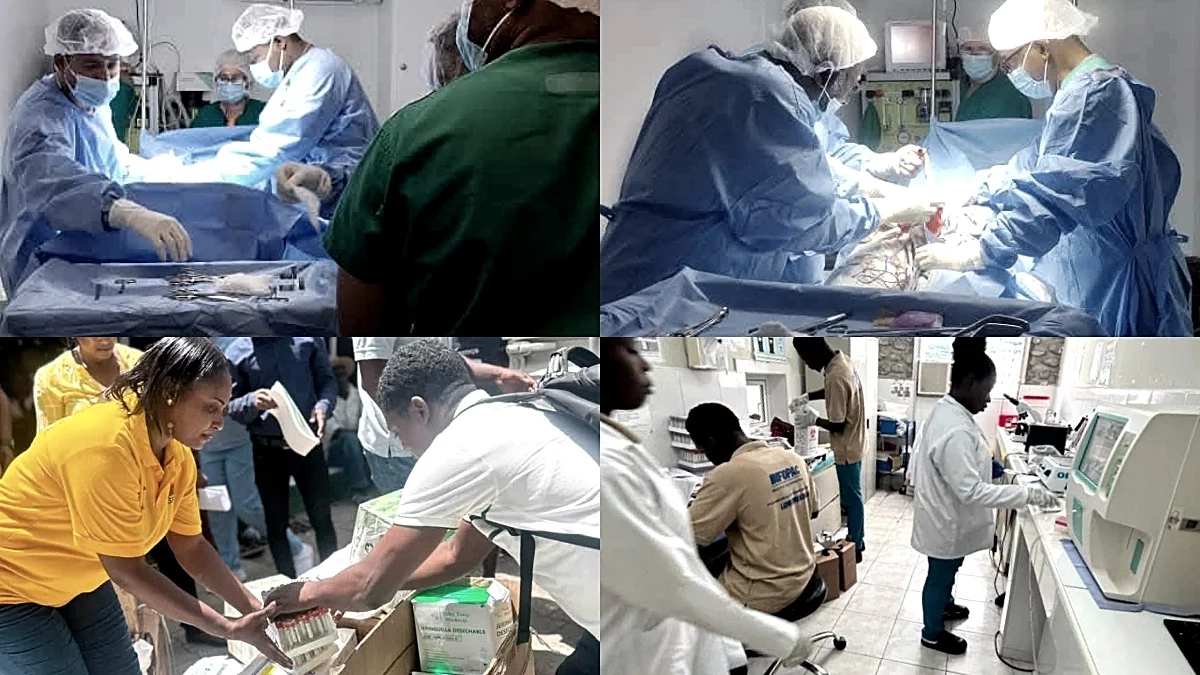
In a landmark step forward for equitable access to specialized medical care in Haiti, a government-led mobile surgical initiative has transformed the lives of more than 550 low-income patients in the country’s Nippes department, delivering completely free life-changing procedures that many families had waited years to access.
Conceived and launched by Haiti’s Ministry of Public Health (MSPP) under the leadership of Health Minister Dr. Bertrand Sinal, the surgical caravan program was designed with a core mission: to bridge the gap in specialized care access for the nation’s most vulnerable communities. The initiative was built on a simple, powerful hypothesis: that high-quality surgical services can be delivered to underserved regions with intentional planning and coordinated collaboration. Nippes was selected as the pilot site for the program, a choice that has been fully vindicated by the initiative’s transformative results.
The program’s success stemmed from intentional cross-stakeholder coordination from its earliest planning stages. A dedicated departmental steering committee, led by Eluderne Denius, Coordinator of the Miragoâne District Health Unit, was tasked with overseeing every stage of the work, from pre-screening and patient selection to post-operative follow-up care, ensuring no detail was overlooked.
To boost local care capacity at the launch of the mobile clinic, MSPP dispatched a team of specialized clinicians to Nippes to support local healthcare workers. After the initial launch phase, the Cuban Medical Brigade, a longstanding partner in healthcare provision in Haiti, took over ongoing operations, extending the program over several weeks and enabling far more patients to receive care than initially projected.
One of the program’s most innovative strategic choices was the simultaneous operation of three fully functional operating theaters across three separate Nippes facilities: Sainte-Thérèse Hospital in Miragoâne, Jules Fleury Hospital in L’Anse-à-Veau, and the Asylum Referral Center. By distributing services across multiple geographically accessible sites, the organizing team cut patient wait times drastically, expanded total treatment capacity, and eliminated the need for many patients to travel long distances to access care.
After weeks of intensive 24/7 clinical work, the program crossed a major milestone: more than 550 patients received completely free surgical interventions. The care delivered covered a broad spectrum of general and obstetric procedures, ranging from common chronic conditions including inguinal and umbilical hernias, hydroceles, lipomas, cysts, hemorrhoids, and phimosis, to urgent interventions such as appendectomies, cesarean sections, benign tumor and mass removals, and complex gynecological procedures including hysterectomies, myomectomies, and cystocele repairs. Other procedures included circumcisions and cryptorchidism corrections.
Program organizers emphasized that the outcome was not the work of clinicians alone, but a broad collective effort. Every level of the healthcare system contributed to the result: central MSPP administrative teams, Cuban Medical Brigade professionals, local surgeons, anesthesiologists, nurses, medical technicians, facility maintenance teams, drivers, logistics staff, health facility managers, and all employees of the Nippes Health Directorate worked tirelessly to overcome barriers and keep operations running smoothly.
Today, the Nippes surgical caravan stands as a replicable, inspiring model for equitable healthcare delivery across Haiti. The pilot’s success proves that with clear strategic vision, strong leadership, and coordinated collective action, even resource-constrained regions can deliver high-quality, life-saving care to the communities that need it most.