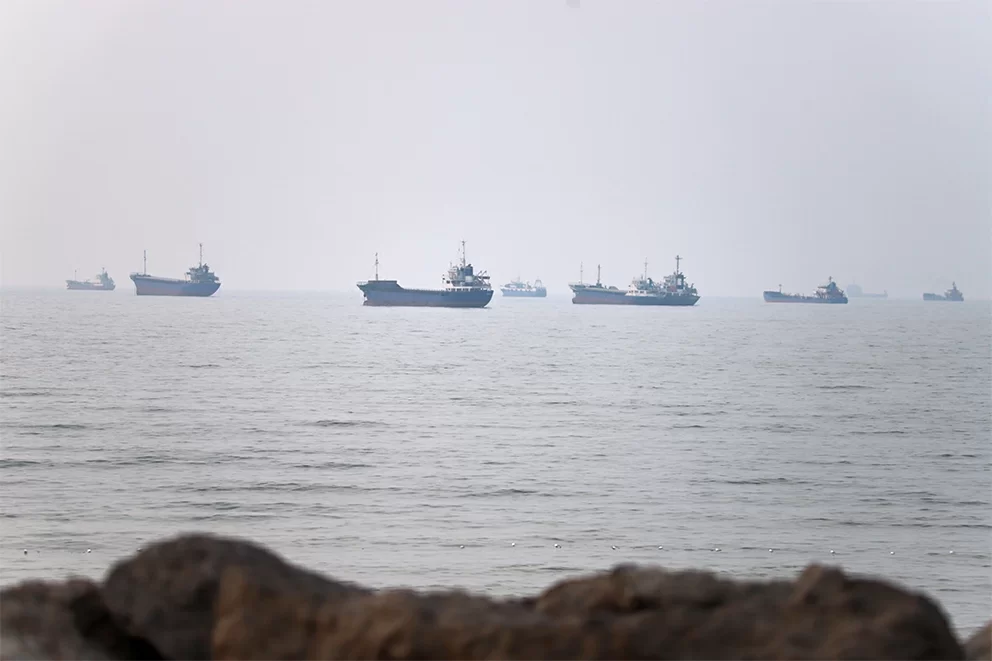
Global oil markets saw a sharp upward spike on Tuesday, with benchmark Brent crude climbing to $83.32 per barrel to mark a 4.5% one-day gain. The sudden surge comes on the heels of rapidly escalating geopolitical tensions between the United States and Iran centered on the Strait of Hormuz, the world’s most critical chokepoint for global energy trade.
The escalation unfolded after U.S. Central Command (Centcom) launched dozens of airstrikes on Iranian targets in the region, an operation explicitly designed to reduce Iran’s capacity to launch attacks on commercial vessels transiting the waterway. This U.S. military action was itself a response to an earlier alleged Iranian attack on a container ship registered under the flag of Cyprus. In a public statement, Centcom reaffirmed that the United States remains committed to guaranteeing freedom of navigation through the strait, despite what it calls continued aggressive actions by Tehran.
Iran hit back quickly, launching a wave of drone and rocket attacks targeting states across the Persian Gulf region, including the United Arab Emirates, Qatar, Kuwait, Oman and Bahrain. The Iranian authority that manages maritime traffic through the straat also issued a stark warning: any commercial vessel that deviates from the Tehran-designated shipping corridor will not be guaranteed safe passage. “The consequences of transiting via unauthorized routes are the sole responsibility of the vessel’s owner, operator and captain,” the official statement read.
Geopolitical analysts widely recognize the Strait of Hormuz as an irreplaceable strategic energy artery, with roughly one-fifth of all globally traded oil passing through the narrow waterway each year. The sharp spike in tensions has already triggered a dramatic drop in daily vessel transits, fanning widespread market fears over potential disruptions to global oil supply chains.
The drop in traffic comes after a brief period of de-escalation earlier in June, when Washington and Tehran signed a memorandum of understanding to de-escalate hostilities. Data from maritime intelligence firm Windward illustrates the severity of the recent decline: between Thursday evening and Friday morning during the latest escalation, only six vessels completed transits of the strait, down from a steady 18 to 22 daily transits recorded earlier in June. Between Saturday evening and Sunday morning, just nine vessels passed through, four of which sailed under the Iraqi flag.
Compounding market concerns is the ongoing drawdown of the U.S. Strategic Petroleum Reserve (SPR), which has now fallen to its lowest level since 1983. The reserve has released 172 million barrels of crude onto global markets in an effort to offset price spikes and stabilize supply, leaving storage at a multi-decade low.
Industry analysts forecast that oil prices will remain elevated through August and September, holding in a range of $70 to $80 per barrel with continued volatility tied directly to geopolitical developments and shifting global demand patterns. The latest escalation between the U.S. and Iran has also accelerated a long-running trend of major energy importers reducing their dependence on Middle Eastern crude, though analysts note that persistent geopolitical risk premiums will continue to support higher global prices.
Beyond energy markets, the renewed tensions have also rippled through global equity markets, putting downward pressure on major Asian exchanges. Japanese and South Korean stock indices posted notable declines, though the Hang Seng Index in Hong Kong recorded a modest gain.