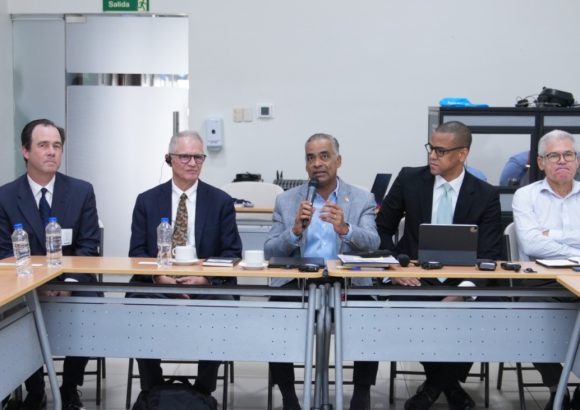
In a landmark move to map out untapped energy and critical mineral wealth, the Dominican Republic has launched a collaborative research initiative with the University of Texas at Austin, focused on upgrading national geological data and evaluating hydrocarbon reserves across the country’s onshore and offshore sedimentary basins.
Spearheaded by the Dominican Ministry of Energy and Mines and the university’s Bureau of Economic Geology (BEG), the multi-year project is scheduled to run through March 2027. Beyond mapping oil and gas deposits, the core mission of the collaboration is to generate high-precision geological data that will streamline future exploration efforts, attract greater international private investment to the Dominican energy sector, and shore up the country’s long-term energy security.
Dominican Energy and Mines Minister Joel Santos emphasized that the project will extend far beyond hydrocarbon assessment, adding critical evaluation of strategic minerals including rare earth elements to its scope. This expanded work will give the Dominican government and industry stakeholders a clear, comprehensive picture of the nation’s untapped strategic natural resources, laying the groundwork for responsible, targeted development.
For BEG, the partnership represents more than a one-off research project: it will deepen ongoing technical collaboration and cross-institutional knowledge sharing, while bringing world-class geological expertise to bear on the Dominican Republic’s resource evaluation efforts. The collaboration also builds on existing work already underway in the country.
During the UT Austin delegation’s visit to the Dominican Republic, the team received a progress update on the nation’s active rare earth exploration program in the Pedernales region. That initiative, led by the Ministry of Energy and Mines in partnership with state-owned Dominican Mining Company (Emidom), is already working to quantify the extent of the country’s critical mineral reserves, the outcome of which will complement the broader joint resource assessment.