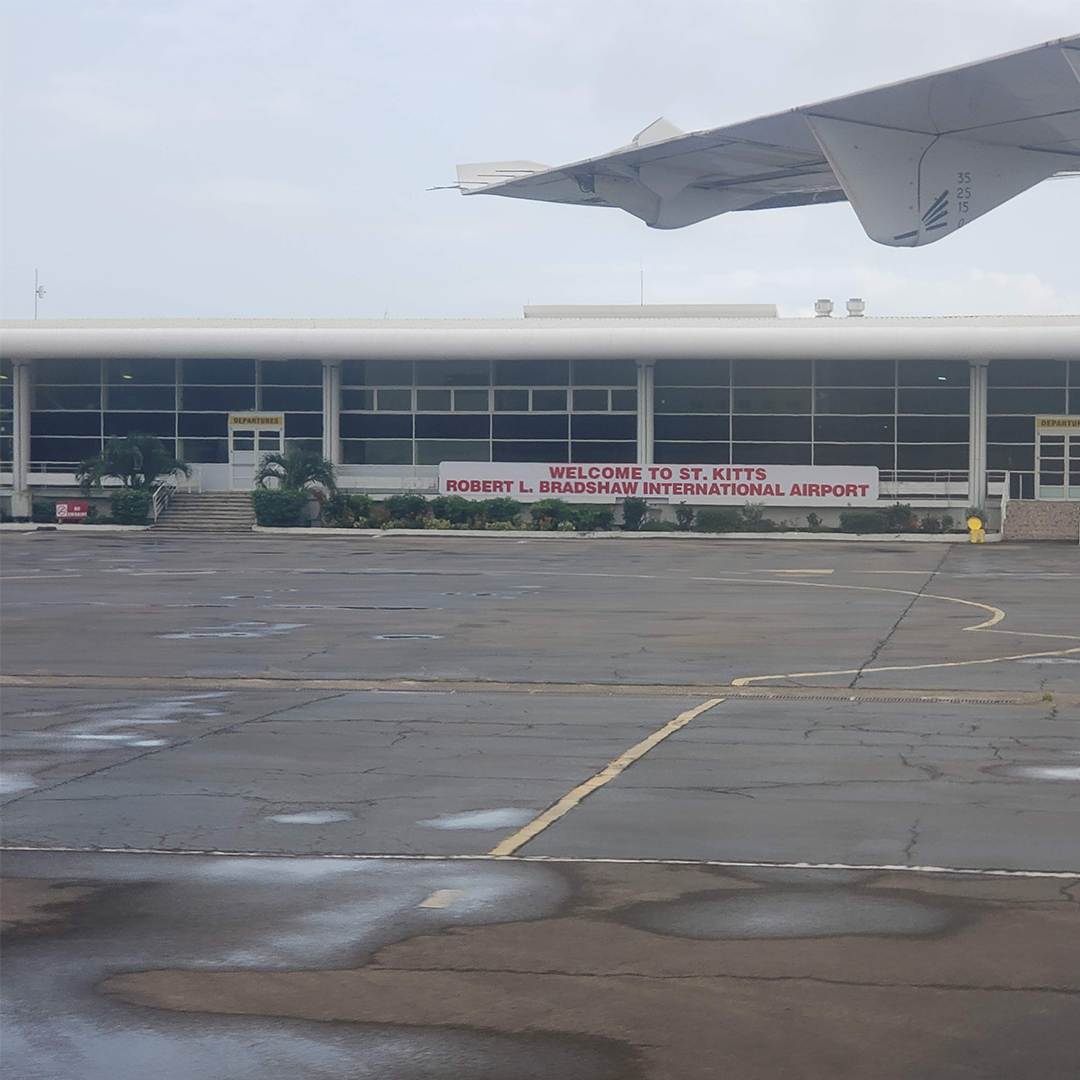
In late May 2026, three CARICOM nationals from Jamaica and Belize made an unexpected landing in Basseterre, the capital of Antigua and Barbuda. Transferred under a bilateral arrangement with the United States, these three men were not violent offenders or security threats — they were simply individuals caught in the wrong place at the wrong time, marked for removal by U.S. immigration authorities. This quiet arrival has sparked a urgent regional conversation about power imbalance, national sovereignty, and the growing pressure on small Caribbean nations to absorb other countries’ unresolved policy problems.
Today, Antigua and Barbuda’s government has released a formal White Paper outlining strict, conditional terms under which it might consider accepting a strictly capped number of third-country nationals removed from U.S. territory. To understand how the Caribbean reached this defining moment, it is useful to turn to a decades-old observation from Italian philosopher Antonio Gramsci, who wrote from a Fascist prison in the 1930s that political crisis emerges when the old order collapses, a new order has not yet taken root, and dangerous, corrupting pathologies fill the void. That pattern is familiar to Caribbean nations, which have long been framed as a dumping ground for other countries’ unwanted burdens: from toxic industrial waste to decommissioned vessels, the packaging of these problems changes, but the lopsided power dynamic between large global powers and small island states remains the same.
We are now living through that exact interregnum. The post-Cold War global order is fraying at the edges, and no new power bloc — whether a rising China, a fractured European Union, or an increasingly inward-focused United States — has emerged to establish a broadly legitimate new framework. What we have instead is a fragmented multipolar world that looks less like a balanced system of global governance and more like an unregulated brawl without a referee. The monsters Gramsci wrote of are not coming; they are already here, and four distinct threats to small-state sovereignty are now on full display in the debate over U.S. deportation policy.
The first and most obvious monster is the policy of outsourced deportation itself. The United States is pressuring small Caribbean states to help advance its domestic migration goals by accepting third-country nationals who often have no familial, cultural, or linguistic ties to the Caribbean, no clear lawful status, and no path to a durable future. While policymakers frame this as a collaborative partnership, it is in reality nothing more than the U.S. offloading its policy challenges onto smaller, more vulnerable nations.
The second monster is the dehumanizing rhetoric used to sell this policy to the public. During a 2025 Cabinet meeting, U.S. Secretary of State Marco Rubio declared that the U.S. was seeking countries to take in what he called the “most despicable human beings,” adding that “the further away from America, the better.” The contradiction of this framing could not be clearer when compared to the three individuals who landed in Basseterre: all three were transferred solely for immigration violations, with not a single criminal conviction between them. Rubio’s inflammatory language was crafted for a domestic U.S. political audience conditioned to view migrants as inherent threats, but Caribbean nations have no obligation to adopt this dehumanizing framework. Deported people are not abstract disposable cargo; they are parents, siblings, neighbors, people who made mistakes in the search for a better life. While upholding the rule of law does not require accepting dangerous individuals, it also does not require dehumanization. True security is built on fact-based sovereign assessment, not lazy, dehumanizing labels.
The third monster is the raw diplomatic asymmetry at the heart of this arrangement. As of July 2026, Antigua and Barbuda is being asked to take on the legal, financial, and social risk of hosting U.S. deportees, even as the U.S. maintains strict new restrictions on visa issuance for Antiguan and Barbudan nationals. The double standard is impossible to ignore: the island nation is considered good enough to absorb Washington’s deportation backlog, but its own citizens are required to pay additional bonds and jump through extra hurdles just to be granted the privilege of travel to the U.S. This is not a minor side issue; it cuts directly to questions of reciprocity, national dignity, and sovereign interest. If Washington demands that Antigua and Barbuda shoulder risk for U.S. policy goals, Washington must address the unfair treatment of Antiguan and Barbudan travelers. This is not about trading human beings for visa access — people can never be reduced to bargaining chips — but it is about demanding fair, measurable benefits for a nation that is being asked to take on U.S. problems.
To the Antigua and Barbuda government’s credit, its published White Paper acknowledges many of these core concerns. The document rejects a permanent open-ended monthly transfer program, preserves full sovereign discretion over which individuals may be accepted, and proposes a capped pilot of no more than ten deportees in 2026, followed by a full policy review in 2027. It also sets strict exclusion criteria and requires binding written guarantees for legal status, full financial coverage, healthcare, social support, and return arrangements before any transfer can proceed. Most critically, the White Paper emphasizes that these minimum protections are not reciprocal concessions, but non-negotiable prerequisites for any cooperation, and it explicitly calls for the lifting of blanket visa restrictions on Antiguan and Barbudan nationals as a core condition of any agreement.
This stance must be reinforced. The visa issue cannot be sidelined to separate diplomatic negotiations; it must remain a core part of this discussion. Antigua and Barbuda should never accept open-ended risk in exchange for vague promises of future favor, and any proposed transfer agreement must receive full parliamentary scrutiny before it can be implemented.
Small Caribbean states are not powerless. The United States itself refers to the region as its “third border,” a phrase that implicitly acknowledges the Caribbean’s strategic importance to U.S. national security. That status gives small nations the standing to negotiate as equals, not just accept terms dictated by Washington. Sovereignty is not a gift granted by large powers; it is a muscle that atrophies if it is not exercised. The imbalance of diplomatic power must be addressed head-on.
The fourth and final monster is the instinct to reduce this debate to partisan domestic politics. This issue cannot be reduced to a simple test of whether one supports or opposes the sitting government. The government has a duty to be fully transparent with the public, the opposition has a duty to conduct rigorous scrutiny, and citizens have a duty to demand seriousness from both sides of the political divide. Across party lines, there should be a clear shared minimum set of principles: no permanent standing transfer program, no automatic admission of deportees, no transfers without full biographical, biometric, criminal, and medical background information, no acceptance of individuals with criminal convictions beyond minor immigration violations, no transfers before binding written guarantees for cost coverage, legal status, and return responsibility are secured, and no agreement without full parliamentary scrutiny and the inclusion of visa restriction reform on the negotiating table.
This stance is not anti-American. It is pro-Antigua and Barbuda. Friendship between sovereign states does not require obedience. Mature diplomacy allows a small nation to say: we value our relationship with the United States, we recognize the balance of power between us, we will listen respectfully to your concerns, but we will not become a dumping ground for your unresolved migration challenges. We will not accept one-sided risk while our own citizens are treated as presumptive threats and restricted from travel.
The real danger extends beyond the demands coming from Washington. It lies in how we respond to one another. These dangerous pathologies thrive when compassion is mocked as weakness, caution is dismissed as disloyalty, scrutiny is labeled sabotage, and foreign political rhetoric is adopted as local common sense. We should not adopt Marco Rubio’s dehumanizing framing, but we also should not build our diplomatic posture on anger alone. We must be clear-eyed, firm, and united around core principles: respect for the rule of law, strict limits on any cooperation, full funding for any accepted deportees, complete vetting, parliamentary oversight, reciprocal visa treatment, and the sovereign right to say no.
Let us be clear: the monsters in this debate are not the migrants. They are the four pathologies that threaten small-state sovereignty: outsourced deportation dressed up as bilateral partnership, dehumanization dressed up as national security, diplomatic imbalance dressed up as friendship, and partisan division dressed up as patriotism. We defeat all four by remembering who we are: we are a small state, yes, but we are not a small people. We are a friend of the United States, yes, but we are not a subordinate. We are a nation prepared to cooperate, yes, but only on terms that protect our citizens, our laws, our institutional capacity, and our national dignity.
The test we face today is not whether we accept ten deportees. It is whether we accept a framework where ten becomes twenty, twenty becomes an open-ended flow, and our own citizens continue to wait years for visas and pay costly bonds just to visit family abroad. That threshold is where sovereignty begins. And for small states everywhere, sovereignty is not for sale.