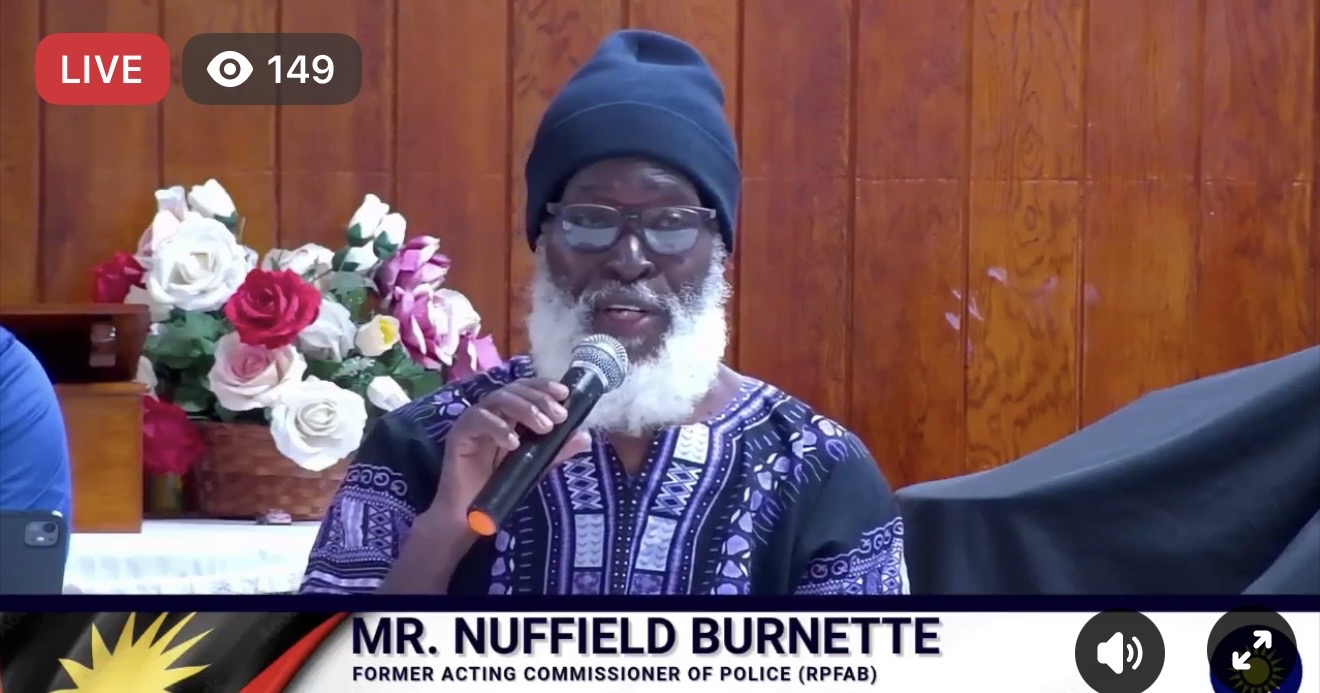
A retired senior law enforcement leader in Antigua and Barbuda has sounded a stark alarm over the Caribbean nation’s ability to absorb a planned influx of third-country deportees sent from the United States, warning that the arrangement would deepen already severe public safety and policing challenges the country currently faces.
Speaking at a United Progressive Party town hall focused on the government’s recently released policy White Paper, former Assistant Commissioner of Police Nuffield Burnette framed the proposal as a high-risk gamble that the country can ill afford. With the island nation’s law enforcement apparatus already stretched thin by persistent domestic crime, Burnette questioned why local leaders would voluntarily agree to take on unplanned additional responsibilities that would further strain institutional capacity.
“If our law enforcement agencies are already failing to keep up with day-to-day domestic crime, what will happen when we add this new layer of demands laid out in the White Paper?” Burnette said during the event. “We need to make our position clear to the country’s leadership while we still have the chance: we do not support this potentially damaging proposal as it stands.”
Burnette also pushed back against the common narrative that Antigua and Barbuda ranks among the safest nations in the Caribbean. He argued that official assessments that rely almost exclusively on homicide rates paint an incomplete and misleading picture of the country’s true crime landscape, erasing the widespread impact of violent home invasions and other offenses that leave long-term psychological trauma on survivors.
To illustrate his point, he referenced a string of fatal home invasion attacks carried out by young offenders years earlier, saying these incidents prove the country’s public safety challenges are far more severe than official cross-border comparisons often acknowledge. “No crime leaves a deeper trauma than a home invasion,” Burnette explained. “Our homes are supposed to be our safe sanctuaries, our castles. When intruders break into that space and commit acts like sexual assault within those four walls, that means we have a very serious crisis that cannot be ignored.”
The retired senior officer also cast doubt on the accuracy of the government’s official crime statistics, noting that a large share of criminal incidents are never reported to police, and that officials have been accused of downplaying the true scale of crime to project a more positive image. “I made a deliberate choice not to bring any official statistics with me tonight,” Burnette said. “The numbers are not reliable. People do not report every crime they experience, and what the government releases to the public rarely matches the actual reality of crime across the country.”
Burnette went on to criticize the performance of Antigua and Barbuda’s Royal Police Force, pointing to systemic issues including slow emergency response times, gaps in leadership, and a steady decline in overall operational effectiveness. “We are not properly managing the current crime situation in Antigua and Barbuda,” he said. “Police often fail to respond to calls in a timely manner, sometimes do not show up at all, and more often than not their response is unacceptably delayed.”
Against this already challenging backdrop, Burnette argued that accepting third-country deportees would introduce a host of new complexities that the country’s institutions simply do not have the capacity to address. He noted that the government’s White Paper covers a broad range of people including asylum seekers, refugees, and stateless persons, but Antigua and Barbuda currently has no dedicated legal framework in place to manage the arrival and integration of these groups.
“Our existing laws have absolutely no provisions to accommodate any of these populations,” Burnette said. “That is the most alarming detail that stuck with me when I reviewed the proposal.”
Burnette concluded by calling for a full, open national debate on the plan before any binding decisions are made, emphasizing that the proposal carries sweeping long-term implications for the country’s public safety and the future of its law enforcement system.