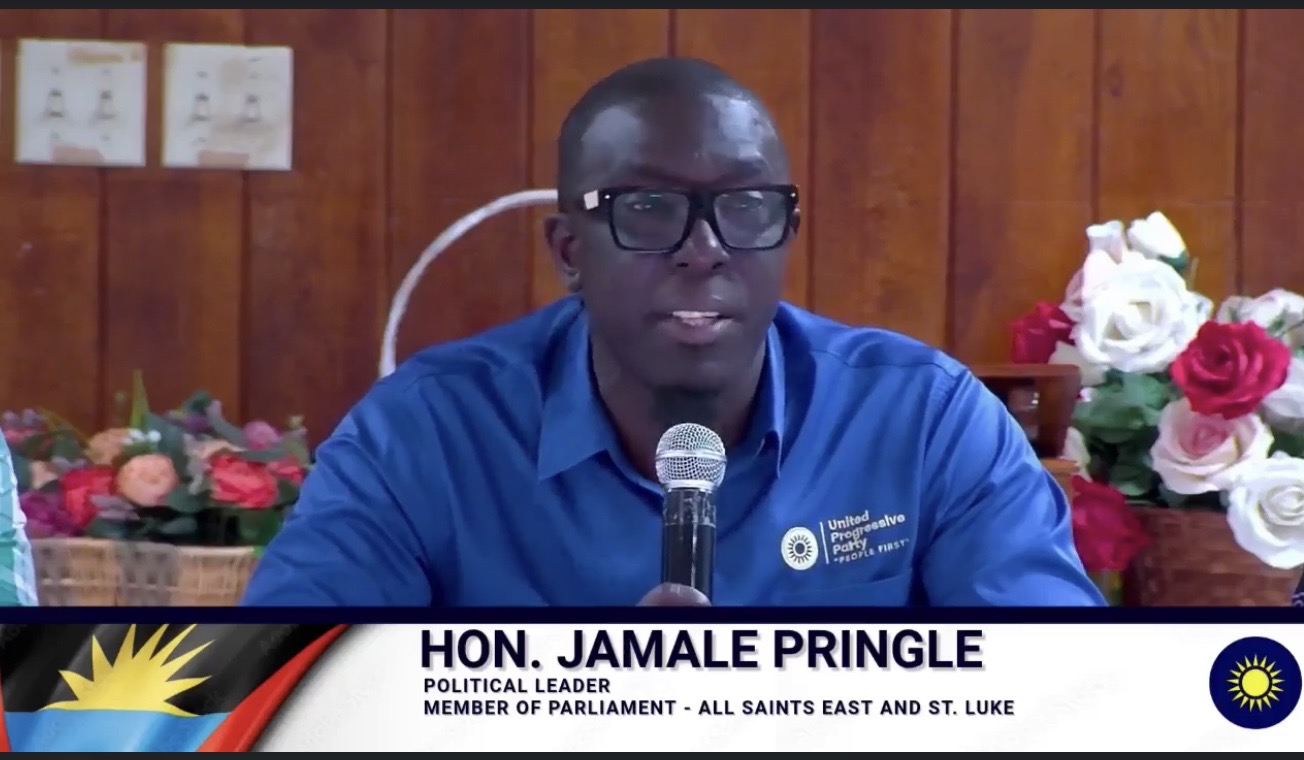
The leader of Antigua and Barbuda’s main opposition bloc, Jamale Pringle, has raised urgent alarms over a proposed bilateral deportation agreement with the United States, arguing that the small Caribbean nation lacks both the foundational legal structure and institutional resources to responsibly manage third-country deportees transferred under the deal. Pringing made these criticisms during a public town hall meeting hosted by the United Progressive Party, where he centered his remarks on gaps explicitly acknowledged by the ruling government in its own policy White Paper for the arrangement.
Pringle pointed out that Antigua and Barbuda currently has no independent, standalone Refugees Act, nor does it have dedicated legislation to address the legal status of stateless people or individuals who cannot be removed to another country. This is particularly concerning, he emphasized, because the government’s own White Paper acknowledges that transferred deportees could easily fall into one of these unregulated categories. Without a formal legal framework in place, people who cannot be repatriated to either their country of origin or the United States would be left in permanent legal limbo, with no domestic statutes to guide the government in determining their residency, rights, or long-term status.
Beyond the legal gaps, Pringle stressed that the strain of absorbing deportees would extend far beyond immigration policy, placing additional unnecessary pressure on public services that are already operating at maximum capacity. Even if the government initially caps the number of transfers, he argued, accepting any deportees would trigger binding international legal obligations that the country’s current domestic legislation is not equipped to uphold.
Pringle went on to note that the government’s White Paper itself confirms the country’s limitations: as a small island developing state, Antigua and Barbuda has limited population and infrastructure absorptive capacity, and its public services are already stretched thin by existing demand. The document, he said, explicitly warns that receiving third-country deportees carries tangible risks to domestic public order and social cohesion.
“The government’s own paper tells us that accepting these people will create major challenges that we are not positioned to handle, because it could harm public order and our social fabric,” Pringle said during the meeting. “If all of these risks are already laid out on the table, why is the government still moving forward with this as an inevitability, rather than a choice that requires fixing these gaps first?”
The opposition leader also outlined a series of unanswered practical questions about the proposal, including where transferred deportees would be housed, how administrative and legal processes for their status would be funded and operated, and what protocols would be put in place to address unforeseen issues that arise. He further argued that parliament is being blocked from conducting a full, transparent debate of the proposal because lawmakers have not been granted access to the full underlying Memorandum of Understanding and other core operational documents. Instead, he said, legislators are only able to review the government’s curated interpretation of the agreement, rather than the full binding text itself.
For its part, the ruling government has confirmed that parliament will hold a formal debate on the White Paper outlining the proposed third-country deportation arrangement in the near future.