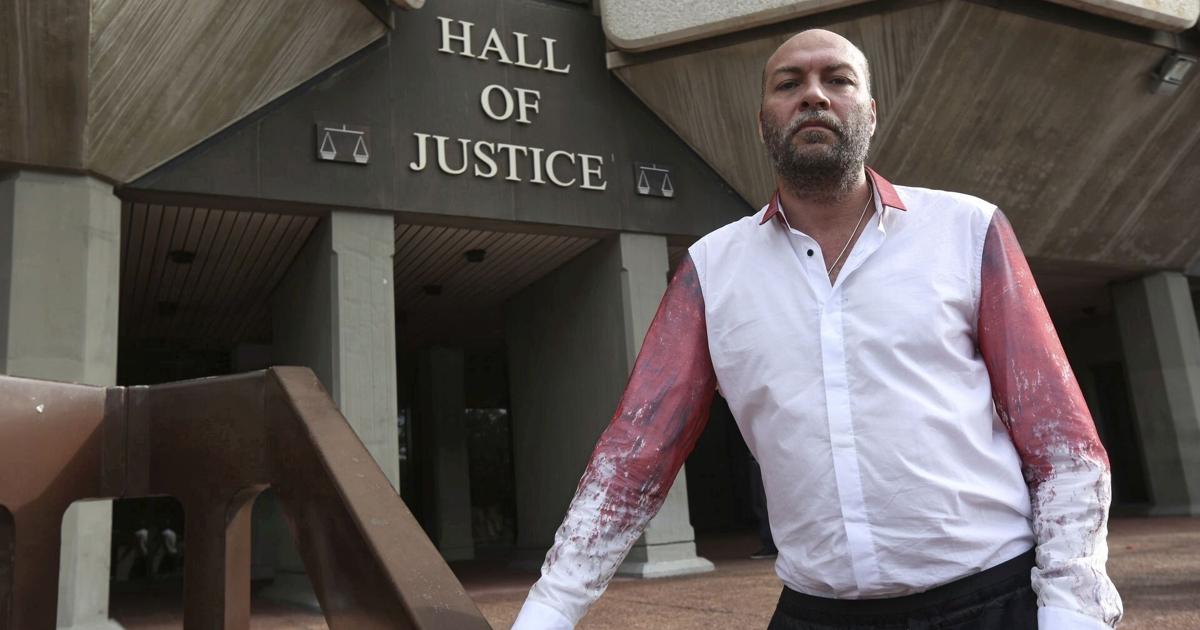
The Judicial Committee of the Privy Council, the highest appellate court for Trinidad and Tobago, has concluded initial hearings in a landmark constitutional challenge targeting colonial-era laws that still criminalize consensual same-sex intimate relations between adults, and has announced it will issue its ruling at a future date. The case, brought by Trinidad-born gay rights campaigner Jason Jones, centers on two key provisions of the country’s Sexual Offences Act—Sections 13 and 16, which outline the criminal offenses of buggery and serious indecency. The core legal question before the five-judge panel, led by Lord Reed and including Lords Briggs, Sales, Lloyd-Jones and Lady Rose, is whether these provisions remain protected from judicial invalidation under the Constitution’s controversial savings law clause.
Jones’s legal challenge traces back to a 2018 High Court ruling, in which Justice Devindra Rampersad struck down the two provisions, finding they violated the fundamental constitutional rights to privacy, personal liberty, and equal treatment under the law guaranteed to all citizens. However, that landmark ruling was later overturned by the country’s Court of Appeal. The appellate court ruled that while the provisions did conflict with modern constitutional rights protections, they were preserved by the savings law clause because the offenses were originally enacted before Trinidad and Tobago gained independence, and were substantially re-enacted after self-rule. The Court of Appeal did reduce the harsh penalties attached to the offenses to align with the lower penalties outlined in the original colonial legislation, but left the criminalization intact.
Anand Ramlogan, Senior Counsel representing Jason Jones, presented extensive arguments to the panel that the savings law clause should not apply to the current version of the Sexual Offences Act. Ramlogan emphasized that the 2000 Sexual Offences (Amendment) Act and the 2012 Children Act made sweeping, fundamental changes to the statutory framework of the original 1986 legislation. These changes, he argued, stripped the law of any constitutional immunity it may have held in the decades after independence, opening it up to full constitutional challenge.
Ramlogan told the judicial panel that constitutional rights are explicitly designed to protect marginalized minority groups from majority discrimination, and should never be interpreted to perpetuate historical prejudice against vulnerable communities. “There is simply no justification in a democratic society with respect for fundamental rights for this to happen,” he told the court. Drawing parallels to other outdated discriminatory laws that have been struck down over time, he argued that legal frameworks must evolve to reflect modern commitments to equality, rather than preserve harmful, centuries-old prejudices. “Constitutional rights exist precisely because the majority is not always right,” Ramlogan stated, adding that Jones is not seeking special treatment for the LGBT community, only equal access to the same constitutional protections that every other citizen of Trinidad and Tobago enjoys. He further noted that history has repeatedly shown that practices once legally accepted, including chattel slavery, gender discrimination, and bans on interracial marriage, were later universally recognized as unjust and incompatible with democratic values. In a striking rhetorical appeal, Ramlogan asked: “Ultimately, we need to ask ourselves the hard legal conscience question of ‘who are we to volunteer that gay people should starve because we don’t like the meat that they eat’?”
Peter Knox, King’s Counsel representing the Office of the Attorney General, defended the Court of Appeal’s ruling, arguing that the 1986 Sexual Offences Act was validly enacted by Parliament with the required three-fifths special majority. Knox contended that the legislation largely re-enacted long-standing criminal offenses that existed in Trinidad and Tobago for decades before independence, and should be evaluated through the lens of the social and historical context of the 1980s—including widespread public concern about the emerging HIV/AIDS epidemic at that time—rather than modern equality standards.
Jones, who currently resides in the United Kingdom but travels regularly back to his native Trinidad and Tobago, has spoken publicly about the harm caused by the law. He says the legislation has subjected him and countless other LGBT Trinidadians and Tobagonians to systemic stigma, systematic discrimination, and physical and emotional abuse, forcing consenting adult same-sex couples to choose between living openly in their intimate relationships and avoiding criminal prosecution.
In addition to the Attorney General’s Office, which serves as the primary respondent in the appeal, the Equal Opportunity Commission and the Trinidad and Tobago Council of Evangelical Churches are formal parties to the proceedings. Several regional and international LGBT advocacy groups, including Colours Caribbean, the Silver Lining Foundation, OutBermuda, the United Belize Advocacy Movement, and ILGA-NAC, were granted intervenor status to contribute arguments to the case. The Privy Council’s final ruling is expected to set a landmark precedent for LGBTQ+ rights across the Caribbean, where dozens of former British colonies still retain colonial-era laws criminalizing same-sex relations.